Four Candidates Confirmed for Fonterra Board Election
Four candidates have been confirmed for two director positions on Fonterra’s board.
 increase font size
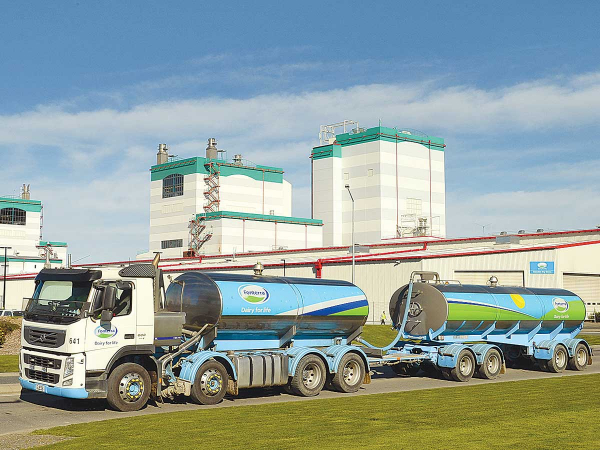 Fonterra says, at this stage, it hasn’t experienced any significant interruption in its supply chain.
For the country’s two largest milk processors, it’s business as usual: milk is coming in, being processed and products shipped to offshore markets without any major hitch.
Both Fonterra and Open Country Dairy say they are not facing shortage of shipping containers as Covid-19 wreaks havoc globally.
Fonterra’s director global supply chain, Gordon Carlyle says at this stage, the co-op hasn’t experienced significant interruption in its end-to-end supply chain.
Carlyle says farmers’ milk is still being collected and processed as normal and collection volumes are not “wildly different” to previous seasons at this time of year, considering this season’s challenges included a significant drought in the North and flooding in the South.
This time last year Fonterra’s full year milk forecast was 1,530 million kgMS: this year, the co-op is sitting at 1,515 million kgMS to the end of the season. “We would update the market if the milk forecast changed,” Carlyle told Rural News.
Fonterra’s isn’t experiencing any issues with exports leaving NZ ports: while some ports in some markets have slowed, Fonterra exports are still getting through.
“We haven’t experienced any shortages of shipping containers or chilled capacity.
“As part of our business continuity plan; we have identified extra storage space, but as of yet we have not needed it. At this time of year, we generally always have storage over and above our fixed footprint.”
Carlyle says one of Fonterra’s advantages is its scale: both in manufacturing, product mix and international marketplaces.
“We have the ability to flex and change to adapt to hot-spots around the world. This is a key benefit of having a global customer base and multiple selling platforms – consumer, food service, supply contracts, GDT and spot sales.”
OCD chief executive Steve Koekemoer told Rural News most of its markets are also operating as essential services: customers continue to manufacture as normal in the food sector.
“Our sales team carries on selling as per our policy, and we see continued demand for dairy products.”
Like Fonterra, OCD’s milk volumes are tracking close to forecast.
“We might experience inefficiencies here and there as everybody settles into the new norm. But we have, so far, not had any restrictions on ordering raw materials or shipping containers, which is a better result than many would have expected at this point in the process,” he says.
“The milk is coming into the sites and volumes are tracking to forecast.”
Four candidates have been confirmed for two director positions on Fonterra’s board.
A record farmgate milk price and strong global demand is laying the foundation for continued growth of organic dairy farming in New Zealand.
Waikato milk processor Tatua has again declared a record milk payout to farmer shareholders, leaving other processors in the dust.
Fonterra has unveiled its annual results for the 2026 financial year, posting $27 billion in revenue and close to $20 billion returned to New Zealand farmer owners and unit holders.
Fonterra Co-operative Group has confirmed the independently assessed candidates standing for election to its board in 2026.


A major move is about to get underway to improve the quality and viability of dairy beef and cattle in NZ.
Veterinarians say changes to the code of welfare for dairy cattle provides a positive foundation for improved cattle welfare across the country.
Today, 15 October, is the International Day of Rural Women, which recognises rural women’s contribution to farming, communities and the environment.
Global dairy giant Lactalis has integrated its Australian operations with the Mainland Dairy consumer business it acquired from Fonterra earlier this year.
After almost two decades of sharemilking, saving and building equity, Aaron and Marcia Flay this year realised their long-held dream of settling on their first dairy farm.
Good medium to long term prospects for NZ beef, especially in the US, has heighted the focus on various initiatives to capitalise on this situation.