Country Calendar Celebrates 60 Years on NZ Screens
New Zealand's longest running television programme, the iconic Country Calendar, celebrated its 60th birthday in style in Wellington last week.
 increase font size
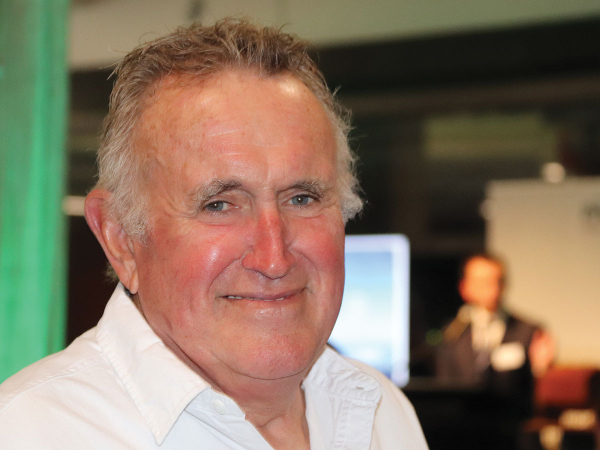 Richard Williams has been working as a camera operator on Country Calendar for more than 30 years.
New Zealanders are spontaneously joining in the 60th birthday celebrations of the nation’s iconic rural programme, Country Calendar.
There was big party in Wellington a couple of weeks ago for all those who are, and who have been, associated with the programme since it first went to air in 1966. In Lotto shops there are Country Calendar kiwi scratchies, which is prompting people to recount how frequently they watch the show and how much they enjoy it.
One couple tells the story about their dog, who as soon as it hears the Country Calendar theme, rushes to their TV set and starts barking. Apparently he once saw sheep on the programme and the music reminds him of that. Country Calendar has become an institution and is compulsory weekly viewing for thousands of people.
The official Country Calendar birthday event hosted by Pāmu (Landcorp) and TVNZ saw the National Library foyer in Wellington packed with people all excitedly recounting their own stories about the programme and sharing in the unabashed emotional celebration of this television milestone. It was also a time to catch up with old friends.
TVNZ chief executive Jodie O’Donnell praised Country Calendar, saying the magic about the programme is that it’s all about New Zealanders telling real stories. She noted that it was the second most watched show on its linier channels and always in the top ten on TVNZ plus.
“It’s the longest running programme in our country and I heard that it might be within the top 30 longest running shows worldwide. What makes it special is that it connects with New Zealanders and everybody wants to see how we farm and fish and conserve our land, which is a very important part of our economy,” she says.
Broadcasting Minister Paul Goldsmith was at the party and says it was the positivity of the show that appealed to him.
“It’s a remarkable show that is part of the fabric of NZ society and I’m pleased that Country Calendar continues to succeed,” he says.
Richard Williams has been working as a camera operator on Country Calendar for more than 30 years and says it’s absolutely the best programme one can work on. He says one of the secrets to the success of the programme is the relationships and trust that the field crew establish with the people they are filming.
He says as a camera operator it’s a case of letting a farmer do their work as per normal and being prepared to give them space to do this.
“Anybody can take pretty pictures, but it’s that trusting relationship between people such as myself and the people we are filming that makes the difference,” he says.
One organisation whose farms have featured many times on Country Calendar is Pāmu. CEO of the company Mark Leslie says the programme is fantastic because of the way it connects people in urban areas with the land. He says nowadays fewer people have direct contact with those who work the land.
He says over the years Country Calendar has moved with the times covering innovation and new farming systems and highlighting the technology that supports the primary sector.
Leslie says every generation of farmers face challenges and at the moment succession planning around the family farm is a significant issue. He says for commercial farmers like Pāmu it’s about doing the right thing around profitability, the environment, water and people.
“Technology will play a big part in supporting that and then you have the unrest in the world today, which is something farmers over the generations have had to battle with. For me Country Calendar is a great way to see history though time,” he says.
Some History
In 1966, television was still in its infancy in NZ.
The first programmes were broadcast to the Auckland region only in June 1960 and it was over a two-year period before Wellington, Christchurch and Dunedin came on stream – in black and white, of course, and for limited hours.
Rural broadcasts were already running on radio and it was the vision of two people – the Director General of NZBC at the time Gilbert Stringer and veteran rural broadcaster and later head of Current Affairs, Bruce Broadhead – who along with the legendary Fred Barnes got Country Calendar up and running. Barnes said at the time it was initially designed to be a television version of a popular rural radio programme called ‘Country Session’ (Initially television was regarded as radio with pictures). The early programmes were directed primarily at farmers and included a three minute news segment, followed by a story shot ‘in the field’ and then a studio interview.
Television production in the 1960s was somewhat ‘number 8 wireish’ and although the technical equipment at the time was the best on offer, staff were frequently learning on the job. Key people who fronted the first Country Calendars were Fred Barnes, Tony Trotter, Frank Torley and Colin Follas. It was these people and those behind the scenes who set the highest of standards of broadcasting which have remained a constant over the past 60 years. Their legacy has been carried forward to this very day by cohorts of talented and committed filmmakers and it would be a very brave person who would cut the funding for this icon of our television screens.
New Zealand's longest running television programme, the iconic Country Calendar, celebrated its 60th birthday in style in Wellington last week.
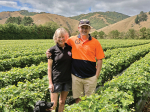
Stanmore Farm featured on Hyundai Country Calendar in October, giving insights into the Kāpiti Coast family business supplying commercial vineyards with baby vines.
OPINION: The Hound notes that marketing/promotion couple and Lake Hawea Station owners Geoff and Justine Ross came in for a fair bit of criticism about their 'woke' farming practices after recently featuring on Country Calendar.
New Zealanders will be able to size up the president of Federated Farmers for themselves this Saturday, with Country Calendar featuring the farm and work of Bruce Wills. The episode airs on TV One Saturday at 7pm.
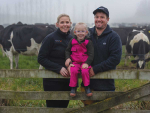
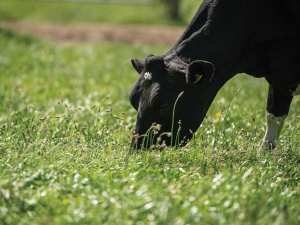
Farms across the upper North Island are trialling different pasture mixes as part of a research programme that aims to build greater resilience into farming systems.
Election years are always a concerning time for farmers, according to DairyNZ chair Tracy Brown.
The Ballance Farm Environment Awards are coming to the West Coast of the South Island.
Most dairy regions around the country have had a pretty good season so far says Tracy Brown.
Rural leader Mark Hooper has been appointed as an independent director to the NZPork board, bringing extensive farming, governance and advocacy experience to the role.