Fonterra Elections 2026: Voting Opens Tuesday 20 October
Fonterra shareholders can begin voting on Tuesday 20 October in the 2026 Board of Directors’ election, a Co-operative Council election in one Ward, and seven Annual Meeting resolutions.
 increase font size
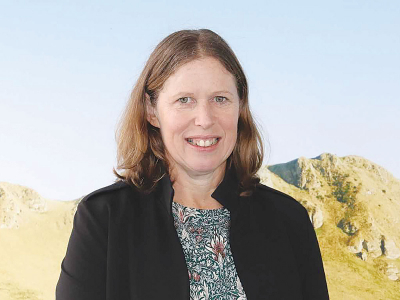 ANZ agriculture economist Susan Kilsby.
A sudden drop in log prices which impacted the New Zealand commodity price index in July seems to have stabilised, says ANZ agriculture economist Susan Kilsby.
Prices and demand from China had been strong for some time, but harvest rates were also high from the surge in plantings in the 1990s.
Then came the northern summer when Chinese building activity falls off because it’s too hot, and suddenly logs weren’t leaving the ports, she said.
Kilsby says the trading mentality in China seemed to be “if my fellow trader is buying then I should buy”, with less sense of the big picture, giving rise to periods of oversupply and sharp corrections.
But prices now seem to have stabilised. “We may see some gradual recovery but it’s going to take a little while,” she said.
Kilsby was speaking at the recent New Zealand Institute of Primary Industry Management (NZIPIM) annual conference in Christchurch.
Speaking a couple of days before the Reserve Bank cut the official cash rate in early August, Kilsby said everyone was expecting a cut, but the question was how many more cuts will follow.
The economy was “chugging along” but not booming, she said.
“We at ANZ have a slightly differing view to the Reserve Bank as to how quickly our economy will pick up. We think the path is going to bee a little bit longer.”
Kilsby referred to the slowdown in economic growth in a lot of our trading partners, particularly in Europe. Germany is “chugging along” just above recession levels, while the UK was “not too flash” with the uncertainty of Brexit”. But Asian markets are still growing rapidly and NZ is well aligned to some of those markets.
A rapid lift in nearly all export products to China -- most markedly beef, lamb and mutton -- is driven by their shortage of protein due to the Asian swine flu epidemic.
Kilsby says many beef restaurants are opening in China, citing her own recent experience at a restaurant offering tail, neck and belly rather than the usual recognised premium cuts.
“The way they cook it all tastes amazingly good anyway. I think we may have [been served] tail because it came out with a lot of bone and not much meat.”
She says that China’s valuing of cuts which other markets do not value is a welcome trend at a critical time: NZ has been relying on selling into the US hamburger pattie market where consumers may now be just as happy to buy product made from other protein or grown in a lab.
The lamb market is also performing strongly, again partly due to the price for the poorer cuts, driven by strong demand from China.
“If you can get $150 for your cull ewe that’s quite different from where things were a few years back.”
Kilsby says ANZ is also “reasonably bullish” on dairy, largely because the world’s milk production is not huge.
US production is growing about 0.5% and Europe would be lucky if it were growing by 1%. Australia, Argentina and Uruguay are all going backwards.
ANZ’s milk price forecast is $7.10/kgMS.
“So we are a bit more bullish than Fonterra’s midpoint but are certainly within that range,” said Kilsby.
(Fonterra’s opening 2019-20 forecast farmgate milk price range is $6.25-$7.25/kgMS.)
Give us ethical food
Meanwhile, Kilsby says the big coming trend is the demand by consumers that food and other products be ethically produced.
She says millennials often buy second-hand clothes rather than new if new don’t fit their values.
Kilsby believes farmers will have to communicate what they’re doing on farm via data now collected by, say, processors’ farm assurance programmes and farm environment plans. This data is, and will be, linked through the supply chain to tell consumers about product origins.
“This is where we are going to see value-add,” she says. “We’re going have to accept that different farmers will be paid different prices for their products based on how well they do some of these things.
“What we do on farm is going to become the new value-add, but it will have to be supported with data and with stories that resound with people, and [so motivate people] to pay more for product and feel good about what they’re consuming.”
Fonterra shareholders can begin voting on Tuesday 20 October in the 2026 Board of Directors’ election, a Co-operative Council election in one Ward, and seven Annual Meeting resolutions.

Fonterra Co-operative Group chief financial officer Andrew Murray has resigned to take up a role outside the dairy giant.
Four candidates have been confirmed for two director positions on Fonterra’s board.
A record farmgate milk price and strong global demand is laying the foundation for continued growth of organic dairy farming in New Zealand.
Waikato milk processor Tatua has again declared a record milk payout to farmer shareholders, leaving other processors in the dust.


Farmers are being encouraged to rethink how they manage waste on farm with the launch of ruralwastesorted.co.nz, a new website bringing together practical tips, real farmer experiences and resources.

New Zealand Winegrowers (NZW) is celebrating the India-New Zealand Free Trade Agreement (FTA) coming into force today, bringing New Zealand wine improved access to one of the world’s fastest-growing economies.
New Zealand’s red meat sector has welcomed the India-New Zealand Free Trade Agreement taking effect, which removes India’s 33% tariff on New Zealand sheepmeat.
More than 95 per cent of New Zealand’s forestry and wood exports to India can now enter tariff free as the New Zealand-India Free Trade Agreement comes into force today.
Federated Farmers is backing Feilding High School’s call to keep Agriculture and Horticultural Science as a standalone subject in Year 11.
Food and fibre exports have returned a billion- dollar bonus to the country.