Keep up with innovation and e-commerce in China or risk losing market share. That was the message delivered at the China Business Summit in Auckland this month.
Delivering kiwifruit by drone and selling meat on an electric vehicle digital platform - when it comes to innovation and e-commerce, China is proving a world leader. However, New Zealand food producers are being cautioned not to take the Chinese market for granted but to keep up with trends or risk losing market share to competitors.
At the day-long event, attended by over 400 people including Prime Minister Christopher Luxon, New Zealand agribusiness leaders highlighted innovation in the Chinese market and how it's helping their companies increase sales and boost returns for growers and farmers back home.
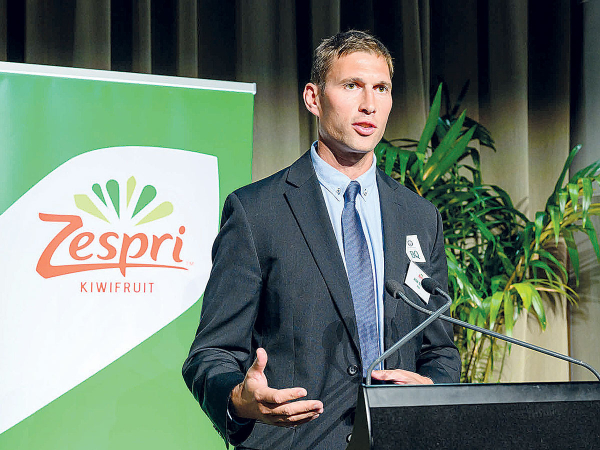
Zespri chief executive Jason Te Brake told the event that innovation changes are happening rapidly, and the company needs to be in China to expand and build capability and keep pace with changes. Zespri does 40% of its business in China online and it is essential for the company to keep up with e-commerce.
"They are now delivering kiwifruit via drones to anywhere you are - you go online and buy kiwifruit, and it gets delivered by drone.
"You can't keep up with that if you operate out of NZ," he says.
Te Brake says he enjoys going to China.
"Because every time you go, you learn something new. We've got a globally leading supply chain in China because out partners have invested heavily in new technology and new automation; we show them to our other partners around the world."
Silver Fern Farms chief executive Dan Boulton told the summit that if people think that sustainability doesn't matter for the Chinese market, then "they are a long way wrong".
Boulton gave an example of electric car company NIO, which is building a 'lifestyle club culture' among Chinese consumers. The EV company is selling products aligned with its values. SFF sold 30,000 packs of grass-fed NZ beef in one week on the car company's platform.
"This is on an EV car digital platform, one example of the different business models operating in China."
Speaking at the event, Fonterra president global ingredients Richard Allen noted that innovation has been one of the big stories for the co-op in China - across both food service and ingredients.
"In our food service business, we've invested significantly in developing our local innovation capability.
"We have six application centres across mainland China, and within those we have over 50 chefs who work closely with our customers across the region, really ensuring that we take the best of New Zealand dairy and we apply that to local tastes and local trends.
"And that has been a big part that's underpinned our growth."
China is New Zeaalnd's number one market. It represents about $18 billion of trade, or on a daily rate, it's $50 million of trade a day. NZ's next biggest market is the US, equating to about $7 billion, then Australia at around $5 billion.
However, despite the stats, nothing can be taken for granted.
Ministry for Primary Industries chief transformation officer Jenny Cameron pointed out that China is also now the number one market for over 100 other countries.
"We are a tiny player in the Chinese economy, so we cannot take that position for granted.
"We must maintain that sophistication and innovation in those distribution channels. The Chinese demographic is changing; consumers and customer expectations are rising all the time."
Trade Minister Todd McClay agrees.
He says that while NZ can celebrate being the first country to have a full trade agreement with China, things have changed.
"We sort of had the playing field to ourselves, for a little bit alone for a long time. If you go to China now, that's not the case.
"Everyone in the world is there. They're playing, you know, very aggressive catch-up to New Zealand.
"And although their products are not as high quality, they're not as good, they're not as tasty as ours, sometimes they're not bad either."