Fall Armyworm in NZ Maize: Four Years of Research
Four years since it was first detected in New Zealand, researchers and growers now know much more about management of maize pest fall armyworm (FAW).
 increase font size
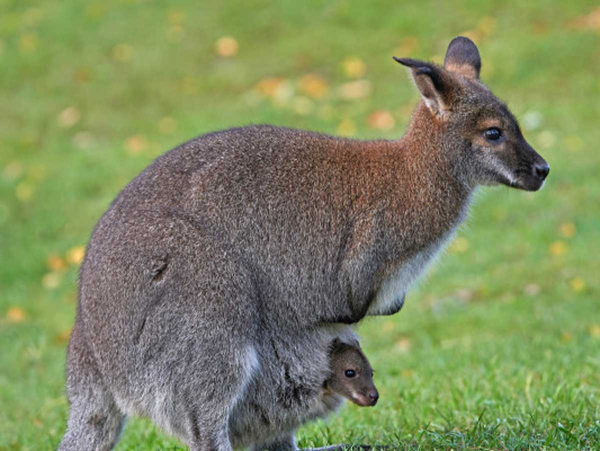 The work also complements central government investment through the Tipu Mātoro National Wallaby Eradication Programme. Photo Credit: Ministry for Primary Industries.
Wallaby control efforts in Canterbury have received a major boost, with Canterbury Regional Council releasing $2 million from its Pest Management Reserve.
The funding will help accelerate wallaby control work during the 2026/27 and 2027/28 financial years, reducing the risk of wallabies spreading into new areas and avoiding much higher long-term control costs.
It builds on previous investment and ensures earlier gains aren't lost at a critical point in the programme.
South Canterbury/Ōtuhituhi Councillor Nick Ward says wallabies are one of the most significant biosecurity threats facing Canterbury.
"This is urgent, we must act now with a huge knock-down, not a band aid approach," Ward says.
He says the boost is a "wise use" of the reserve funds.
"A dollar spent now is ten dollars saved later on," he says.
Peter Scott, another South Canterbury/Ōtuhituhi says local knowledge and coordination is important.
“I know two people who recently shot 200 wallabies over two days. This is a pest and it's destructive. It’s also a huge area we’re dealing with so we need to work with the community to find a local solution for a local problem. I’m pleased the Council has supported this, which will ultimately benefit the whole region and country," Scott says.
“If left unchecked, wallaby spread would have serious consequences for biodiversity, productive land, and neighbouring regions. Acting now enables us to protect both local communities and the substantial public investment already made,” he adds.
The investment will be used for a coordinated package of work across the containment area, including new exclusion fencing, expanded aerial and ground control, maintenance operations and enhanced monitoring and landowner engagement.
The funding comes from the Council’s Pest Management Reserve. The policy sets a target balance of $1 million, allowing surplus funds to be reinvested into urgent pest management activity without the need to increase rates.
The work also complements central government investment through the Tipu Mātoro National Wallaby Eradication Programme, under which nearly $14 million has already been invested in Canterbury.
The Council will receive progress updates on delivery at the end of each financial year, while longer‑term funding options for wallaby management, including targeted rates, will be considered through the Long‑Term Plan 2027–37.
Four years since it was first detected in New Zealand, researchers and growers now know much more about management of maize pest fall armyworm (FAW).
Growers and farmers are being encouraged to have an important conversation before the coming season starts: how to prolong the effectiveness of the crop protection tools they rely on.
Certainty and a clear understanding of the needs of rural communities is a critical outcome in the series of government reforms that are taking place at present.
Newly released data from Environment Canterbury (ECan) Farm Environment Plan (FEP) audits are showing a dramatic lift in environmental performance across the region.
Buying or building a rural or semi-rural property? Make sure you know where the wastewater goes, says Environment Canterbury.


Federated Farmers has welcomed new rural policies released by ACT, saying they align closely with its own election priorities.

Rural Contractors NZ says proposed changes to land transport rules for agricultural vehicles are a welcome response by the Government to out of date regulations which have seen members hit with huge fines.
Alliance is calling for final applications for its 2027 Graduate Programme, with applications closing on Sunday 25 October.
Decades piloting planes has ensured vet and farmer David Hayes is focused on safety. So, after a serious accident while welding on farm, he is sharing his experience so others can learn from it.
Canterbury milk processor, Synlait Milk has confirmed Leon Fung as its chief executive officer.
OPINION: Making it easier to collect rainwater and use it to grow crops and livestock is a no brainer.