NZ Must Prioritise Food Security, Says HortNZ's Malley
New Zealand needs to make sure that it continues to focus on its own food security, according to HortNZ board member and blueberry grower Dermott Malley.
 increase font size
 Garrick Batten reckons hill country farmers have a short-term option to improve labour, capital and feed efficiencies and bottom lines by producing goat meat.
"Adding pastoral goats with suitable management is the production base to develop a niche in an existing market,” Garrick Batten claims.
Production and consumption in the Asia- Pacific region alone are now over 4 million tonnes with annual growth of 1 to 2% in the last 15 years, according to an IndexBox report. “Surprisingly, we have not applied our skills and expertise to producing, processing and marketing meat to this goat meat opportunity,” he says.
“But Australia has capitalised on this regional goat meat market, exporting 19,000 tonnes in 2021 for $270m, to South Korea, Taiwan, Japan, the Caribbean and North America.”
Batten says the Asian market usually prefers skin-on carcases, often with tail hair to show preferred black colour for medicinal as well as food value.
“But New Zealand does not include this product in its small 1,000-plus tonnes annual export.”
He told Rural News that Australia does supply this market and provided 94% of Korean imported goat meat. Australia also exports live slaughter goats by air, with often weekly shipments to Malaysia and Singapore.
However, numbers have dropped from 88,000 tonnes to 12,000 tonnes in the last six years, and Covid-19 has now dramatically reduced this trade. Australia also supplied 85% of USA imports last year with 60% of their exports.
“Meat and Livestock Australia report the range-land harvest has now reduced to 70% of supply but is still affected by seasonal conditions, fire and predators,” Batten explains. “So, exports fluctuated between 14,000 and 35,000 tonnes in the last 10 years.”
He says frozen whole carcases comprise 98.5% of this trade and carcase weights have also fluctuated between 14 and 17kg.
“But the most marked change has been the gradual increase in the price paid to farmers,” Batten adds.
“On the hooks (OTH) payments from 2015-2021 rose from $4.85 to $9 per kg.
That is now $10 for 8-10kg carcase weight with a slight discount for heavier weights,” he says.
 |
|---|
|
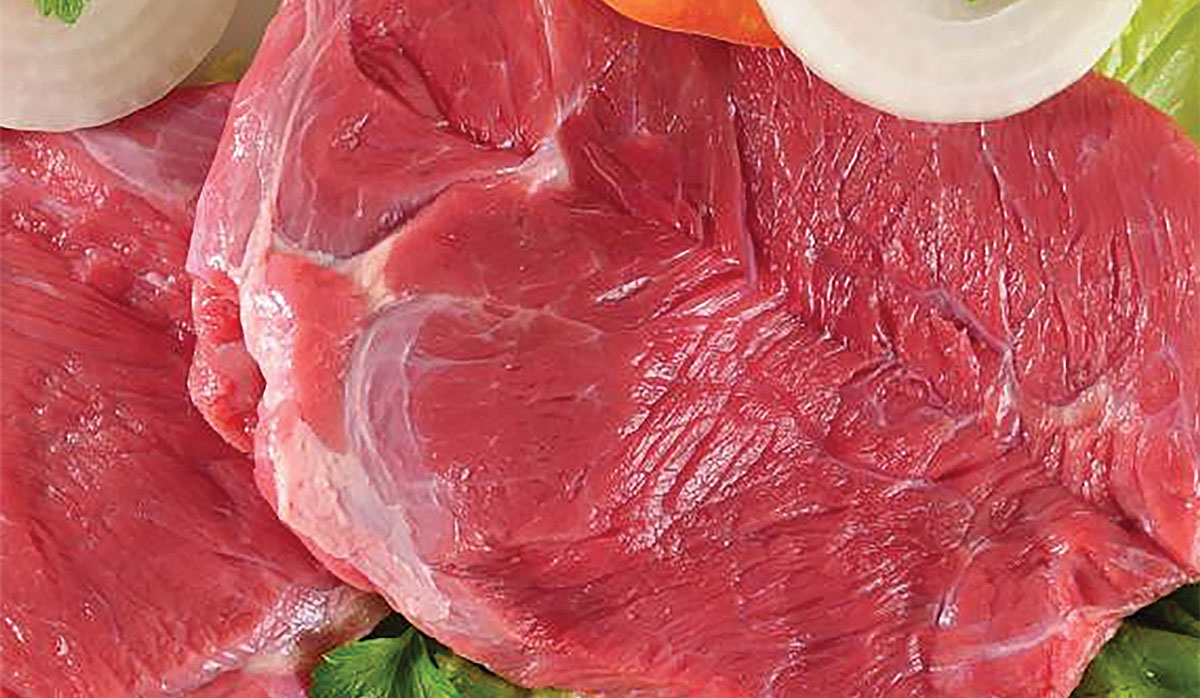
Batten is surprised the NZ meat sector has not applied our skills and expertise to producing, processing and marketing meat to the growing goat meat opportunity - especially in Asia. |
One leading exporter supplying a New Jersey marketing plant quotes $10.35 per kg for 6.2kg (14kg LW) and heavier carcases.
“Those prices should intrigue NZ farmers,” he says.
“While our current lamb prices are encouraging, Australian light lamb – shows their schedule dropping while the goat schedule increases, with a current 10% premium,” Batten claims.
He says that comparison and improving prices in the market has increased Australian farmers’ interest in producing goat meat.
He also noted that MLA has commenced a $5m five-year research package into improved reproductive rate and reduced kid losses.
Batten believes that the USA market is of particular interest, which will be covered in the next article.
“The fluctuating Australian supply is not helpful to market development and provides opportunities for our small supply of a different and better product.”
New Zealand needs to make sure that it continues to focus on its own food security, according to HortNZ board member and blueberry grower Dermott Malley.
Hill country farmers cannot ignore the goat meat market opportunities such as in North America, according to goat farming expert Garrick Batten. He outlines why in the third of his three part series on the topic.
The US goat meat market provides profitable potential for NZ hill country farmers, in Garrick Batten's opinion. From his extensive industry background, he discusses this potential in the second of three articles.
A network of study sites on hill country farms around New Zealand is now providing a wealth of information and research to help guide farmers around pasture forage decisions.
Prior to the 1600’s the liver was considered to be the most important organ in the body, much more so than the heart and the brain.


Farmer-owned fertiliser company, Ballance Agri Nutrients is welcoming National’s plan to negotiate security agreements with key supplier countries to protect New Zealand-bound products from export restrictions and greater supply chain certainty.

Carrfields has announced the appointment of Stu Hall to the newly created role of chief operating officer, Carrfields Ltd, reflecting the continued growth of their agribusinesses and the need to ensure the company has the leadership capacity and support in place as it pursues the emerging opportunities ahead.
New Zealand's role is not to compete with Indian growers, according to NZ Apples and Pears.
The potato industry is celebrating the success of two rising stars - James Blair, the 2026 Young Grower of the Year and runner-up and innovation award winner, Amber Davy.
Twenty-eight emerging leaders from across the horticulture sector spent two days last month learning valuable skills and connecting with industry experts.
There are five entrants in this year’s Young Horticulturist of the Year, competing in a series of technical, practical, business and leadership challenges.