Foliar feeding 'lifts N efficiency'
Research findings published in Europe support the concept of foliar fertilisation or foliar feeding in improving nitrogen use efficiency (NUE) while maintaining pasture productivity.
 increase font size
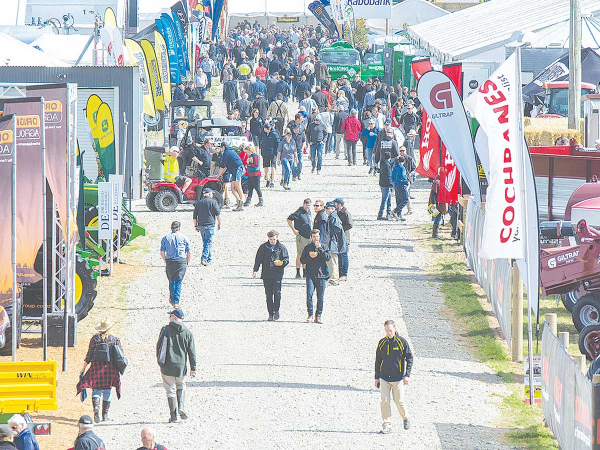 The three-day SIAFD usually attracts between 20,000 and 25,000 visitors over the course of three days of the event to its Kirwee site on the outskirts of Christchurch.
Organisers of the 2021 South Island Agricultural Field Days are looking forward to celebrating the agricultural sector.
SIAFD chair Michaela McLeod says as a result of Covid-19, the sector, like so many others, has struggled.
“Not just from a financial perspective but from a social perspective as well,” she says. “There have been a number of A&P Shows and other events cancelled around the country. They are such important events for farmers and traders, and I know it’s been very hard on a lot of people not having them.”
McLeod reckons the South Island Agricultural Field Days, being held from March 24-26, at Kirwee, will be a big opportunity for the agricultural industry to get together.
The event will celebrate its 70th year in 2021 and is now one of the largest and longest running field days in New Zealand. McLeod says it will offer something to interest everyone – not just those in the agricultural sector.
“I’d say the technology sector has continued to advance this year, even with Covid-19.
“There are some exciting new innovations which people may have read about, but at the field days they will have a chance to see them, not only on display but in action. The working demonstration area has definitely expanded and we have made them more accessible to people.”
The event attracts between 20,000 and 25,000 visitors over the course of three days to the Kirwee site on the outskirts of Christchurch.
McLeod estimates if someone was to walk around and visit every single attraction it would be about 10km of walking.
“That’s why we encourage people to come over at least a couple of days and take it easy. It is, however, doable in just a day.”
This is McLeod’s first year in the role as chair and it’s a position she has worked towards after more than 10 years on the organising committee, in a number of different duties.
“I really enjoy working with the fantastic bunch of people on the organising committee. I have got to know a lot of them well over the years in my various roles and they are some of the hardest working people you could ever meet.”
McLeod is a mother to two young children and along with her husband Ben runs an agricultural research business which conducts independent trials.
She says when she took the helm of the event for 2021 there wasn’t anything that needed changing.
“It’s already a very successful formula; I think the fact it’s been running for 70 years is testament to that. We had a social function earlier this year with past members from organising committees and stalwarts of the event. It was wonderful listening to their stories about what it was like in the earlier years of the event and just how much it has grown over the years.”
McLeod says a key component of the events success is the support from the local Selwyn Community.
“We love all the support we get and it’s really important for us to be able to outsource jobs to community groups. We always need help with things such as car parking so if anyone wants to get involved, we would love to hear from them.”
Research findings published in Europe support the concept of foliar fertilisation or foliar feeding in improving nitrogen use efficiency (NUE) while maintaining pasture productivity.
With less than five months until the South Island Agricultural Field Days kicks off, organisers are feverishly putting the finishing touches to the upgraded Kirwee site and still finding room for exhibitors keen to be part of the South Island’s largest agricultural event.
After celebrating its 70th year last month, it looks like the South Island Agricultural Field Days (SIAFD) has hit its heights - with most exhibitors spoken to considering it to now be the 'best' field day of any sort in the country.
JCB and Amazone will be on show at the CLAAS Harvest Centre display at the South Island Agricultural Field Days.
The machinery demonstrations are a major part of the biennial South Island Agricultural Field Days.


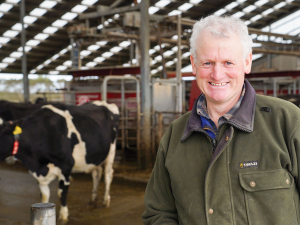
In Dacre, near Invercargill in New Zealand’s South Island, Bruce Dinnington is running a dairy operation unlike any other.

A free online platform aggregating governance vacancies across rural and regional New Zealand has been launched.
Environment Minister Nicola Grigg has announced details of a new rural plastics recycling scheme.
Agricultural drone operators say that a government decision to allow lower-risk drone work without certification won’t lower standards but drive innovation and efficiency.
OPINION: Warning bells are ringing in the arable sector.
Farmgate lamb prices are down by 8%, beef cattle by 4.5% and farm expenditure up by 4.2%.