DairyNZ chair wants cross-party deal
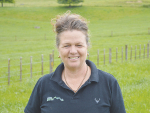
New DairyNZ chair Tracy Brown says bipartisan agreement among political parties on emissions pricing and freshwater regulations would greatly help farmers.
 increase font size
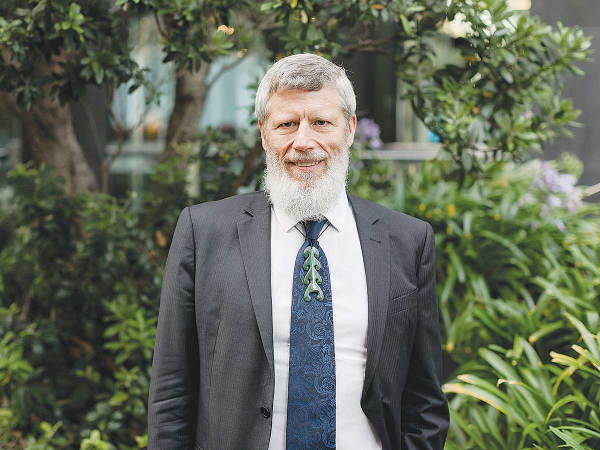 Climate Change Commission chair Rod Carr.
Questions have been raised by Beef + Lamb New Zealand regarding the Climate Change Commission’s recent emissions trading recommendations.
In a report, released earlier this month, the Commission recommended a basic farm-level emissions pricing system using elements of the He Waka Eke Noa proposal.
However, there are two major sticking points with its recommendations for industry good organisations: fertiliser emissions pricing and sequestration.
The Commission is advising for synthetic nitrogen fertiliser to be priced at the manufacturer and importer level.
It states that pricing synthetic nitrogen fertiliser at this level, as opposed to the farm-level pricing He Waka Eke Noa recommends, would achieve “a more broad and equitable coverage for emissions from synthetic nitrogen fertiliser across the country”.
However, Beef + Lamb New Zealand’s general manager, policy and advocacy Dave Harrison disagrees with that analysis.
“Every farm is unique, so it is important that an individualised approach is taken,” says Harrison.
He told Rural News the He Waka Eke Noa system is designed to help farmers manage emissions through their whole farm system, combining key information from a range of areas.
“If individual components such as fertiliser emissions are taken out from farmer’s calculations, their ability to manage and reduce their own farm emissions will be affected,” Harrison says.
“Because funds raised through the emissions pricing system will be reinvested back into research and development, taking components out of that system will also reduce the amount of funding for R&D.”
Another major sticking point is that of sequestration, with the Commission recommending this be priced through the New Zealand Emissions Trading Scheme (ETS).
“Recognising non-NZ ETS sequestration through on-farm vegetation as suggested by the He Waka Eke Noa proposal should be progressed in a separate system, which could recognised and reward a wide range of benefits, such as biodiversity and water quality,” the Commission’s report states.
That won’t do, says Harrison.
“A lot of the vegetation on sheep and beef farms does not qualify for inclusion in the ETS because it does not meet the definition of a forest, and farmers have had difficulties registering exotic forests in the ETS,” he says.
“If farmers are to face a price for agricultural emissions, it’s only fair they get credit for their sequestration.”
Harrison says He Waka Eke Noa recognises what farmers are doing to reduce emissions on their individual farms.
“It would give farmers ability to control their own farm emissions, which will incentivise behaviour change as part of an integrated farm management approach.”
New DairyNZ chair Tracy Brown says bipartisan agreement among political parties on emissions pricing and freshwater regulations would greatly help farmers.

First up to the podium at the recent Tractor and Machinery Association (TAMA) Conference in Wellington, Minster for Agriculture, Todd McClay, reflected on a difficult 12 months, but hinted at signs that things were turning the corner, saying “when ag does well, New Zealand does well”.
A horror story - that’s how Federated Farmers describes new research looking at forestry conversions’ impact on water quality.
OPINION: When Groundswell showed up in the 'advocacy hub' at Fieldays alongside the same groups that brought you He Waka Eke Noa, the Hound feared the ginger group had been brought into the woke fold and given the old rubber ring.
OPINION: Industry-good bodies have had a torrid time recently, with some facing backlash from farmers particularly over their stance on emissions pricing and He Waka Eke Noa.


A major move is about to get underway to improve the quality and viability of dairy beef and cattle in NZ.
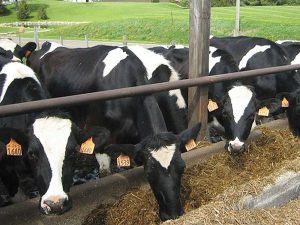
Veterinarians say changes to the code of welfare for dairy cattle provides a positive foundation for improved cattle welfare across the country.
Today, 15 October, is the International Day of Rural Women, which recognises rural women’s contribution to farming, communities and the environment.
Global dairy giant Lactalis has integrated its Australian operations with the Mainland Dairy consumer business it acquired from Fonterra earlier this year.
After almost two decades of sharemilking, saving and building equity, Aaron and Marcia Flay this year realised their long-held dream of settling on their first dairy farm.
Good medium to long term prospects for NZ beef, especially in the US, has heighted the focus on various initiatives to capitalise on this situation.