
Canterbury Boosts Wallaby Control With $2M Funding Push
Wallaby control efforts in Canterbury have received a major boost, with Canterbury Regional Council releasing $2 million from its Pest Management Reserve.
 increase font size
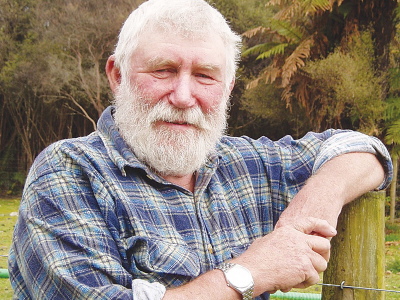 Laurie Collins - manage wallabies for meat, hides and fur.
A conservation and hunting lobby has criticised a call by Environment Canterbury for more funding to prevent a national plague of wallabies.
Laurie Collins, of Sporting Hunters Outdoor Trust, a conservation and hunting advocacy, has accused bureaucracies and some extreme environmentalists – such as Forest and Bird – of suffering from ‘pest panic phobia’.
His criticism follows recent calls by Forest and Bird for the Government to urgently fund wallaby extermination before they reach “plague proportions”.
Forest and Bird central North Island regional manager Rebecca Stirnemann claims wallabies could spread over a third of New Zealand within the next 50 years unless they are killed in large numbers.
However, Collins, who was for many years involved in wild animal work with the NZ Forest Service, rabbit boards and regional bodies, says Forest and Bird’s culture is wrong, wasteful and impractical.
“Too often Forest and Bird sees the solution as drenching the countryside with poison and thereby ignoring prudent, practical management.”
Collins said wallabies were introduced to NZ in the 1870s – almost 200 years ago.
He claims their spread from the South Island liberation point at Waimate had been “very gradual and slow”.
Collins said he doubts the accuracy of Forest and Bird’s claim that “wallabies have already been sighted in fresh territories in Auckland, Northland, Hawke’s Bay, Gisborne, Wellington, Marlborough, Southland and the West Coast”.
He believes any wild animal should be treated as a resource.
“If numbers are considered too high there should be a harvest and where possible utilisation of the carcases.”
Collins says kangaroo meat is considered a dining delicacy and so should wallaby.
“It is wasteful and immoral in a world crying out for food in the face of steadily climbing human numbers, to leave carcases to rot,” he said.
He says another use could be pet food manufacture.
“Pet food manufacture using possums was done successfully some years ago by a Bay of Plenty factory, but export markets collapsed when Japanese authorities learned of NZ’s 1080 poison spreading,” Collins said.
“It is simply a matter of having a constructive attitude instead of a mindless, unscientific dogma of hate and cruelty.”
Wallaby control efforts in Canterbury have received a major boost, with Canterbury Regional Council releasing $2 million from its Pest Management Reserve.

Newly released data from Environment Canterbury (ECan) Farm Environment Plan (FEP) audits are showing a dramatic lift in environmental performance across the region.
Buying or building a rural or semi-rural property? Make sure you know where the wastewater goes, says Environment Canterbury.
OPINION: Canterbury grows most of the country's wheat, barley and oat crops. But persistently low wheat prices, coupled with a high milk payout, are believed to be driving farmers out of the industry in the hunt for the dairy dollar, according to media reports.
Environment Canterbury, alongside industry partners and a group of farmers, is encouraging farmers to consider composting as an environmentally friendly alternative to offal pits.


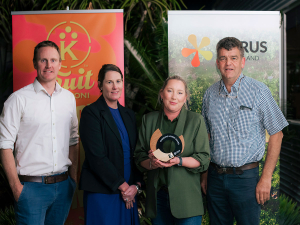
New Zealand's citrus growers were challenged to build their future on the value embedded in their fruit rather than the volume they produce, at Citrus New Zealand's annual gathering in Gisborne on 17 September.
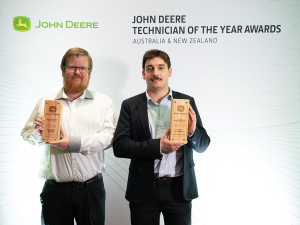
Leading John Deere technicians and apprentices from New Zealand and Australians were recognised at the recent sixth annual JD Technician of the Year Awards, held in Brisbane.
In Dacre, near Invercargill in New Zealand’s South Island, Bruce Dinnington is running a dairy operation unlike any other.
A free online platform aggregating governance vacancies across rural and regional New Zealand has been launched.
Environment Minister Nicola Grigg has announced details of a new rural plastics recycling scheme.
Agricultural drone operators say that a government decision to allow lower-risk drone work without certification won’t lower standards but drive innovation and efficiency.