Rural NZ Welcomes $8.5m Government Health Package
Rural New Zealand is welcoming the Government’s recent package of rural healthcare initiatives.
 increase font size
 Hauora Taiwhenua chair Dr Fiona Bolden describes the decision not to offer pay parity to general practice nurses as a kick in the guts for rural nurses.
Another kick in the guts for rural nurses.
That’s how Dr Fiona Bolden – chair of Hauora Taiwhenua, which represents rural GPs – is describing Health Minister Andrew Little’s decision not to offer pay parity to nurses who work in general practice.
Bolden says on the one hand Little claims he is committed to pay parity with nurse in places such as aged care facilities, but she’s been advised that there is no plan to extend this to nurses who work in general practice.
Bolden says this is a totally devastating decision, not only for practice nurses, but also for the whole general practice team and the communities they serve. She says there is ample evidence of the disparity between pay for nurses in general practice and pay for nurses who work for DHBs.
“General practices, particularly in rural areas, are already struggling to meet the demands placed upon them. They were fundamental to the rollout of Covid vaccination programmes throughout NZ, and a significant factor in getting vaccinations to target rates for rural and rural Māori populations,” she explains.
“Yet for some reason the Minister, who in promoting the health reforms, stated that there was to be a major shift in emphasis towards primary and community care, has once again ignored those efforts,” she says.
Bolden says that, while Little says it is time to start addressing the pay rates of those health workers who don’t work for Te Whatu Ora, he also says that for GP nurses there is no “real evidence of pay difference at this point”.
“This will do nothing to address the continual drain of nurses from general practice to other more well paid and less demanding roles and to overseas jobs which are far more lucrative,” she adds.
hardworking, dedicated health professionals are the backbone of healthcare in the community, and they need recognition by at least being paid equitably to their DHB counterparts. She adds that small rural general practices and communityfunded rural hospitals do not have the financial flexibility to be able to increase their wages to the DHB equivalent.
“With the Christmas holidays coming up, we are still expected to keep general practices open and provide 24/7 care,” Bolden says. “We hope that we can help the Minister see how untenable this is without fair pay across the sector.”
Rural New Zealand is welcoming the Government’s recent package of rural healthcare initiatives.

Doctors and rural women are welcoming the recent pre-budget announcement from the Government that it would be boosting funding to urgent and afterhours care facilities.
While healthcare itself got a $5.5 billion investment in Budget 2025, rural doctors are sounding the alarm about growing health inequities in rural New Zealand.
According to Hauora Taiwhenua Rural Health Network’s Rural Health New Zealand Snapshot 2024, those in rural areas have poorer health outcomes than those in urban areas.
As the National Rural Health Conference 2024 approaches, Fiona Bolden, chair of Hauora Taiwhenua, and Grant Davidson, chief executive of Hauora Taiwhenua, talk about the conference's significance in addressing rural healthcare challenges.



Now in its fourth year, the 2026 Fencing Industry Awards, formed part of the proceedings of the FCANZ Conference, held in Nelson during August.
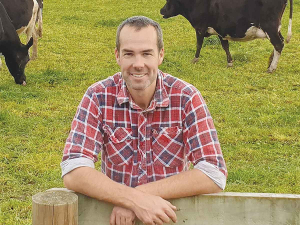
DairyNZ deputy chair Cameron Henderson has been re-appointed unopposed for another term.
OPINION: The stats speak for themselves.
Farms across the upper North Island are trialling different pasture mixes as part of a research programme that aims to build greater resilience into farming systems.
Election years are always a concerning time for farmers, according to DairyNZ chair Tracy Brown.
The Ballance Farm Environment Awards are coming to the West Coast of the South Island.