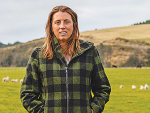
MIA Chief Executive Nick Beeby on Meat Industry Challenges and Cooperation
Meat Industry Association chief executive Nick Beeby says there’s now much closer cooperation between meat processing companies than there was many years ago.
 increase font size
 New Zealand Farm Assurance Incorporated chair Nick Beeby.
More than 8,000 farm businesses have signed up to the New Zealand Farm Assurance (NZFAP) programme, along with growing numbers of red meat and wool companies.
New Zealand Farm Assurance Incorporated (NZFAI) chair Nick Beeby outlined the growth in membership over the past year at the NZFAI annual general meeting in Wellington on Thursday 19 May.
The number of NZFAP-registered suppliers has grown by more than 700 and the number of businesses has more than doubled in the last year.
“There are now more than 40 red meat and wool companies and industry organisations working together for the good of the primary sector and that can only be a good thing,” said Beeby.
He said that’s important because the opportunities and challenges facing the sector are greater than any singular organisation can face on its own.
A key priority over the past year had been to engage with the wider wool and dairy sectors to grow membership and cover a wider number of farmers and animals.
“It has been rewarding to see 23 wool companies seek and gain membership over the year. Ultimately, NZFAI is delivering. We are increasing the number of registered farmers and reducing duplication, the number of audits and costs across the industry.”
Megan Mounsey-Smith, general manager of NZFAI, said other key priorities included ensuring all its standards were fit for purpose and future proofed, with the latest version of the NZFAP rolled out in October and the new voluntary on-farm standard NZFAP Plus going live.
“We now have an independently audited standard, which ensures we are future focused and that our farmers and meat companies can be recognised as global leaders in the growing conscious consumerism trend.”
Mounsey-Smith said that in a recent Beef + Lamb New Zealand survey of 500 farmers, 38% indicated interest in becoming NZFAP Plus certified.
A programme is also due to get underway to digitise the organisation’s assurance process to ensure seamless transfer of data across supply chains.
“Being future focused is not just about the standards, but about how we collect and receive supporting audit evidence, making the process as easy as possible for farmers and auditors, and ensuring our members can extract as much value from the market as possible.”
Meat Industry Association chief executive Nick Beeby says there’s now much closer cooperation between meat processing companies than there was many years ago.
New Zealand's red meat and fifth-quarter exports reached $867 million in August, up 23% on the same month last year, as stronger returns lifted earnings across all major markets.
Meat Industry Association data, released alongside the Red Meat Sector conference in Wellington, shows export value climbing across the US, China, UK and Canada.
Esther Guy-Meakin has been announced as the new chief executive of the New Zealand Meat Board (NZMB).
New Zealand red meat exports reached a second consecutive monthly record in May, rising to $1.6 billion, according to the Meat Industry Association.

Halter has launched Mav, an AI farming assistant that lets dairy farmers ask questions about their herd and pasture and get answers drawn from the data the company’s collars already collect.

OPINION: At first glance it appears that Father Christmas has delivered the rural sector good tidings, with most pundits predicting the return of the centre-right coalition.
For 15 years, Glenda Rees has travelled from Gore to Awarua, often several times a week, to keep watch over one of the country’s rarest birds.
With some farmers opposing a government-industry partnership set up to develop methane reducing products, one NZ company claims that it already has a product on the market.
During the nesting season, from September to December, industrious starlings can quickly build nests in the darker areas behind tractor and vehicle, usually close to hot engines, typically resulting in localised damage or in some cases complete write-offs.
The meat processing industry is much more collegial than it was in the past and is now more focused on common goals.