Don't get caught with worms you can’t kill.
That’s the message from Beef + Lamb New Zealand’s Wormwise programme, as farmers look ahead to the management of lambs and dairy beef calves for the summer and beyond.
Wormwise programme manager Ginny Dodunski says that supply of the so-called ‘novel’ drenches, Zolvix and Startect, is likely to remain constrained this season, as it was in 2022.
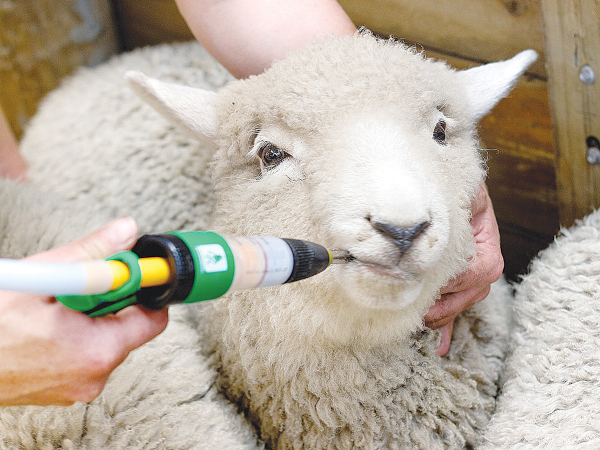
“Last autumn, I received calls from vets and farmers with sick lambs suffering from triple drench resistant parasites, and nothing to treat them with,” she says. “By the time these farmers realised they had worms that could survive a triple drench, the lambs were actually very sick. Even once you treat them with a different drench family, they take a long time to turn around.”
There are also dairy support blocks and dairy beef rearing properties where triple drench resistant worms have developed.
Zolvix contains the active Monepantel and Startect contains Derquantel. Both have been available for about 12 years. However, these have generally been reserved for special treatments such as quarantine drenching, knockout drenching and on farms where combination resistance has already been diagnosed.
Both products are registered for sheep. Only Zolvix is able to be used in cattle.
Dodunski says on the ‘average’ farm, these products should be highly effective at removing resistant parasites.
However, the manufacturers of both products (Elanco for Zolvix and Zoetis for Startect) advise that due to manufacturing issues, they are unlikely to be able to meet market demand in New Zealand this autumn. Both are constrained by the manufacturing plants which make their active ingredient – unique molecules with a limited use case that are in a queue for constrained plant space and time.
“Re-sellers will already have forward supply arrangements in place with clients who have planned ahead for needing Zolvix and Startect,” Dodunski explains.
“A farmer who has not been doing any monitoring and suddenly finds they have sick and dying lambs with combination- resistant worms in autumn 2024 may find that there is nothing available to treat those lambs with.”
She says the best thing farmers can do is to check the performance of their routine drenches now.
“Collect 10 fresh faecal samples from lambs or calves after drenching – 7 to 10 days later for lambs and 14 days for calves. Options for testing are your local vet clinic or FecPak, and there are some private providers out there too. Ask around for the most efficient option for your area.”
Dodunski explains that if your drench is working well, there should be no eggs present after drenching.
“If eggs are still present, it’s time to start some conversations about where to from here. It’s not just about what product to use next time – how many young stock should you be trying to finish?”
She says this should cover things like what’s the best feeding and management for those – are there ways of allocating feed or organising rotations that reduce the worm challenge. Questions should be asked if ewes or other breeding stock are as well set up as they could be and would it be a better use of feed to get them sorted before it gets dry?
“Find out how well your drench is performing – it’s easier to act early than to deal with an ‘outbreak’ of resistant worms later in the season,” Dodunski concludes.
About Wormwise
Wormwise is a pan-industry collaborative effort, funded and run by Beef + Lamb New Zealand with input from the NZVA, APHANZ, DairyNZ and MPI to give farmers tools and skills to fight parasite resistance on their property.