BVD Control: Why One Measure Isn't Enough for NZ Herds
Bovine Viral Diarrhoea (BVD) remains one of the most significant infectious diseases affecting New Zealand dairy herds.
 increase font size
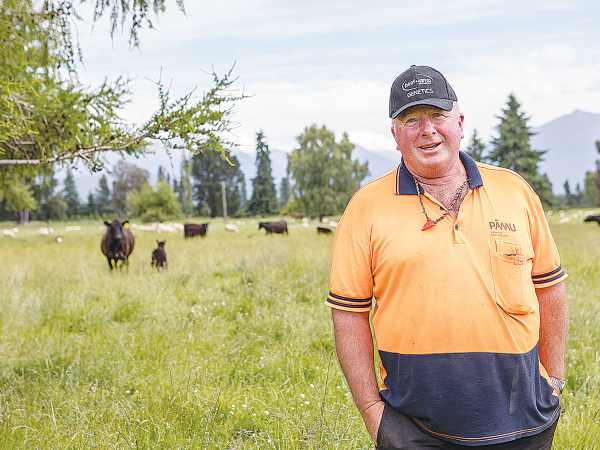 Kepler Farm manager Travis Leslie believes the benefits of hybrid vigour are becoming clear.
Progeny testing at Pāmu’s Kepler farm in Southland as part of Beef + Lamb New Zealand’s Informing New Zealand Beef programme is showing that the benefits of hybrid vigour could have a massive impact on the future of beef breeding.
Travis Leslie, farm manager at Kepler farm, said an initial progeny testing programme was set up to test the effects of hybrid vigour and to enable the development of an across-breed genetic evaluation, but this has since evolved to include greenhouse gas and feed efficiency trials.
“The aim is to improve the efficiency of beef operations through the use of hybrid vigour and help farmers make more informed decisions about bull purchases,” Leslie said.
In the trials, Angus bulls are crossed with Hereford cows, and vice versa. The progeny of these crosses are also bred.
Extensive progeny testing on all progeny is done to find the benefits of hybrid animals.
“For the across-breed analysis, we create an index to compare bulls across breeds.”
Although it is still early in the trial period, the benefits of hybrid vigour are becoming clear, Leslie believes.
Hybrid vigour gives the opportunity to grow out larger cattle, or finish earlier.
Industry theory is that hybrid cows will have better longevity, he says.
It is also early in greenhouse gas and feed conversion trials, however it would stand to reason that a crossbred animal that is finished earlier than a purebred would convert feed better, he said.
“The animal that’s around for the shortest stay is the most methane friendly.”
cohorts of heifers, totalling about 250 individuals so far, to greenhouse gas trials taking 6-8 weeks over the winter.
This year, they travelled to Te Mania Angus in Canterbury for the measurements and also had feed intake measures taken.
The quietness of the heifers is a testament to the Kepler staff’s approach to animal handling and care, he said.
With the animals supplied by Pāmu, the trials were a collaboration between geneticists from Beef + Lamb New Zealand’s Informing New Zealand Beef programme, scientists from AgResearch and Te Mania Angus Stud.
programme is to measure feed efficiency and methane in cattle in a bid to develop new traits specifically for the beef industry.
Head of genetics at B+LNZ, Dr Jason Archer, said the goal of the trial is to produce genetic tools that farmers can use to increase feed efficiency and reduce methane output, without reducing productivity.
“Ultimately we want a feed efficiency Estimated Breeding Value (EBV) and an EBV reflecting methane per kilo of feed eaten.”
Leslie said ongoing trials represent an important opportunity to drive advancements for the industry.
“There is immense value in fully recorded animals in what can be seen as a comprehensive genetics programme. There is also value in linking animals across different programmes and having extensive data that drive strong outcomes.
“In the future, farmers will become more discerning about the bulls they select and put a lot more thinking into their beef breeding systems.
“Harnessing the benefits of hybrid vigour is a way to get something extra from what you are already doing.”
He said Kepler farm is extremely proud to be part of the Informing New Zealand Beef programme and investing in the future of beef breeding. “I can see in the future that selecting bulls for beef breeding will become much more data driven and this will give the industry a real boost.”
Bovine Viral Diarrhoea (BVD) remains one of the most significant infectious diseases affecting New Zealand dairy herds.

State farmer Pamu has delivered its strongest operating result on record.
Bovine Viral Diarrhoea (BVD) is sometimes viewed as a dairy industry issue, but the reality is that the disease can have serious consequences for beef breeding herds as well.
When Simon Hales discovered triple drench resistance on his Weber farm, it was a catalyst to fast-track farm system change.
Beef+Lamb New Zealand and the Ag Emissions Centre have launched a new research project aimed at helping beef farmers reduce methane emissions without impacting productivity or profitability.


Alliance Group's $16 million programme to install innovative heat pump systems at its Otago and Southland processing plants wins a New Zealand Energy Excellence Award after cutting annual emissions by more than 24,000 tonnes of CO₂e.
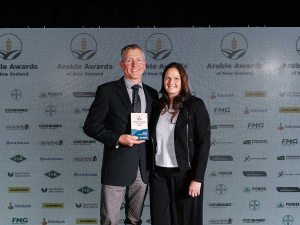
The arable sector losing good people and land is a major concern for the 2026 Arable Farmers of the Year, Mid Canterbury seed growers John and Mel McCaw.
The terrible floods that hit the Wairarapa may have subsided, but the danger to farmers still exists, according to local Federated Farmers president Rob Hickson.
New Zealand's Emissions Trading Scheme (NZ ETS) encourages afforestation while not achieving climate goals, says a new report released by the Parliamentary Commissioner for the Environment, Simon Upton.
Are you ready for El Nino? That’s the question asked by Beef+Lamb NZ’s Ian Tarbotton who leads B+LNZ’s farm extension service.
Bigger, bolder salads packed with colour, crunch and flavour are making headlines overseas — and the arrival of fresh spring vegetables means New Zealanders can now get chopping too, creating their own Great Kiwi Spring Salad.