Inside the Southland Dairy Farm Where Robots and Pasture Work Together
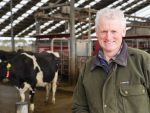
In Dacre, near Invercargill in New Zealand’s South Island, Bruce Dinnington is running a dairy operation unlike any other.
 increase font size
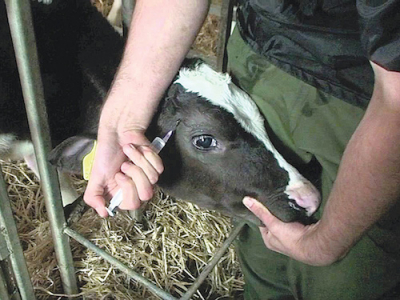 Vets have welcomed the new animal welfare regulations – including pain relief for debudding cattle.
Pain relief for disbudding cattle will be mandatory under new animal welfare regulations.
It is among 46 new regulations under the Animal Welfare Act (1999) recently announced by the Minister for Primary Industries Nathan Guy. The disbudding regulation will come into effect in October 2019 to give time for the industry to prepare.
The New Zealand Veterinary Association (NZVA) has welcomed the new regulations and believes they’re a win for the wellbeing of our animals and further reinforce NZ’s internationally recognised animal welfare standards.
The new regulations set out a number of changes supported by the NZVA including:
Cattle disbudding: pain relief when disbudding cattle will be mandatory under the new regulations.
“The NZVA has long signalled the importance of pain relief for procedures such as this. It views pain relief for disbudding as being accessible, practical, effective, and affordable."
Animal transportation: the proposed regulations will make existing restrictions on the trucking of lame, diseased, or ill animals enforceable.
“This reinforces the critical role veterinarians have to play in NZ in protecting animal welfare through ensuring that only animals fit and sound are transported."
NZVA also notes that tail docking in dogs and removal of front dew claw in dogs will be banned.
"The NZVA acknowledges the enormous amount of work and consultation that has gone into the development of these regulations and we applaud the ministry’s commitment to animal welfare in delivering them," NZVA head of veterinary services Dr Callum Irvine says.
Guy confirmed 46 new animal welfare regulations will be developed this year.
“Changes we made to the Animal Welfare Act in 2015 have allowed us to create directly enforceable regulations. This has given the act more teeth, and creates more tools to deal with mistreatment of animals,” says Guy.
“These 46 regulations include stock transport, farm husbandry, companion and working animals, pigs, layer hens and the way animals are accounted for in research, testing and teaching.
“These follow the young calf and live animal export regulations which we fast-tracked and introduced last year. They helped to reduce by at least 50% the mortality rates for bobby calves during the 2016 season.”
Last year, the Ministry for Primary Industries consulted on 91 animal welfare regulations and received at least 1400 submissions from a wide range of individuals and organisations, all with different perspectives on animal welfare.
MPI will now focus on having the next 46 regulations ready by the end of this year and to come into effect by October 2018. The delay will enable farmers, processors, truckers and others to get their systems are up and running before the new regulations take effect.
The remaining regulations consulted on last year will be considered in a third package of work in 2018, for introduction in 2019.
“In 2014, NZ’s animal welfare system was ranked first equal out of 50 countries assessed by the global animal protection charity World Animal Protection,” says Guy.
“Animal welfare is extremely important to NZers and to our international consumers. We take good care of our animals but one bad incident can damage our reputation.
“That’s why these new regulations are important, providing greater enforcement and helping protect animals.”
In Dacre, near Invercargill in New Zealand’s South Island, Bruce Dinnington is running a dairy operation unlike any other.

Rural leader Mark Hooper has been appointed as an independent director to the NZPork board, bringing extensive farming, governance and advocacy experience to the role.
Climate, nature and animal wellbeing make up Fonterra's refreshed sustainability roadmap released last week.
B+LNZ's Wormwise veterinarian Mary Bowron has won the Best Sheep and Beef Vet of the Year Award in recognition of her outstanding contribution to New Zealand’s sheep and beef sector.
With lambing underway in many regions, Beef + Lamb New Zealand is encouraging farmers to put together a wellequipped lambing kit to help minimise lamb losses, particularly in bad weather.


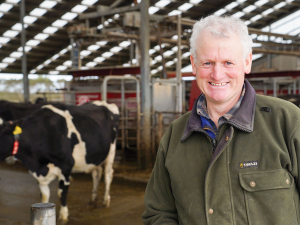
In Dacre, near Invercargill in New Zealand’s South Island, Bruce Dinnington is running a dairy operation unlike any other.

A free online platform aggregating governance vacancies across rural and regional New Zealand has been launched.
Environment Minister Nicola Grigg has announced details of a new rural plastics recycling scheme.
Agricultural drone operators say that a government decision to allow lower-risk drone work without certification won’t lower standards but drive innovation and efficiency.
OPINION: Warning bells are ringing in the arable sector.
Farmgate lamb prices are down by 8%, beef cattle by 4.5% and farm expenditure up by 4.2%.