Commercial farmers can be sure estimated breeding values (EBVs) for calf weaning weights will deliver what they predict.
Initial results from the Beef + Lamb New Zealand (BLNZ) Genetics beef progeny test are rolling in and the second lot of calves is due on the ground in coming weeks.
The test is being run on five large commercial properties and involves about 2200 cows and heifers each year. Its goal is to determine how bulls of different types perform under comparable commercial conditions. It aims to put a dollar value on the worth of superior genetics, from the perspectives of breeding cow performance and finishing stock's carcase attributes.
BLNZ Genetics general manager Graham Alder says there are now three key results for commercial farmers to note.
"The most significant result so far is around the estimated breeding value for weaning weight. More than 80% of the expected weaning weight advantage predicted by estimated breeding values is being realised on NZ commercial farms."
He says farmers should be reassured by the results.
"They were achieved on five large-scale farms, in different breeds and with proven bulls that could be purchased by commercial farmers at most bull sales," Adler says.
"The key point is that the calf weaning weight EBV will largely deliver what you expect. So, if you want heavier calves, choose bulls with heavier 200-day weight EBVs."
Lead scientist Dr Jason Archer says the other two key findings relate to cow mating – specifically, artificial insemination (AI) results and the impact of cow condition at mating.
"AI success improved markedly between year 1 and 2 of the test, likely due to improved cow body condition scores, more feed handy to yards, quieter cattle and a tighter calving period resulting from the success of the year 1 AI programme."
Archer says the other noteworthy point for commercial farmers is the importance of body condition score at mating.
"Analysis of the project's pregnancy data against body condition score reinforces what we already know: a better condition score is important for re-breeding. For reproductive success, a minimum score of 6 at mating is recommended, but greater than 7 is optimal."
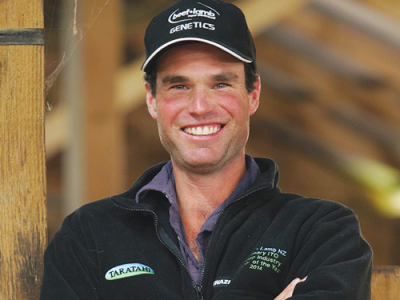
Tautane Station is one of the five properties involved in the test. The 3700ha station is owned by Ngati Kahungunu and leased to the Taratahi Agricultural Training Centre. Manager Matt Smith says that, while it is early days for test results, everything to date is positive.
"There will be some great information come out in about 12-15 months. For instance, I'm looking forward to seeing how the heifers perform, particularly those from high-growth sires. Will they stand up to our commercial conditions?"
Smith says it all comes back to efficiency.
"I don't want big cows. I want a cow that will work hard over winter, hold her condition, get in calf and produce a calf that grows well."
The role of body condition scoring has also made an impact on Tautane.
"We are now managing our herds around body condition scores, particularly at weaning time," Smith adds. "We've always scored them, but by eye. Now we have a figure and we are all on the same page. The aim is a score of 7 at mating."
Smith says the use of AI has not passed him by.
"We are looking at using it on a commercial basis. It opens up such a large pool of genetics, and from bulls we could never afford to buy."