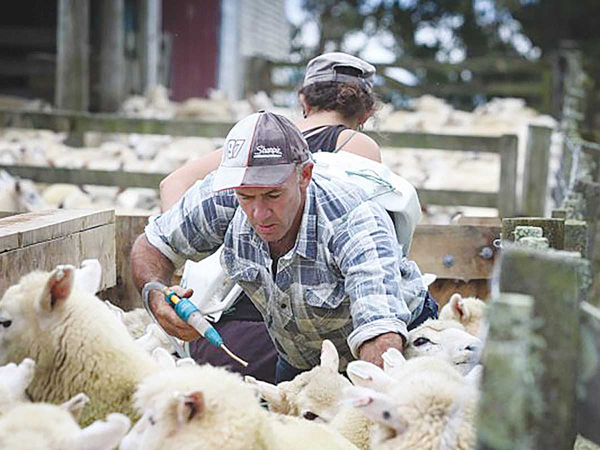
AI is being used to report on samples with high parasite counts ensuring farmers with high FECs (faecal egg counts) receive results within minutes.
Faecal samples processed through FECPAKG2 are analysed utilising the speed and power of AI and when results are high – more than 700epg in sheep and horses – a preliminary FEC result is reported within a few minutes. This is followed a short time later with a confirmed count from this new technology.
Techion – the company behind this new technology – believes this innovation will help farmers make faster decisions for animals requiring immediate parasite treatment.
“We hope providing near-instant FEC results when testing using FECPAKG2 will encourage more farmers to test more often,” says Techion founder and managing director Greg Mirams.
“The ability to make fast informed decisions is an important development for farmers managing the welfare and performance of their livestock. We process tens of thousands of FEC tests annually from farms across New Zealand and we are recording increased variability of results and at times, higher parasite challenges than in previous years.”
Mirams says the double whammy of climate change and increasing drench resistance means the usual pattern of the parasite challenge, which farmers have traditionally observed, is changing.
“This means regular FEC testing is a crucial aspect in effectively managing parasites throughout the year.”
He adds that initiating fast AI generated FEC results for high tests was the first step in the company’s AI development.
Techion, the developer of parasite testing platform FECPAKG2, has partnered with AI developers Aware Group to create the automated FEC result reporting technology. The more tests which run through the AI model over the coming months the higher its accuracy will become.
This will enable instant AI generated results for all tests for all production animals in the future.
FECPAKG2 is an onfarm parasite management system which processes FEC tests for sheep, equine, cattle and camelids, securely storing results. Its portable digital microscope – the Micro-I – takes photos of faecal samples and immediately sends the images to the cloud for analysis by AI and/or trained technicians.
The FEC results are securely stored on the platform, can be reviewed and can be used to understand which animals are at risk and which paddocks are parasite hot spots. All FEC results from FECPAKG2 are emailed to farmers and can be shared with approved advisors – such as vets – allowing them to make informed treatment decisions.