Layered Plan Needed To Fight BVD
Bovine Viral Diarrhoea (BVD) is sometimes viewed as a dairy industry issue, but the reality is that the disease can have serious consequences for beef breeding herds as well.
 increase font size
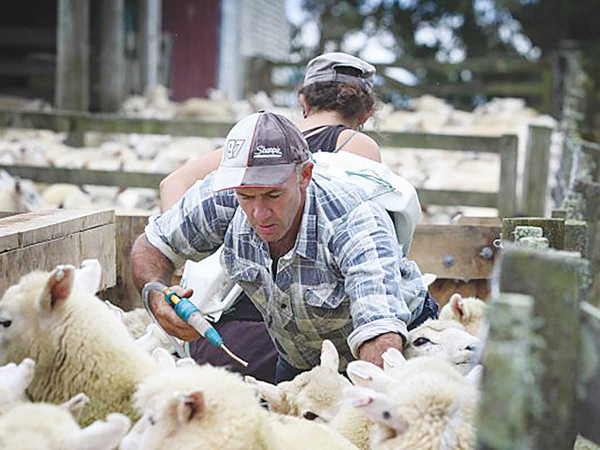 Managing internal parasites is not as simple as just drenching lambs every 28 to 30 days.
Drenching routines are well underway for many lamb finishers.
However, it is important to know the efficacy of the drenches used and to take a whole farm management approach to internal parasite management.
Beef + Lamb New Zealand’s senior advisor animal welfare and biosecurity Will Halliday says a ‘Drench Check’ (Faecal Egg Counts (FECs) carried out 7- 12 days after drenching) will give an indication of the efficacy of the drench they’ve used and/or their drenching technique.
If there are still eggs present, and problems with drenching technique such as a faulty gun can be eliminated, then a FEC Reduction Test will be required to determine what drench families are still effective on their property.
Halliday says a lot of farmers still don’t know the drench status of their farms.
He adds that using ineffective drenches are not only a waste of money, but they are also not good for the longterm sustainability of the farm.
“Managing internal parasites is not as simple as just drenching lambs every 28 to 30 days, you need to look at the whole farm management.”
These tools include using breeding, refugia, regular monitoring and the use of forage crops as part of a total management package.
He says that every farm and situation is different and variables such as the mix of livestock classes, irrigation, grazing management and seasonal variations will all influence the shape of an internal parasite management programme.
Get Worm Wise
Wormwise is the national worm management strategy – which aims to help farmers and their advisors to manage worms sustainably.
It brings together industry experts to manage and integrate research work, education, communication and extension services for the benefit of farmers, veterinarians, key influencers and retailers.
For more information go to: www.wormwise.co.nz
Bovine Viral Diarrhoea (BVD) is sometimes viewed as a dairy industry issue, but the reality is that the disease can have serious consequences for beef breeding herds as well.

When Simon Hales discovered triple drench resistance on his Weber farm, it was a catalyst to fast-track farm system change.
Body Condition Score (BCS) is a critical element in managing the health and reproduction of the dairy herd.
Bull management involves ensuring the right number of healthy bulls for your herd, minimising stress and reducing injury risks.
It's easy to look over a lush spring paddock and assume cows are getting enough usable nutrition. But while fast-growing pasture can give plenty of volume, in high moisture, variable dry matter and uneven mineral profile can leave real nutrition gaps when cows need it most.



Testing confirms H5 bird flu in a single northern giant petrel, found dead on a remote Cape Palliser beach in the Wairarapa, says Dr Mary van Andel, the Ministry for Primary Industries' (MPI) Chief Veterinary Officer.

"What's for dinner?" may sound like a simple question, but for many Kiwi parents, answering it has become a job in itself.
Fifty Eight years ago, on the 16th of August 1968, August Claas, the founder of the harvesting company and father of Helmut Claas, personally presented a Claas Senator combine harvester to Scottish farmer John Steven.
New Zealand consumers are paying more for beef mince than ever before, with the average retail price now sitting above $24 per kilogram, according to Rabobank.
State farmer Pamu has delivered its strongest operating result on record.
Celebrating 50 years in the rural landscape of Central Canterbury and beyond, Ashburton-based Carrfields, has been the exemplar for all aspects of modern agriculture via its extensive range of services including supply, growing, agronomic advice and marketing.