As the pressure mounts to reduce herbicide use and deliver chemicalfree food, farms growing ridge crops are faced with a problem of reducing weed burdens to maintain yields.
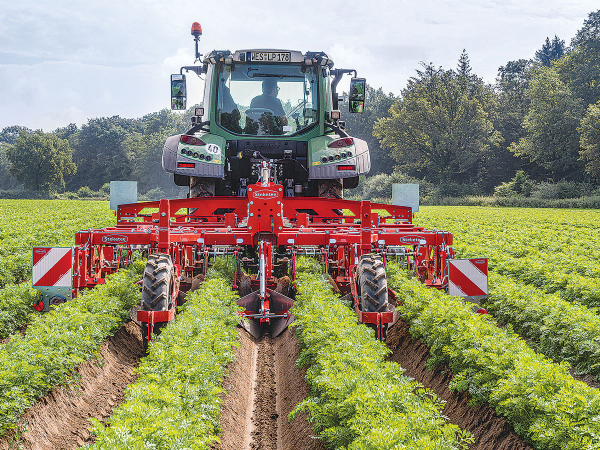
German machinery manufacturer LEMKEN offers a viable solution with its Steketee EC Ridger 5, 7 and 9 models, designed for 75cm row widths. The machine works in three stages. Hoeing discs cut weeds on the top and the sides of the ridge, spring tines loosen the voids between the ridges, before being followed by ridging bodies that reinstate the ridge to the desired profile.
The EC-Ridger 5 uses lightweight basic elements for removing weeds from the tops and sides of ridges. It can be front or rear-mounted and is suitable for use in lighter soils and with smaller crops which require less ridging.
The EC-Ridger 7, a rear-mounted unit, features the TRS hoeing element that is particularly well suited for working in difficult conditions. A leaf guard can be added to prevent crops from becoming damaged or buried when the implement hoes move along the sides and rebuilds the ridges.
As an option, the ridging bodies can be replaced by ridging discs for use in lighter soils. Meanwhile, a subsoiler option can be specified for more challenging conditions.
Also rear-mounted, the EC-Ridger 9 comprises a range of tool modules that can be used to adapt the machine to changing conditions and the various growth stages of a developing crop. Featuring a module with blades for hoeing on ridges and a module with hoeing discs for working in between ridges. Depth control wheels ensure that both elements maintain a precise working depth.
Complementary tools available include spring tines, subsoiler, ridging discs and ridging shares, with the individual modules easily selected using the quick-change implement system.
www.lemken.com