James Blair Named 2026 Young Grower of the Year
The potato industry is celebrating the success of two rising stars - James Blair, the 2026 Young Grower of the Year and runner-up and innovation award winner, Amber Davy.
 increase font size
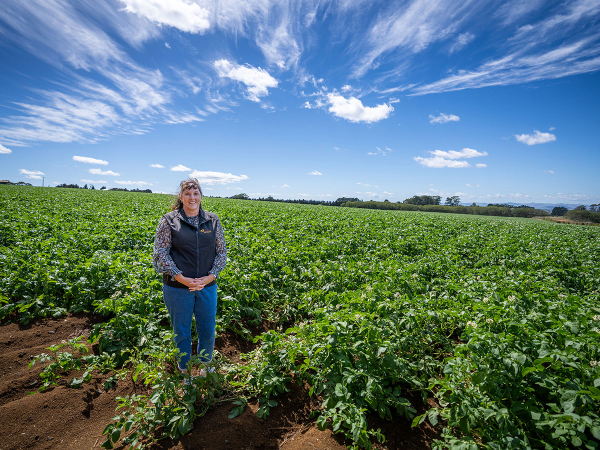 Potatoes NZ chief executive Kate Trufitt.
Potatoes New Zealand is reflecting on its legacy of innovation, resilience and a commitment to growers as it gets ready to mark its birthday on 17th April.
Kate Truffitt, chief executive of Potatoes New Zealand says the anniversary comes at a time when growers are under real pressure.
“Input costs remain high, markets are tight, and uncertainty continues to weigh heavily across the sector,” Trufitt says.
“While it’s important to acknowledge how far we’ve come as an organisation, our focus is firmly on supporting growers through the challenges they are facing right now – with practical tools, strong advocacy, and science-based solutions that help build resilience for the future,” she says.
The organisation was established in 2012 as a collective effort to represent growers.
Potatoes New Zealand says it has subsequently grown into a national voice championing potatoes in all forms and practical advocacy for the industry as a whole.
It has led research programmes to improve crop performance, invested in science to protect against pests and disease, and worked closely with government and partners to support the long-term viability of potato production in New Zealand.
Today, the organisation continues to evolve, with work spanning biosecurity readiness, environmental stewardship, innovation in sustainable farming systems, data-driven insights, and targeted support for domestic and export markets.
As Potatoes New Zealand marks its 14th year, it says it acknowledges the generations of growers, industry partners, researchers, and supporters who have shaped the sector through both good seasons and bad.
“Their resilience and commitment continue to underpin the strength of the industry today,” Potatoes New Zealand says.
The potato industry is celebrating the success of two rising stars - James Blair, the 2026 Young Grower of the Year and runner-up and innovation award winner, Amber Davy.
Where any worker in the kiwifruit industry is mistreated, we expect the authorities to take action.
Kiwifruit growers are watchful but remain optimistic as concerns around the potential effects of the El Niño weather pattern this season.
James Blair, an agronomist for AS Wilcox and the Pukekohe regional champion, has won the 2026 Young Grower national title.
Claimed to be the first autonomous robot for New Zealand vegetables growers, the first Kilter AX-1 unit has arrived in the country.


Farmer-owned fertiliser company, Ballance Agri Nutrients is welcoming National’s plan to negotiate security agreements with key supplier countries to protect New Zealand-bound products from export restrictions and greater supply chain certainty.

Carrfields has announced the appointment of Stu Hall to the newly created role of chief operating officer, Carrfields Ltd, reflecting the continued growth of their agribusinesses and the need to ensure the company has the leadership capacity and support in place as it pursues the emerging opportunities ahead.
New Zealand's role is not to compete with Indian growers, according to NZ Apples and Pears.
The potato industry is celebrating the success of two rising stars - James Blair, the 2026 Young Grower of the Year and runner-up and innovation award winner, Amber Davy.
Twenty-eight emerging leaders from across the horticulture sector spent two days last month learning valuable skills and connecting with industry experts.
There are five entrants in this year’s Young Horticulturist of the Year, competing in a series of technical, practical, business and leadership challenges.