Westpac Urges Farmers to Prepare Now for El Niño Drought
Westpac NZ is calling on farmers and growers to start preparing now for the possibility of a dry summer, as likely El Niño conditions raise the risk of drought across parts of the country.
 increase font size
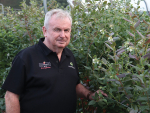
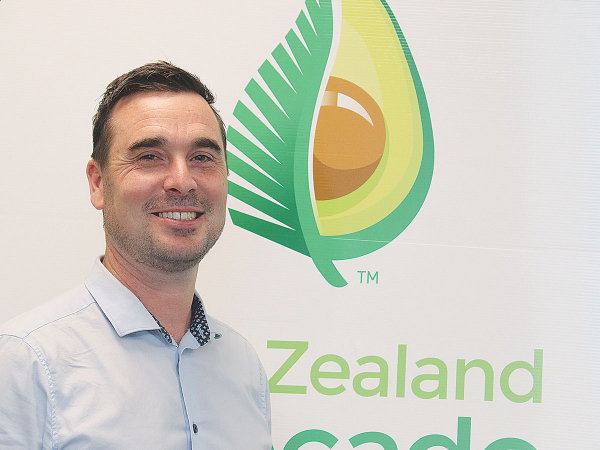 NZ Avocado chief executive Brad Siebert.
The avocado sector is entering the new season with a larger crop and positive market opportunities.
That’s according to NZ Avocado chief executive Brad Siebert who says close to eight million trays are expected this season, with strong export demand from Australia and across an increasingly diverse range of markets.
“The sector is taking a targeted approach to building a more diverse range of export markets across Australia, Asia and North America,” Siebert told Rural News.
He says this includes market insights, targeted promotional programmes in priority markets and raising the profile of New Zealand Avocados at international trade shows.
“Alongside the commercial activity of our exporters, this is helping build awareness of New Zealand as a premium avocado origin, strengthen customer relationships and create more options for our growing export crop,” he says.
Siebert says the recently-signed NZ-India free trade agreement (FTA) is a positive long-term opportunity for the industry.
“While the logistics of accessing this market currently constrain volumes, the phased removal of tariffs will improve the competitiveness of New Zealand avocados and provide a platform to develop a market where consumption is currently relatively small but has significant growth potential,” he says.
Meanwhile, RaboResearch has released its Global Avocado Update 2026, suggesting a drop in avocados exported in the 2025/26 season.
Report co-author and RaboResearch senior analyst, Jen Corkran says Australia remained New Zealand’s largest export market, at 750,000 trays or 22% market share.
However, she says volumes declined meaning New Zealand’s avocado sector is less reliant on its Trans- Tasman counterparts than five years ago.
“To offset weaker Australian demand, the sector continues to diversify, with strong growth across Asia,” Corkran says.
She says that exports to South Korea surged 70% year-on-year to 625,000 trays in the 25/26 season. At the same time, shipments to China, Hong Kong, and India almost doubled and exports to Taiwan increased by 50%.
“Global exports have risen dramatically, from 0.73 million metric tons in 2010/11 to more than 3.3 million tons in 2025/26, with Mexico and Peru as the dominant contributors alongside growing volumes from others like Kenya, Spain, Colombia and South Africa,” she adds.
“Rather than a broad supply squeeze, El Niño will likely increase variability of yields and fruit sizes across regions, thereby amplifying seasonal imbalances and market volatility,” Corkran says.
On the demand side, the report says some established markets are showing signs of maturity while new players continue to increase demand.
 |
|---|
|
The avocado sector expects to harvest eight million trays this season. |
“Global avocado demand continues to display a dual-speed dynamic, with mature markets approaching saturation, while emerging consumption regions sustain structurally higher growth,” she says.
“Mexico and Chile remain clear outliers in per capita/ per annum availability (standard measure used to estimate average per person consumption) at approximately 14kg and 9kg respectively, suggesting limited headroom relative to emerging consumption regions.
“In contrast, steady expansion across large population markets like the EU, which reached 2.24kg per capita in 2025, indicates significant growth potential.
“Countries such as Italy, Germany and Turkey are also exhibiting rapid relative growth, pointing to broad-based adoption rather than niche consumption.”
Westpac NZ is calling on farmers and growers to start preparing now for the possibility of a dry summer, as likely El Niño conditions raise the risk of drought across parts of the country.
A spate of southerly winds bringing cold temperatures has presented challenges for Taranaki dairy farmers.
Have a plan in place for your cows and staff.
Drench Options are become increasingly limited for sheep farmers, highlighting the importance of proactive parasite management planning within the wider farm system to stretch the longevity of drench as a tool.


When Northland leather worker Vernon Suckling started making horse saddles 50 years ago, quad bikes and side-by-side vehicles were unheard of.
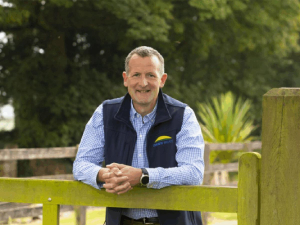
Alliance Group has confirmed that eligible farmer-shareholders who supply and continue to back the business will receive up to $20 million later this year, following the strategic investment partnership with Dawn Meats.
With a general election under five weeks away, Rural News is asking major political parties about their policies and positions on key issues facing the primary sector. We will run their responses to each question over the next four weeks. The ACT Party and the Greens didn't respond in time.
The red meat sector is in great heart.
Dr Scott Champion, Foundation for Arable Research chief executive, says that everyone in the supply chain had a role to play in driving the sector's long-term success.
Entries opened on Monday, 5 October 2026 for the 2027 New Zealand Dairy Industry Awards (NZDIA), which organisers describe as the nation's biggest celebration of excellence in the dairy sector.