NZ Red Meat Exports Hit $867m in August, Up 23%
New Zealand's red meat and fifth-quarter exports reached $867 million in August, up 23% on the same month last year, as stronger returns lifted earnings across all major markets.
 increase font size
 US dairy farmers have many reasons to be optimistic, says US Dairy Export Council president Tom Vilsack.
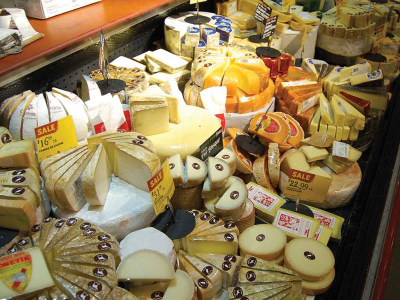
US dairy exporters keep finding new markets for cheese and dairy ingredients despite facing trade tensions.
Figures last week from the US Dairy Export Council show exports of nearly US$3.92 billion in the first eight months of 2019 were up 3% on last year and the highest figure in five years. The gains were led by increased volumes of cheese and higher selling prices for dairy ingredients.
In August, US export performance was in line with recent months, with overall volume about the same as June and July. But these volumes lagged August 2018 totals in most product categories.
Exports of non-fat dry milk/skim milk powder were 50,993 tonnes in August, down 18% on a year ago. Sales to Mexico were down 23%, shipments to the Philippines were down 62% and to China down 91%.
Since posting record export volume in March, US cheese exports (on a 30-day-month basis) have declined five months in a row on the previous month as strong domestic markets keep more US product at home.
Shipments in August were 26,595t, down 6% on a year ago. Sales to Southeast Asia were nearly a record high (2811t, +127%), but lower exports to Australia (-46%), Japan (-42%) and South Korea (-12%) dragged down the total. And sales to Mexico, though up 3%, were the lowest in 11 months.
Total whey exports were 38,722 tons in August - down 21% on last year. Nearly all the decline can be attributed to lost sales to China from retaliatory tariffs and African swine fever. Suppliers sold just 5430 tons of whey to China in August, down 63% and the lowest monthly figure in 19 years. These losses were only partially offset by record whey sales to Southeast Asia (12,129t in August, +6%).
Exports of whey protein isolate (WPI) were up 9% in August, and remain at a record for 2019, led by improved sales to the EU, Southeast Asia and South Korea.
Lactose exports dipped in August - falling 9% to 31,550 tons. Sales to China were down 40%, while shipments to New Zealand (-43%) and Japan (-31%) also were lower. Some unsold products were diverted to Southeast Asia, where volume was up 36% for the month.
Exports of whole milk powder (WMP) spiked in August, reaching 6216 tons, more than double last year, and the second-highest monthly amount in the last nine years. One third of the volume went to Algeria (vs nil last year) and Colombia and Peru also bought more.
Shipments of fluid milk/cream stayed at a record - up 13% in August. Nearly 90% of the volume this year has gone to Taiwan, Mexico and Canada.
Exports of butterfat and food preps (blends) remained depressed in August - down 55% and 26%, respectively.
On a total milk solids basis, US exports were equivalent to 14.2% of US milk solids production in August. In the first eight months of the year, exports were 14.1% of production.
Reason for optimism
US Dairy Export Council president Tom Vilsack says US dairy farmers have many reasons to be optimistic.
Vilsack predicts long term growth of dairy exports to high demand markets such as the Middle East, Asia and Mexico.
“This will require patience. We have to play the strategic long game.
“But I am more convinced that we are competing to win, not just for today’s dairy farmers but for the next generation,” Vilsack told the World Dairy Expo recently.
New Zealand's red meat and fifth-quarter exports reached $867 million in August, up 23% on the same month last year, as stronger returns lifted earnings across all major markets.

OPINION: The United States wine market has changed forever, and companies cannot use same old playbook, said Erin Kirschenmann at the New Zealand Wine 2026 Wine Business Forum in August.
Meat Industry Association data, released alongside the Red Meat Sector conference in Wellington, shows export value climbing across the US, China, UK and Canada.
OPINION: The stats speak for themselves.
Chinese beef trade quotas and a looming suspension of Brazilian beef imports into the European Union are expected to reshape global beef trade flows over the remainder of 2026, with implications for New Zealand exporters, according to Rabobank's Q3 Global Beef Quarterly report.



National’s pledge to introduce 19 new national standards shows the party is serious about getting Wellington out of farming, Federated Farmers says.

The National Party’s policies to make it easier to grow fresh vegetables, secure reliable water and energy and simplify farm planning are practical changes that will give growers the confidence to invest, according to Horticulture New Zealand (HortNZ).
Fonterra Co-operative Group chief financial officer Andrew Murray has resigned to take up a role outside the dairy giant.
A major move is about to get underway to improve the quality and viability of dairy beef and cattle in NZ.
Veterinarians say changes to the code of welfare for dairy cattle provides a positive foundation for improved cattle welfare across the country.
Today, 15 October, is the International Day of Rural Women, which recognises rural women’s contribution to farming, communities and the environment.




