Europe’s largest dairy co-operative to launch in 2026 as Arla Foods and DMK merge
The creation of Europe's largest dairy co-operative should be complete by early 2026.
 increase font size
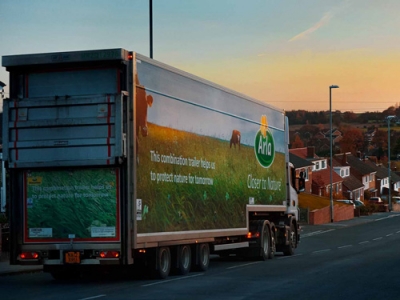 The US market is one of six growth regions pinpointed in Arla's strategy 'Good Growth 2020'. Source: Arla.com
The US market is one of six growth regions pinpointed in Arla's strategy 'Good Growth 2020'.
The goal is to become a top 10 player in the retail cheese market by growing its business beyond the deli section into the dairy aisle, where 92% of US cheese sales take place.
A newly launched big bet in the dairy aisle is Arla branded cream cheese, which has no artificial growth hormones, artificial ingredients or flavours.
"US consumers are increasingly looking for food products they can feel good about serving and consuming from a better-for-you standpoint," says head of Arla Foods USA, Don Stohrer Jr.
"This is exactly the position we have created for the Arla brand with its authenticity, transparency and great taste. It's an attractive position that doesn't now exist in the US dairy aisle or the cheddar segment. Our expectation is that the new cheddar products will create a halo effect for the cream cheese and other Arla branded products."
The joint venture will be owned 70% by DFA, which also holds the management role, 20% by Arla and 10% by the eight farmers who supply the milk. Thirty people are expected to be employed.
On-site construction will begin later this year, to start producing in the autumn 2017.
The creation of Europe's largest dairy co-operative should be complete by early 2026.
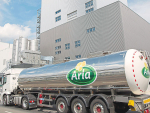
Global Dairy Trade (GDT) and Arla Foods have announced that Arla will begin offering European-sourced skim milk powder (SMP) on GDT Pulse from May 2025 as part of an extension to the GDT Pulse pilot.
European dairy co-operative Arla Foods is forecasting a total revenue of nearly $25 billion this year.
Danish co-op Arla is now paying a monthly incentive to its farmer shareholders for sustainability efforts.
European dairy co-operative Arla Foods is eyeing a fibre-based cap for its milk cartons.


High country stations, mixed sheep and beef farms, Māori-owned farms, corporates and family operations are among the nine commercial farms taking part in the Livestock Innovation Farming Transformation programme, known as LIFT.
OPINION: New health and safety guidance unveiled by the Government recently provides farmers greater certainty about what is expected of them when managing risks on farm.
The National Animal Welfare Advisory Committee (NAWAC) is seeking public feedback on proposed changes to the Code of Welfare for Rodeos.
A New Zealand initiative supporting farmers to restore the health of grazing landscapes has received international backing through the Regenerative Fund for Nature, a global collaborative fund supporting regenerative agriculture and the communities that produce natural fibres for the fashion industry.
Combine premium New Zealand products, blend in a family ritual and what do you get? A world-class functional drink.
Entries are now open across eleven regions for the 2027 New Zealand Dairy Industry Awards (NZDIA).