Arla Foods delivers $15b revenue as Co-op turns 25
European dairy giant Arla Foods celebrated its 25th anniversary as a cross-border, farmer-owned co-operative with a solid half-year result.
 increase font size
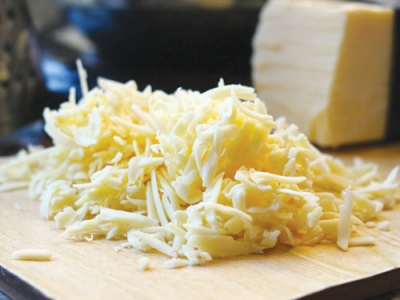 by US consumers is cheddar.
European dairy co-op Arla Foods is joining forces with Dairy Farmers of America (DFA) to set up a cheese plant in the US, the world's biggest cheese market.
In their first collaboration ever, the two farmer-owned co-ops plan to look into building a plant to make premium cheddar.
The joint cost will be US$58m of which Arla covers 20% (US$11.6m).
A third of the cheese bought by US consumers is cheddar. However, very few brands there make cheddar using the highest quality available milk -- without growth hormones or artificial ingredients.
"Together with Dairy Farmers of America and eight of their farmers, who will supply the raw milk, we will explore the opportunities for premium quality cheddar under the Arla brand," says Arla chief executive Peder Tuborgh.
"Adding cheddar to our US portfolio will make us more attractive to the retailers and help increase the sales of our European products made from owners' milk."
DFA president Rick Smith says it is pleased to be linking with Arla.
"Arla and DFA share the same passion for providing the highest quality products... [sourced] from dairy farmers who employ sustainable and transparent farm practices."
The partners will build on a production site in western New York State where the eight farms supplying the raw milk are located. The farmers are members of DFA and will supply about 70,000t of raw milk annually, to quality standards similar to Arla's programme Arlagården.
The US market has a quota regime that imposes limits on Arla importing European cheddar.
Pinpointing the growth targets
The US market is one of six growth regions pinpointed in Arla's strategy 'Good Growth 2020'.
The goal is to become a top 10 player in the retail cheese market by growing its business beyond the deli section into the dairy aisle, where 92% of US cheese sales take place.
A newly launched big bet in the dairy aisle is Arla branded cream cheese, which has no artificial growth hormones, artificial ingredients or flavours.
"US consumers are increasingly looking for food products they can feel good about serving and consuming from a better-for-you standpoint," says head of Arla Foods USA, Don Stohrer Jr.
"This is exactly the position we have created for the Arla brand with its authenticity, transparency and great taste. It's an attractive position that doesn't now exist in the US dairy aisle or the cheddar segment. Our expectation is that the new cheddar products will create a halo effect for the cream cheese and other Arla branded products."
The joint venture will be owned 70% by DFA, which also holds the management role, 20% by Arla and 10% by the eight farmers who supply the milk. Thirty people are expected to be employed.
On-site construction will begin later this year, to start producing in the autumn 2017.
European dairy giant Arla Foods celebrated its 25th anniversary as a cross-border, farmer-owned co-operative with a solid half-year result.
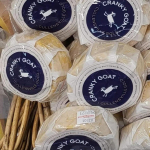
Award-winning boutique cheese company, Cranky Goat Ltd has gone into voluntary liquidation.
The creation of Europe's largest dairy co-operative should be complete by early 2026.
OPINION: One of the world’s largest dairy co-operatives has come under fire for embracing a new methane-reducing additive fed to cows. The claims, made on social media, says the use of a feed additive by Arla Foods farmers could ‘contaminate’ milk and allegedly cause cancer.
European dairy co-operative Arla Foods is forecasting a total revenue of nearly $25 billion this year.


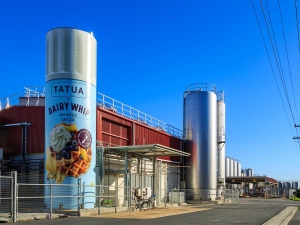
Waikato milk processor Tatua has again declared a record milk payout to farmer shareholders, leaving other processors in the dust.
A Labour-led Government won’t be bringing back the controversial freshwater rules of 2020.
National’s much-touted free trade deal with India featured in the Rural Issues Debate at Mystery Creek, Hamilton on Wednesday night.
New Zealand's 2026-27 freshwater fishing season has opened, with anglers encouraged to head to rivers and lakes over the coming days as conditions look favourable across much of the country.
Central Otago District Council (CODC) has voted against a plan to spread treated sewage sludge from Cromwell and Alexandra on farmland near Lauder, a decision Federated Farmers says reflects strong opposition from rural residents.
Pāmu has released its FY26 Integrated Annual Report, reporting a Net Operating Profit of $113 million, more than double the $49 million recorded in FY25.