Arla Foods delivers $15b revenue as Co-op turns 25
European dairy giant Arla Foods celebrated its 25th anniversary as a cross-border, farmer-owned co-operative with a solid half-year result.
 increase font size
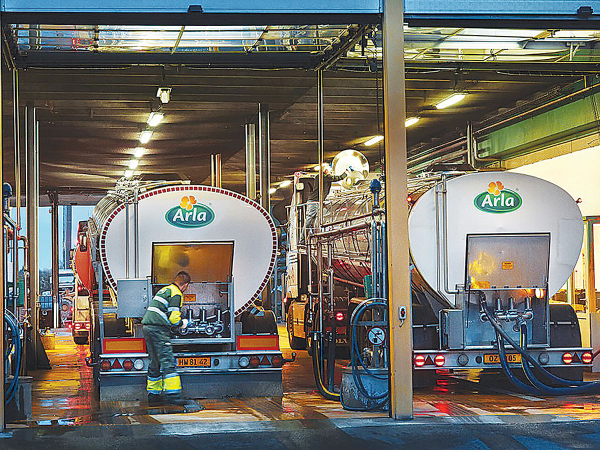 The new European dairy co-op will be named Arla Foods.
The creation of Europe's largest dairy co-operative should be complete by early 2026.
The merged entity will be called Arla Foods and comprises 2200 farmers who are currently part of two co-operatives Arla Foods and DMK Group.
Last month, the decision making bodies of both co-ops voted in favour of a planned merger, which now only has to clear regulatory hurdles.
The statement says this marks a significant milestone in bringing together two companies with shared values and complementary strengths, setting the stage for "a new era in European dairy".
It says the merger unites Arla's international reach and innovation expertise with DMK Group's strong and diversified product portfolio and know-how. By supplementing each other's capabilities, the joint cooperative will "deliver even greater value through a broader range of high-quality dairy products, enhanced product innovation, and resilient market presence".
Since the announcement of the intended merger, both Arla and DMK Group have held a series of meetings across the companies' regions, encouraging open debate and giving members the opportunity to share their views and questions.
Arla chair Jan Toft Nørgaard thanked the co-op farmers for their active participation.
"The approval of the decision-making bodies confirms our shared belief that Arla and DMK Group are stronger together. By combining our complementary strengths, we can secure a more sustainable and innovative dairy sector for the future, while continuing to deliver value to owners and partners."
DMK chair Heinz Korte commented on the synergies between the two co-ops.
"At DMK we share the same values as Arla, have the same approach to our work, and a common vision for the future of the dairy industry.
"I am delighted that my fellow farmers today have approved the merger and thus support our approach. I would therefore like to thank all members who have shown their belief in the strength of this idea as I firmly believe that this will prove to be a good decision."
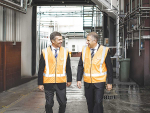
The new entity will be headquartered in Viby J, Denmark. Nørgaard will serve as chair, Arla chief executive Peder Tuborgh as CEO, and DMK chief executive Ingo Muller will join the Arla executive management team as EVP of post-merger integration.
The partnership between Arla Foods and DMK Group is already proven through successful joint ventures such as ArNoCo, which combines DMK's strength in cheese production with Arla's global expertise in ingredients. The two companies say the merger will build on this foundation, driving further advances in dairy technology, sustainable production, and nutritional excellence.
"The approval of our cooperative members is a strong sign. It shows that we live the cooperative idea and believe in joining forces to become even stronger," Muller says.
Arla Foods is owned by 7600 farmers from Denmark, Sweden, the UK, Germany, Belgium, Luxembourg and the Netherlands. It has annual revenue of 13.8 billion euros and milk volume of 13.7 billion kgMS. DMK, Germany's largest dairy co-op, is owned by 4600 farmers and has 20 manufacturing sites in Germany and Netherlands.
European dairy giant Arla Foods celebrated its 25th anniversary as a cross-border, farmer-owned co-operative with a solid half-year result.
Global Dairy Trade (GDT) and Arla Foods have announced that Arla will begin offering European-sourced skim milk powder (SMP) on GDT Pulse from May 2025 as part of an extension to the GDT Pulse pilot.
OPINION: One of the world’s largest dairy co-operatives has come under fire for embracing a new methane-reducing additive fed to cows. The claims, made on social media, says the use of a feed additive by Arla Foods farmers could ‘contaminate’ milk and allegedly cause cancer.
European dairy co-operative Arla Foods is forecasting a total revenue of nearly $25 billion this year.
Danish dairy co-operative Arla Foods is accelerating sustainability efforts on farm to help customers achieve their reduction targets for scope 3 emissions targets.

High country stations, mixed sheep and beef farms, Māori-owned farms, corporates and family operations are among the nine commercial farms taking part in the Livestock Innovation Farming Transformation programme, known as LIFT.
OPINION: New health and safety guidance unveiled by the Government recently provides farmers greater certainty about what is expected of them when managing risks on farm.
The National Animal Welfare Advisory Committee (NAWAC) is seeking public feedback on proposed changes to the Code of Welfare for Rodeos.
A New Zealand initiative supporting farmers to restore the health of grazing landscapes has received international backing through the Regenerative Fund for Nature, a global collaborative fund supporting regenerative agriculture and the communities that produce natural fibres for the fashion industry.
Combine premium New Zealand products, blend in a family ritual and what do you get? A world-class functional drink.
Entries are now open across eleven regions for the 2027 New Zealand Dairy Industry Awards (NZDIA).