
EU dairy co-ops to merge
Two European dairy co-operatives are set to merge and create a €14 billion business.
 increase font size
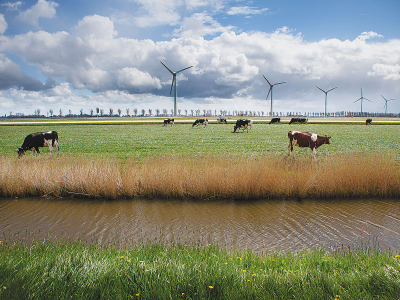 FrieslandCampina rewards farmers for grazing cows.
World-renowned dairy co-op FrieslandCampina has posted a half-year operating profit of $354 million.
It attributes the 19% jump in operating profit over the previous half year to changes initiated last year.
Chief executive Hein Schumacher says following the launch of its market driven strategy the co-op is seeing a positive momentum.
“After a strong finish in 2018, our consumer business experienced continued growth in a challenging market and our market shares and margins improved.
“But increasing protein prices put pressure on the development of the result in essentially all business groups. Throughout the entire chain, from grass to glass, our ambition to lead with sustainability is taking further shape and significant progress has been made.”
FrieslandCampina’s revenue stabilised in the first half of 2019 versus the same period last year. Results improved due to an increase in the sale of value added products, mainly cheese.
“Our activities in Africa in particular showed strong growth and we showed positive momentum in Asia. Overall the consumer dairy business group’s branded volumes grew by 4.8%,” Schumacher says.
Reduced milk supply in the Netherlands contributed to improved profit due to decreased production of (still loss-making) basic dairy products such as butter and milk powder.
Increased protein prices put pressure on overall margins as sales prices continued to lag market input costs.
In China volumes stabilised due to challenging market conditions and the constrained supply of a number of key ingredients.
Milk supply in the first half of this year dropped 268 million kgMS to 5088m kgMS versus the same period in 2018. This decrease is partly due to members who left the cooperative.
Also playing a role were fewer cows as a result of the phosphate related restrictions (phosphate legislation) in the Netherlands, limited feed stocks (silage and other feeds) due to last year’s drought, and higher feed costs.
FrieslandCampina has 18,261 farmer shareholders in the Netherlands, Germany and Belgium. It was the sixth-largest dairy processor in the world last year with $19.5 billion in annual revenues.
Packaging 100% recyclable
European dairy co-op FrieslandCampina aims to have all packaging 100% recyclable within six years.
The move is part of the co-op’s efforts to reduce its environmental impact to achieve a more sustainable, ‘circular’ dairy chain.
To help with attain its recycling target it has developed the Respackt software tool. This quickly analyses the environmental burden and recyclability of packaging and then selects the most sustainable options.
In Europe, FrieslandCampina uses 100% ‘green’ electricity in making dairy products.
It said last week that worldwide the use of green electricity rose to 94%. Of the electricity consumed by Dutch plants and offices, 62% was generated by member dairy farms.
And it continues to reward farmers’ paddock grazing efforts. This year 248 member dairy farmers switched to outdoor grazing. The number of FrieslandCampina member dairy farms in the Netherlands where cows graze pasture increased to 83.3%, well above the sector average of 81.2%.
During first half 2019 almost 42,000 dairy farmers in Nigeria, Vietnam, Malaysia, Thailand, Pakistan, Romania and Indonesia were trained and advised as part of the FrieslandCampina dairy development programme.
Two European dairy co-operatives are set to merge and create a €14 billion business.
One of the world's largest dairy co-operatives is reporting a slump in half-year profits on the back of declining commodity prices and lower sales volumes.
Three major Dutch agribusinesses are joining forces to reduce nitrogen emissions at dairy farms.
European dairy co-operative FrieslandCampina is trialling a feed additive that is said to reduce methane emissions from cows by 30%.
One of the world's largest dairy co-operatives celebrated its 150th birthday this month.


National’s pledge to introduce 19 new national standards shows the party is serious about getting Wellington out of farming, Federated Farmers says.
The National Party’s policies to make it easier to grow fresh vegetables, secure reliable water and energy and simplify farm planning are practical changes that will give growers the confidence to invest, according to Horticulture New Zealand (HortNZ).
Fonterra Co-operative Group chief financial officer Andrew Murray has resigned to take up a role outside the dairy giant.
A major move is about to get underway to improve the quality and viability of dairy beef and cattle in NZ.
Veterinarians say changes to the code of welfare for dairy cattle provides a positive foundation for improved cattle welfare across the country.
Today, 15 October, is the International Day of Rural Women, which recognises rural women’s contribution to farming, communities and the environment.




