SWNZ Strengthens People Pillar for Global Markets
With ethical employment practices a "hot topic" in key markets, Sustainable Winegrowing New Zealand (SWNZ) is strengthening its People Pillar.
 increase font size
 Sue Duncan
OPINION: Farmers have been clear: it is getting harder, not easier, to find and keep good people.
Federated Farmers employment spokesperson and national dairy chair Karl Dean has warned that extra visa charges and tougher settings risk pushing workers towards Australia and Canada instead of New Zealand. When every cost and hoop matters, it is understandable that employers feel immigration settings are working against them.
New Zealand has also signed a free trade agreement with India, with ambitions around skills, education and people-to-people links. For those goals to matter on farm, there needs to be a practical way for Indian students and young professionals to connect with New Zealand's primary sector - not just on paper, but on paddocks.
One useful part of that picture is international agriculture internships.
For 25 years, our team at Working In has helped employers bring in skilled people from overseas and manage visas and settlement through constant policy change. Many "quick fix" labour models prove either too complex for smaller operators or too transactional to add real value.
International agriculture interns are different.
These are tertiary agriculture dairy, livestock and horticulture students who must complete practical industry experience as part of their qualificaton. They are not backpackers. They are motivated, career-focused young people who want to spend six months on a real dairy or sheep-beef operation, learning and contributing before returning home to finish their degree.
Working In currently has 30 such students pre-screened and ready for placement on New Zealand farms under a structured six-month paid internship programme. They have the theory; what they are missing is exactly what New Zealand farmers can provide: pasture-based systems, animal health and welfare, seasonal pressure and commercial realities.
Interns are not a silver bullet or a replacement for permanent staff. They can offer reliable, planned support for specific roles and times of year.
Typical tasks include dairy shed and pasture work, young-stock and animal care, general farm and field work, basic agronomy and irrigation monitoring, packhouse or yard duties, and farm administration and data tasks.
One of the biggest barriers farmers raise about bringing in anyone from overseas is the bureaucracy.
Accreditation, Job Checks, labour market tests and the risk of getting it wrong feel daunting, particularly for smaller operations.
The agriculture internship pathway is designed to remove much of that friction.
For these internship roles there is no INZ Accreditation, Job Check or labour market test requirement.
Interns are paid at least the New Zealand minimum wage, roles are aligned to their field of study, and there is a clear framework around support and expectations. That matters for compliance and for New Zealand’s reputation as an ethical primary‑sector destination.
No single programme will fix workforce challenges in New Zealand agriculture. But as the immigration debate continues, it is important to put constructive, workable models on the table.
International agriculture internships tick several boxes at once: they provide practical, time‑bound workforce support for dairy and sheep‑beef operations; they offer Indian agriculture students genuine, structured experience; and they deepen the people‑to‑people relationships that will underpin the new NZ–India trade agreement.
Working In is now seeking host farms for the first cohort of 30 interns, with an initial focus on major dairy and sheep‑beef regions. For farmers open to trying something different, this is a chance to get extra capability on farm, contribute to the development of future agriculture professionals, and help shape a model of migrant labour that works better for everyone.
Sue Duncan is general manager – Interns at Working In New Zealand, an international agriculture internship programmes that connect global ag students with Kiwi dairy, livestock and agritech operations.
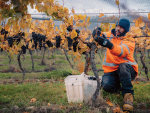
With ethical employment practices a "hot topic" in key markets, Sustainable Winegrowing New Zealand (SWNZ) is strengthening its People Pillar.
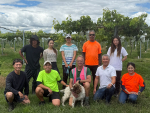
A multi-cultural team is helping to establish one of New Zealand's largest plantings of premium eating grapes - while learning each other's languages and cultures along the way.
Building on the success of last year's events, the opportunity to attend People Expos is back for 2025, offering farmers the chance to be inspired and gain more tips and insights for their toolkits to support their people on farm.
DairyNZ says the decision to allow an extra 500 international workers to help on dairy farms will help with the present shortage - estimated to be 4,000 workers.
An extra 500 workers will certainly help but only if they get here in time.



Now in its fourth year, the 2026 Fencing Industry Awards, formed part of the proceedings of the FCANZ Conference, held in Nelson during August.
DairyNZ deputy chair Cameron Henderson has been re-appointed unopposed for another term.
OPINION: The stats speak for themselves.
Farms across the upper North Island are trialling different pasture mixes as part of a research programme that aims to build greater resilience into farming systems.
Election years are always a concerning time for farmers, according to DairyNZ chair Tracy Brown.
The Ballance Farm Environment Awards are coming to the West Coast of the South Island.