
Federated Farmers Welcomes ACT’s New Farming Policies
Federated Farmers has welcomed new rural policies released by ACT, saying they align closely with its own election priorities.
 increase font size
 Federated Farmers says at least 1100 farmers have been directly affected by the M. bovis response.
Federated Farmers last month issued an advisory on Mycloplasma bovis to all members. Here are excerpts:
While there is an increasing degree of confidence that the Mycoplasma bovis response is going to be successful, Federated Farmers is acutely aware of the human cost of seeking to contain and eradicate M. bovis.
We recognise that at least 1100 farmers have been directly affected by the response, whether as an infected property (IP), restricted place (RP), under movement control (a notice of direction NOD) or active surveillance (onfarm testing).
We all -- industry and MPI -- agree things could have been handled better as we all learned how to manage the significant challenges of New Zealand’s largest biosecurity response in living memory.
The following is some of the work Feds has done to date:
Contacted M. bovis experts at the very beginning; set up an industry phone call with Australian experts
Gained a commitment that farmers would be compensated for culled cattle at full market rates (as though they were not infected)
Ensured that contract milkers (and herd owning and lower order sharemilkers) would be compensated and that compensation for lost income would go straight to all these business partners
Ensured that the Government accepted the industry offer of 32% (share of response costs) when MPI was talking of a 40 - 50% contribution from industry
Advocated strongly for equitable compensation including:
– compensation for loss of grazing income when animals are unable to be brought onto properties that are under movement control,
– compensation for loss of income for direct losses incurred by those under active surveillance (recognising that some will incur costs because of the inability to sell store stock); this is a work in progress we are continuing to push
Formally requested that the minister initiate an independent review of the M. bovis and other biosecurity responses to ensure the lessons learned are not lost and all players (industry and government) are better prepared in the future.
This M. bovis response has been the first significant test of the compensation provisions of the Biosecurity Act regarding an animal response and the first animal disease response under the GIA (Government Industry Agreement) framework.
Federated Farmers has taken an active role, recognising our limited resources, in the response from day one.
Federated Farmers continues to work closely with the response partners, assisting where appropriate and playing an important advocacy role on behalf of all affected farmers – be they dairy or beef farmers or grazers caught in the cross-fire.
Compensation
The key principle for compensation as contained in the Biosecurity Act is that affected farmers, including sharemilkers, should not be any worse or better off because of the use of the Act powers during a biosecurity response.
Of importance, losses must be verifiable (clearly good quality information makes the process easier and quicker).
As compensation principles and processes have been established for the M. bovis response it has been clear that the Act has some limitations. Feds will be seeking changes to the Act when it is reviewed.
While all those involved in the response will agree that providing compensation has been slow, significant progress has been made by all to speed up the process including the development of standardised tools and increasing the number of people working in the compensation team. This now exceeds 45 and the average time to process a compensation claim is now about 20 working days.
Federated Farmers has welcomed new rural policies released by ACT, saying they align closely with its own election priorities.

A farmgate milk price of $10/kgMS this season is firming up as milk powder prices soar and the New Zealand dollar weakens.
Federated Farmers is backing Feilding High School’s call to keep Agriculture and Horticultural Science as a standalone subject in Year 11.
National’s pledge to introduce 19 new national standards shows the party is serious about getting Wellington out of farming, Federated Farmers says.
Mobile phone coverage and reliability are deteriorating in rural areas, and farming families are bearing the cost, according to a Federated Farmers survey.



Farmlands has reported higher operating earnings and a profit before income tax of $4.5 million, up 118.9%, for the year ended 30 June 2026.
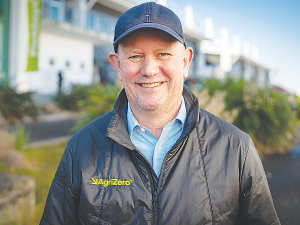
AgriZeroNZ has invested a further NZ$17.7 million in methane vaccine developer ArkeaBio and NZ$5.1 million in BioLumic, a New Zealand-founded company that uses ultraviolet light to develop low-emissions pasture..
Good news for Fonterra farmers. The co-op has raised this season’s farmgate milk price mid-point by 25c to $9.75/kgMS.
OPINION: Political parties are getting plenty of advice and recommendations from sector groups as the election approaches.
In farming there are external factors that can influence behaviour of a whole herd, such as a bad weather event, triggering false positive heat detections or health attentions.
For Canterbury dairy farmer Cameron Henderson, supporting Meet the Need comes down to a simple question: how can the success of New Zealand farming benefit more than just those within the industry?