Farmer Confidence Wavers Despite Decade-High Profits – Feds Survey
Will the good times last? That's one of the key issues to come out of the latest Federated Farmers confidence survey.
 increase font size
 President of Federated Farmers Manawatu/Rangitikei, James Stewart.
Being a dairy farmer and an environmentalist, I have been perplexed by the banter and politicking over the regional council's One Plan implementation.
Terms such as 'licence to pollute' are ridiculous and obviously come from uninformed sources lacking understanding of what this is all about.
The regional council, meanwhile, is wisely trucking on with its One Plan implementation, and rightly so. This plan enables farmers to make environmental plans that continue to reduce our footprint on the environment, and to keep running viable businesses that help in no small way to grow the region's economy.
Of course, One Plan is not all about dairy; that is just one part, and surely it's better to work with all members of the community, including farmers, to work towards achieving outcomes catchment by catchment. That's what the National Policy Statement on Freshwater Management says we should be doing.
Remember also that we all have an effect on the environment, whether by running a business, running a car or in the things we choose to buy or use. We all have a role to play and this is no time for finger pointing. Let's get behind each other and be proud of environmental progress in the region.
I'm not saying farmers don't have a responsibility, far from it. Farmers know the importance of looking after land. It's fundamental to what we do, something handed down from generation to generation. Farmers also recognise a healthy environment is an important aspect of our image as an agricultural exporting country.
Farmers are also putting their money where their mouths are, we always do. A recent survey by Federated Farmers showed that farmers nationwide have spent at least $1 billion dollars on environmental work over the past five years.
Here in the Horizons region the spend was slightly higher, with dairy farmers collectively spending at least $100 million on stock exclusion, effluent management and other upgrades: that's about $110,000 per farmer.
And this investment is delivering results. In 1997 there were 439 discharges of dairy effluent to water. By 2012 this was zero, removing the direct input of E coli, nitrogen and phosphorous. This has lessened the annual load on the Manawatu River by about 100 tonnes of nitrates and 18 tonnes of phosphorous, equivalent to what a town five times the size of Dannevirke would produce.
Sediment levels are also dropping, pointing to an estimated reduction of 27% in the Manawatu catchment by 2043 if implementation of the sustainable land use initiative maintains its present rate.
Nutrient budgeting, riparian fencing and environmental projects are also positively affecting our water quality.
I'm proud of what the farming industry is doing, though some clearly are not.
Comments were made recently about fewer prosecutions by regional councils of dairy farms. I say 'well done' to our dairy farmers for achieving 97% compliance last season and for all their fencing, planting and upgrades to effluent systems.
'Well done' also to the people who are working with us; farmers are doing a lot but we're not doing it alone.
The regional council deserves credit for its commitment to its One Plan implementation and so do others in the region. I'm proud of a major riparian planting project underway in our province that will transform the appearance of the countryside.
Farmers are in the thick of it, as are environmental groups and local schools. The community is working together to protect and enrich an environment we all share, as it should be.
• James Stewart is president of Federated Farmers Manawatu/Rangitikei.
Will the good times last? That's one of the key issues to come out of the latest Federated Farmers confidence survey.
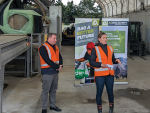
Environment Minister Nicola Grigg has announced details of a new rural plastics recycling scheme.
Almond hulls sourced from Australian orchards may have the potential to help New Zealand cows reduce emissions, boost milk yield and lower input costs.
Mid Canterbury Federated Farmers arable chair, Bevan Lill, said Beef + Lamb NZ data indicated that for the last six years, the average arable return on investment was about 0.8% while inflation ran about 4% - so the average arable farm was going backwards at about 3% a year.
For the first time in a quarter of a century, Federated Farmers has something positive to say about the Labour Party’s climate change policy leading into a general election.


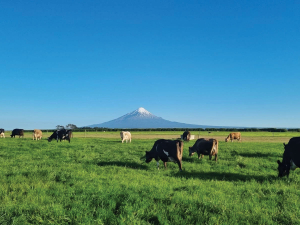
A spate of southerly winds bringing cold temperatures has presented challenges for Taranaki dairy farmers.
Converting a longstanding cropping farm to dairy was the only way to ensure the land stayed in the family long term, says new dairy farmer Rod May.
As the election heats up, Organics Aotearoa New Zealand (OANZ) has launched its election scorecard designed to help voters wanting to support policies that grow organic and New Zealand's organic sector.
A 'tsunami' of milk from key exporting countries is winding down and this may be good news for New Zealand dairy farmers.
Will the good times last? That's one of the key issues to come out of the latest Federated Farmers confidence survey.
Outgoing Fonterra Co-operative Council chair John Stevenson says that it has been a privilege to represent the co-op's farmer shareholders.