Ford Vehicles Now Compatible With HVO Renewable Diesel
Continued fluctuations in fuel costs are putting pressure on many businesses, driving a significant spike in interest for electrified options like hybrids and alternative power sources.
 increase font size
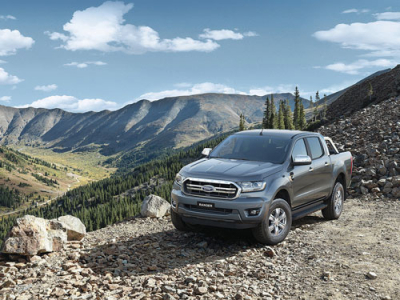 Ford’s new Ranger launching October.
Having dominated the ute market for the last three years, Ford NZ says it will launch its 2019 Ranger in October.
The 2019 Ranger builds on its solid workhorse credentials and the refinement of new powertrain options that should appeal to more customers for a wider variety of uses.
Part of the new offering will be the option of the latest new-generation 2.0L Bi-Turbo diesel engine for the Wildtrak version, already seen in the off-road themed Ranger Raptor.
The new BiTurbo will deliver an extra 10kW at 157kW, with torque increased to 500Nm from 1750rpm, both achieved with the use of two-stage sequential turbocharging, said to deliver efficiency, performance and smoothness.
The new powerplant is coupled to an advanced 10-speed torque-convertor automatic to bring improved flexibility and a quieter, more comfortable drive to the new Ranger, with the close ratios reducing gaps in power and acceleration to make steep, slippery hill-climbs, for instance, much easier.
The Ranger’s proven 3.2L turbo-diesel promises an outstanding payload and towing -- 3500kg on all 3.2L-powered Rangers in all body styles and transmission options. Offering147kW/470Nm, the 3.2L comes with a six-speed torque converter automatic transmission -- the sole choice because manual transmissions have been dropped.
In the Range 2019, Ford’s pre-collision assist uses inter-urban autonomous emergency braking (AEB) with pedestrian detection and vehicle detection at any speed to detect pedestrians, objects and vehicles; these bring the Ranger to a stop, mitigating rear-end collisions and collisions with pedestrians.
The system, which functions at speeds above 3.6km/h, is standard on the Ranger Wildtrak.
Then there’s traffic sign recognition, which identifies traffic signs at the side or above the road, permanent or temporary, and displays them in the instrument cluster.
Lane keeping alert and lane keeping aid, and adaptive cruise control with forward alert, are also now fitted in the Ranger Wildtrak, reducing driver workload to help with short-term attentiveness and longer journey driver fatigue.
In a segment first, the 2019 Ranger Wildtrak also has active park assist to enable semi-automatic parallel parking, with the driver needing only to apply the throttle and brakes as the system steers the Ranger into the parking space. And a new easy-lift tailgate requires 70% less initial force to raise it for closing.
In the looks department there’s a cleaner new grille with distinctive ‘nostrils’, a more chiselled lower bumper and, for the Wildtrak and XLT, LED daytime running lights and HID headlights. There’s also clearer distinction between models visually, with bumper treatments and colours unique to each model.
The Ranger will be offered with passive entry passive start, keyless entry and push-button start as standard on the XLT and Wildtrak, and a host of upgrades to inner surfaces for a quality feel and a long lifespan.
SYNC 3iii with Apple CarPlay and Android Autoiv compatibility continues as standard on the XLT and Wildtrak, including Bluetooth, an 8.0-inch full colour touchscreen and reversing camera.
Continued fluctuations in fuel costs are putting pressure on many businesses, driving a significant spike in interest for electrified options like hybrids and alternative power sources.
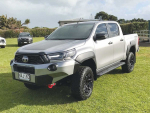
With Ford holding the reins of the ute market since about 2014, it was always going to be a case of when – not if – Toyota NZ would deliver a model to compete.
The latest addition to the long running Ford Ranger line-up, is the return of the FX4.
The Ford Ranger Raptor is not the truck you buy for heavy work; payload and towing capacity are significantly less than a standard Ranger or any other working-clothes ute. But that's not the point.
The modern trend to fewer cubic centimetres and more gear ratios continues as car manufacturers chase better fuel economy and lower emissions.


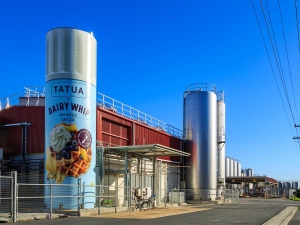
Waikato milk processor Tatua has again declared a record milk payout to farmer shareholders, leaving other processors in the dust.

A Labour-led Government won’t be bringing back the controversial freshwater rules of 2020.
National’s much-touted free trade deal with India featured in the Rural Issues Debate at Mystery Creek, Hamilton on Wednesday night.
New Zealand's 2026-27 freshwater fishing season has opened, with anglers encouraged to head to rivers and lakes over the coming days as conditions look favourable across much of the country.
Central Otago District Council (CODC) has voted against a plan to spread treated sewage sludge from Cromwell and Alexandra on farmland near Lauder, a decision Federated Farmers says reflects strong opposition from rural residents.
Pāmu has released its FY26 Integrated Annual Report, reporting a Net Operating Profit of $113 million, more than double the $49 million recorded in FY25.