What Would Synlait Be Worth to Fonterra or a2 Milk?
Speculation of a possible joint move by Fonterra and a2 Milk to buy Synlait raises a much bigger strategic question, says agribusiness expert Dr Nic Lees.
 increase font size
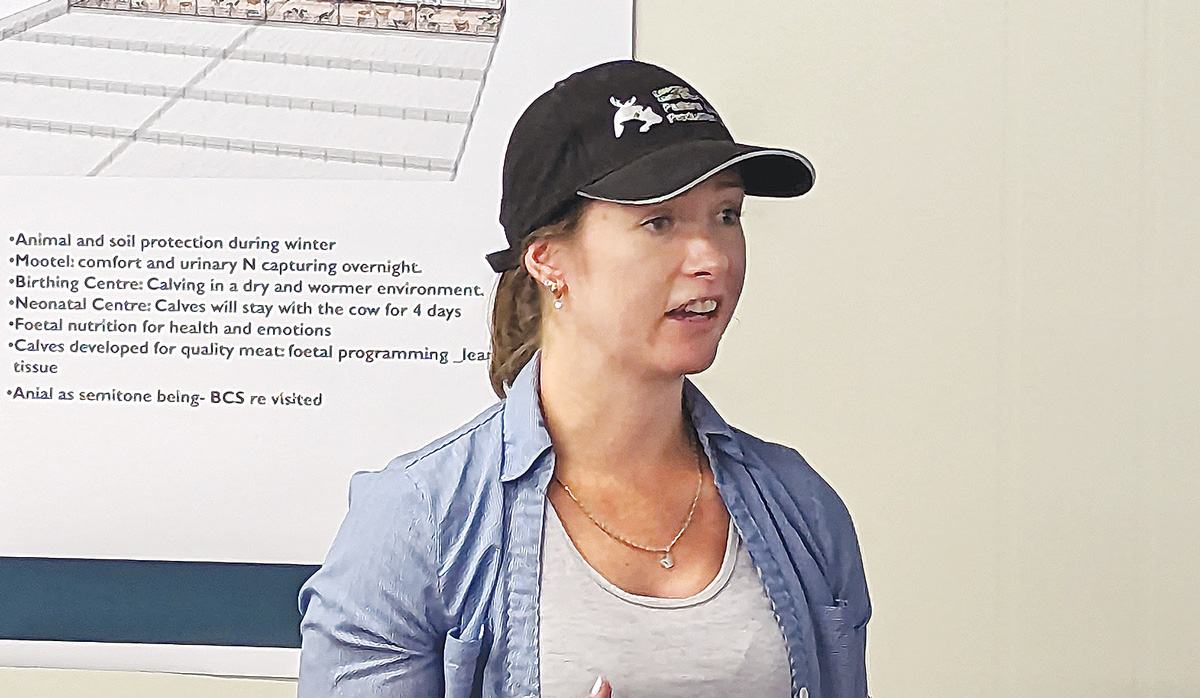
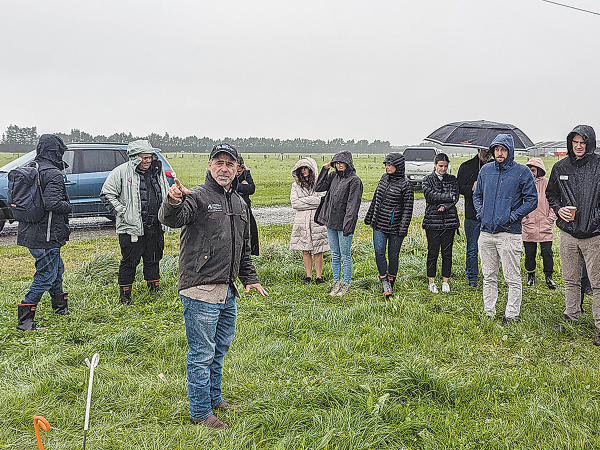 Professor of Livestock Production Pablo Gregorini speaking at a recent open day.
Lincoln University has launched a new research venture which aims to lead the way towards a more ethical and sustainable way of dairying.
The Integral Health Dairy Farm is being establishd acros a large portion of the University's Ashley Dene Research and Development Station at Springston.
The project focuses on "producing healthier dairy products, removing the negative connotations and environmental impact of dairying, providing a positive emotional environment for animals, offering a new range of narratives for the industry and enhancing the sense of belonging to the land".
The project is led by Professor of Livestock Production Pablo Gregorini, who told a recent open day that the farm aimed to produce "not milk, but health".
"We are members of nature's community. What we do to them we do to ourselves, only by nurturing them can we nurture ourselves. Only by healing them can we heal ourselves."
Gregorini also heads the University's Pastoral Livestock Production Lab, which has recently released research demonstrating that cows bred for low-N emissions and fed on diverse pastures produce milk containing higher levels of substances valuable to human health.
 |
|---|
|
Farm research manager, Dr Anita Fleming said they brought a more biochemical diversity into the pasture system. |
He said there was a need to re-engage with a society which was looking for changes in production systems and where some people were seeking to live lives absent of animal products.
Gregorini said the project was a collaborative effort with input from universities students and researchers around the world.
The farm's guiding principles include:
To achieve those goals, the farm will feature what they call multipiece adjacent pastures - strips of various forages - and multifunctional browsing sites, in the form of many small blocks of trees, shrubs and herbs giving cows both shelter and a choice of feed giving both a "hedonic benefit" and self-medication for minor ailments.
Structures will include a sheltering "mootel" and birthing unit.
The farm's research manager, Dr Anita Fleming, said they wanted to bring more biochemical diversity into the pasture system and allow cows to make their own decisions about what to eat.
She said cows find it difficult to selectively graze mixed pastures, so they have come up with the concept of adjacent pastures, with strips of different forages that the animals can easily distinguish and pick from.
Stocked with crossbred cows, the farm would implement a calving system that was less stressful for calves and mothers, and produce an animal that isn't considered just a by-product.
The open day also included presentations from some of the collaborators including suppliers of high-tech monitoring and management systems.
The farm will include what is called Green Artificial Intelligence to constantly measre carbon and greenhouse gs flow in real time.
It also intends using ear tags from Waikato-based ProTag, which monitor all the usual parameters of cows' vital signs and activity, but in a small solar-powered ear-tag package without collars or counterweights.
ProTag co-founder Tyrel Glass told the open day that part of the solution to its small size was using a power-saving system in which only a few tags at any time would be communicating whole herd data over significant distances. Most ear tags in the herd would be communicating with low power only over short distances to those relays. The method would "smear" power consumption across the entire herd, he said.
Speculation of a possible joint move by Fonterra and a2 Milk to buy Synlait raises a much bigger strategic question, says agribusiness expert Dr Nic Lees.

Lynnette Hudson's 30-year obsession with Pinot Noir was sparked working vintage in Burgundy, seeing how subtle changes in terroir were expressed in the glass. It was, she says, "an elightening moment in every way".
A four year trial has reaffirmed that mixing plantain into dairy pastures can help reduce nitrogen losses to freshwater while maintaining milk production and profitability, say researchers.
Twenty five secondary school students from around New Zealand recently completed a three day residential programme designed to explore career opportunities across the food and fibre production supply chain.
A Lincoln University student is set to become the first person to contest both the Young Viticulturist and the Young Winemaker national titles in one year.


High country stations, mixed sheep and beef farms, Māori-owned farms, corporates and family operations are among the nine commercial farms taking part in the Livestock Innovation Farming Transformation programme, known as LIFT.
OPINION: New health and safety guidance unveiled by the Government recently provides farmers greater certainty about what is expected of them when managing risks on farm.
The National Animal Welfare Advisory Committee (NAWAC) is seeking public feedback on proposed changes to the Code of Welfare for Rodeos.
A New Zealand initiative supporting farmers to restore the health of grazing landscapes has received international backing through the Regenerative Fund for Nature, a global collaborative fund supporting regenerative agriculture and the communities that produce natural fibres for the fashion industry.
Combine premium New Zealand products, blend in a family ritual and what do you get? A world-class functional drink.
Entries are now open across eleven regions for the 2027 New Zealand Dairy Industry Awards (NZDIA).