Turning data into dollars
If growing more feed at home adds up to $428 profit per tonne of dry matter to your bottom line, wouldn’t it be good to have a ryegrass that gets you there quicker?
 increase font size
 Once silage is sealed nothing can be done to change its fermentation process.
Most losses that occur when you make silage are invisible, but they can be up to 40% of the original cut pasture.
Losses occur as sugars and protein in the grass are broken down by enzymes, and bacteria; this process starts as soon as the grass is cut.
Losses diminish quality and quantity, because it is the highly digestible components that are most rapidly broken down.
As cut pasture waits to be picked up, sugars are lost through a process of respiration.
Drier pasture is more likely to be lost while being picked up because it is more likely to break up or blow away. As the DM% of the pasture increases, so do field losses.
Plant sugars are used up during fermentation to make acid. In poorly preserved silage, protein and organic matter can also be lost because of air in the stack or high pH. Fermentation losses are lowest in pasture above 25% DM.
Silage effluent is surplus water from the silage, which carries soluble sugars and proteins with it as it flows out. Effluent is produced from silage made out of low DM pasture. Above 30% DM no effluent losses will occur.
In dry grass silage it is a challenge to achieve good compaction. Poor compaction causes air to penetrate into the stack once it is opened. When air is present, yeasts are able to generate heat from sugars and even from lactic acid and cause losses by converting these nutrients into heat.
Optimum DM for silage is 25-30% because total DM loss is minimised and effluent losses will be minor. To achieve this, cut in the morning of a sunny day for rapid wilting.
Cutting after one-two days sunny weather will result in good sugar levels in the pasture, even when cut in the morning.
Avoid wilting longer than 24 hours. Compact the silage well. In a stack or pit, use the heaviest wheeled vehicle available. Tractor wheels should not sink into the pile of pasture any further than the depth of the rubber. For baled silage make sure that a high density baler is used.
Seal the stack completely with a weighted, airtight cover. Wash old polythene before use to avoid contamination with the wrong bacteria.
Don’t re-open a covered stack to add more pasture on another day.
Once the silage is sealed nothing can be done to change the fermentation process. A good fermentation relies on no air being in the silage and having plenty of sugar available to turn into lactic acid. Poor fermentation leads to major losses of protein quality.
In poorly preserved silage protein is broken down into ammonia which decreases the feeding value of the silage. Getting things right while the grass is being harvested will maximise the chance of having a good fermentation.
• Article: DairyNZ
If growing more feed at home adds up to $428 profit per tonne of dry matter to your bottom line, wouldn’t it be good to have a ryegrass that gets you there quicker?
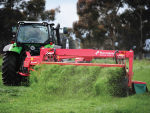
Grass silage is pickled pasture, preserved through the conversion of its sugars into lactic acid by bacteria.
As I write this article, we have just had our first frost in the Waikato, a change in weather signalling that winter is upon us.
When buying supplementary feeds, farmers need to consider the entire package on offer – service, freight and all the components in a feed mix – not just focus on the price of the cheapest component – palm kernel meal, according to J. Swap Stockfoods sales manager Joe Hardman.
Two high producing Canterbury dairy farmers are moving to blended stockfeed supplements fed in-shed for a number of reasons, not the least of which is to boost protein levels, which they can’t achieve through pasture under the region’s nitrogen limit of 190kg/ha.


Converting a longstanding cropping farm to dairy was the only way to ensure the land stayed in the family long term, says new dairy farmer Rod May.

As the election heats up, Organics Aotearoa New Zealand (OANZ) has launched its election scorecard designed to help voters wanting to support policies that grow organic and New Zealand's organic sector.
A 'tsunami' of milk from key exporting countries is winding down and this may be good news for New Zealand dairy farmers.
Will the good times last? That's one of the key issues to come out of the latest Federated Farmers confidence survey.
Outgoing Fonterra Co-operative Council chair John Stevenson says that it has been a privilege to represent the co-op's farmer shareholders.
Have a plan in place for your cows and staff.