Waikato Dairy Farmer Danielle Hovmand Named Primary Sector's Top Emerging Leader
Waikato dairy farmer Danielle Hovmand has been named the primary sector's top emerging leader.
 increase font size
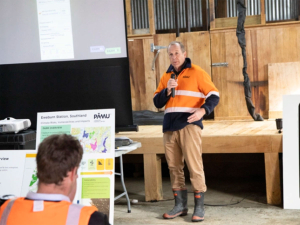
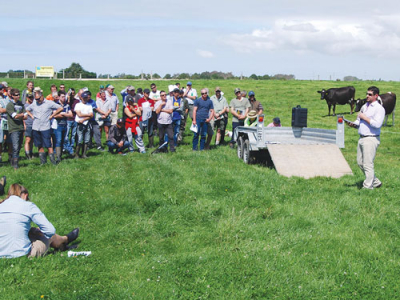 IrrigationNZ project manager Steve Breneger (right) addresses the Lincoln Uni Demonstration Dairy Farm open day.
Dairy farmers are being warned to keep a lookout for a common virus which may be becoming more virulent in New Zealand herds.
A continuing high herd empty rate is puzzling the Lincoln University Demonstration Dairy Farm, and some suspicion is turning onto IBR (Infectious Bovine Rhinotracheitis).
Manager Peter Hancox told a gathering of 300 at the farm’s February 23 focus day that the empty rate was 9% this spring, versus 14% last year.
“It’s an improvement but it’s still not where we want to be. We’re struggling to know why.”
Donald Arthur, of Selwyn Rakaia Vet Services, told the open day the disease struck the LUDF herd in the first week of November, when several two-year-old milking heifers presented with very high temperatures, mild coughs and discharges, the worst affected being “right off their milk”.
“We believe it was going through the herd about the time we were trying to get the cows pregnant. Particularly it seemed to be affecting the two year olds.”
However, the possible link was not clear, some of the empty cows having tested positive for IBR and others negative.
IBR is a type of herpes virus, common in NZ although local strains usually appear mild compared with overseas, where abortions and encephalitis due to IBR have been recorded.
Arthur says it is generally quite innocuous.
“But we are starting to see episodes like those we’ve seen at Lincoln.
I don’t know whether more pathogenic strains are emerging or whether they’ve always been out there and we’re recognising them.”
Arthur says that as a virus there is no treatment for the primary disease but plain white penicillin is useful against secondary bacterial infections.
Vaccination rates had been higher 20 years ago but had fallen, in part because animals testing positive for IBR could not be considered for the China export market.
“It’s something to be aware of, something that could affect herd performance, and it could even impact young stock growth as well if they get it bad enough.”
The LUDF herd is now vaccinated against IBR but Arthur is reluctant to suggest all farmers should vaccinate.
“Watch this space; if we are seeing the emergence of more pathogenic strains maybe we will have to consider it,” he says.
Waikato dairy farmer Danielle Hovmand has been named the primary sector's top emerging leader.
New Zealand’s wine industry produces around 100,000 tonnes of grape marc waste annually, while the forestry sector generates over five million tonnes of wood residue.
A young man just five years out of his Lincoln University degree already has his foot in the door of farm ownership, as equity manager of a large new dairy conversion now taking shape in Mid- Canterbury.
Analysis of decades of research has revealed the good farming pracrtice plays a critical role in reducing nutrient losses to improve freshwater outcomes.
A Lincoln University research fellow is working to safeguard grapevine species from extinction, using careful science and liquid nitrogen.
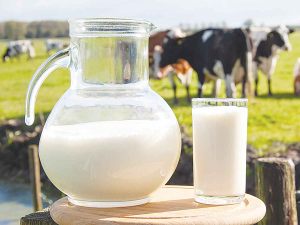
New Zealand dairy farmers are set to be the first in the world to receive access to a new digital physical milk pricing tool that enables them to fix the price for their physical milk.
State farmer Pāmu is opening its farm gates this summer in an effort to give the rural sector the opportunity to see how large-scale, multi-system farming is delivering productivity and profitability across New Zealand.
A five-year study has found that the cost of reducing emissions without technology may be significant and unsustainable for Northland dairy farmers.
DairyNZ says Waikato farmers need certainty on Plan Change 1, but they say that certainty must be matched with practical, workable rules and a clear transition that doesn't get ahead of the new resource management system currently under review.
While the Government has moved quickly to make commercial hauliers' lot easier during the current fuel crisis, they appear to be stuck in the creep box when it comes to the agricultural industry.
Waikato farmers have been told that the Government’s new planning system legislation and the region’s Plan Change 1 (PC1) “won’t mesh together very well”.