Susan O'Regan Appointed New Chair of QEII National Trust
Minister of Conservation Hon Tama Potaka has appointed Susan O'Regan as Chair of the Queen Elizabeth II National Trust (QEII) for a three-year term.
 increase font size
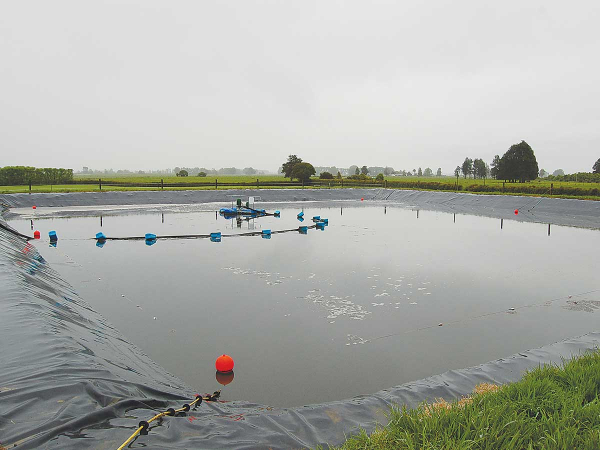 Do you really need a large effluent pond?
A Hamilton soil and water consultant is questioning the effectiveness of the dairy effluent storage calculator on Waikato farms.
Fred Phillips, a natural resource engineer, says Waikato soils are hugely variable and there are large areas of free draining sandy loams and ash soils that are extremely low-risk when it comes to effluent management.
The Waikato also has large areas of what were originally classed as peat soils, the vast majority of which have been drained over the last 80 years and are now organic loams and are likely to be low-risk soils despite being classed as High-risk peat bogs.
Massey, AgResearch and Horizons Regional Council developed a dairy effluent storage calculator to help farmers plan storage to cope with wet weather and heavy clay soils, so that effluent could be stored when soil conditions were likely to give rise to excessive drainage and subsequent discharge into streams.
Phillips says they also included a category for low-risk soils for farmers who were not on the heavy clay soils of the Manawatu or the marine clays common in the Hauraki.
“Having designed the DESC Massey and AgResearch staff had done what they were contracted to do and DairyNZ took over responsibility for the model and successfully marketed its environmental benefits to other regional councils all over NZ so that it has now become the “Bible”,” he says.
“Unfortunately computer models are not biblical and as additional experience and information becomes evident, computer models need to be upgraded and tuned to be more appropriate for the range of conditions encountered.
It is even more important when a programme is designed as a management guide is grabbed by councils and used as a blanket enforcement tool. It happened with Overseer and it has happened with the DESC.
“Councils and dairy companies are on the band wagon telling farmers that they must comply with the DESC. The fact that a person can be successfully prosecuted for not complying with a rule is a lot easier than proving that a person is damaging the environment.”
Phillips notes that many Waikato farmers have been doing an excellent job in relation to effluent management for more than 25 years.
This has been achieved with modest sprinkler and pump systems pumping from small sumps adjacent to the cow yard and irrigated directly onto pasture as soon as the effluent is produced during the washdown process.
He says this has worked well because the Waikato region has been blessed with a range of free-draining soils from sandy loams near the major river systems and vast areas of volcanic ash soils as a result of volcanic eruptions.
Many of these soils have natural infiltration rates well in excess of 15mm/hour.
Farmers who look after these precious soils can apply effluent at up to 15 mm per hour without any risk of ponding, almost every day of the year, he says.
“At lower application rates they are even more secure.
“When the DESC was applied to these very low-risk soils, it became very obvious that the DESC was predicting storage volumes that were excessive, because the very low risk soils had not been identified as an important issue.
“It has taken four years of debate and discussion for it to be accepted that the DESC was not providing fit for purpose advice for farmers with these highly productive and free draining soils.”
Phillips says farmer experience and comparative advantage were being pushed aside and Waikato farmers were being told to invest millions of dollars over and above what was actually needed, to be good law abiding custodians of our land and water.
“It is fair to say that these people have been bullied by well-intended people who did not have the appropriate personal knowledge and experience in soil and water to make judgement calls, but they could look up maps and models on a computer, even if they did not know how to use a spade as a validation or an investigative tool.”
Six key factors
According to Fred Philips, there are six key factors that determine the storage requirements for effluent.
• The area of concrete draining to the effluent sump,
• The amount of water used for washing down,
• The Volume of effluent you are prepared to apply on any day after wet weather,
• The soil characteristics and infiltration rate,
• The sprinkler application rate (this is where the rubber meets the road),
• And how you manage and maintain your system.
Minister of Conservation Hon Tama Potaka has appointed Susan O'Regan as Chair of the Queen Elizabeth II National Trust (QEII) for a three-year term.
Farms across the upper North Island are trialling different pasture mixes as part of a research programme that aims to build greater resilience into farming systems.
The Government has announced it will pause key parts of Waikato Plan Change 1 (PC1) in a decision that is set to give Waikato farmers a reprieve from new consenting and farm-planning requirements while the wider resource management system is overhauled.
When Fraser Hasnip returned to his family farm in Pirongia, Waikato, he saw an opportunity to do things differently.


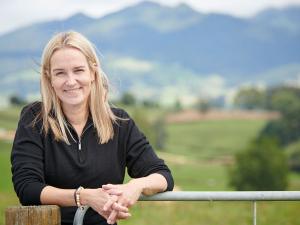
Minister of Conservation Hon Tama Potaka has appointed Susan O'Regan as Chair of the Queen Elizabeth II National Trust (QEII) for a three-year term.
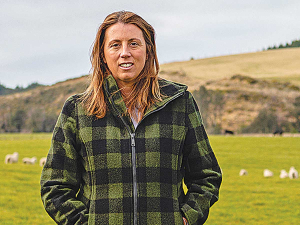
Red meat farmers are welcoming Labour’s plan to review the Emissions Trading Scheme and not to campaign on pricing agricultural emissions.
Where any worker in the kiwifruit industry is mistreated, we expect the authorities to take action.
Mid Canterbury Federated Farmers arable chair, Bevan Lill, said Beef + Lamb NZ data indicated that for the last six years, the average arable return on investment was about 0.8% while inflation ran about 4% - so the average arable farm was going backwards at about 3% a year.
Seed and grain companies share the concerns of arable farmers about the viability of their sector, says Seed and Grain New Zealand chief executive Dr Sarah Clark.
The New Zealand Institute of Forestry (NZIF) says unnecessary changes to New Zealand’s Emissions Trading Scheme (NZ ETS) will seriously erode investor confidence and result in significant reductions in forest planting rates.