Fall Armyworm in NZ Maize: Four Years of Research
Four years since it was first detected in New Zealand, researchers and growers now know much more about management of maize pest fall armyworm (FAW).
 increase font size
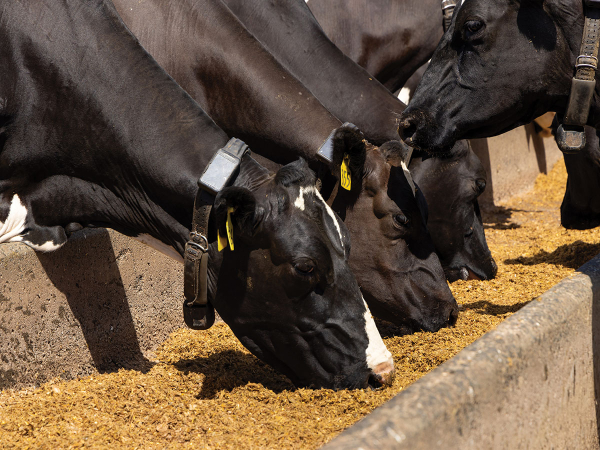 The dry period is your best opportunity to correct body weight deficits, protect animal health, and build the platform for a strong start next season.
As spring calving cows head into dry-off, the priority shifts to one thing: setting cows up to calve at the target body condition score (BCS).
The dry period is your best opportunity to correct body weight deficits, protect animal health, and build the platform for a strong start next season.
Getting the dry period right comes down to planning early: knowing your starting BCS, confirming your calving BCS targets, and matching feed supply to what dry cows can realistically eat. It's also about discipline consistent allocation, smart grouping, and regular checks so that cows are trending in the right direction well before calving. Don't forget about cows that are grazing off farm or heifers.
For heifers, the target is 90% of mature cow weight by calving. Heifers that calve below target are more likely to have poorer milk production, reduced fertility and shorter herd life, whereas those that meet the target perform more like mature cows from their first lactation onwards.
Many farmers are using maize silage as a cornerstone of their dry-cow ration. When pasture supply is variable, maize brings consistency supporting steady intakes and a reliable energy supply, which is critical if you're trying to hold or gain BCS through winter.
With the availability and spot price of bought-in feed often changing quickly, the advantage of maize silage is confidence: you can plan around known quality and known volume. That makes it easier to set a ration that meets requirements, which is exactly what dry cows need if they are to hit BCS targets.
Quality matters. Well managed maize silage with good starch levels, high digestibility and now heating delivers more usable energy per kilogram of dry matter, helping you get more out of every mouthful - especially important when pasture is not meeting dry-cow needs.
At calving, target BCS 5.0 for mature cows and BCS 5.5 for first and second calvers. Don't rely solely on the herd average, identify cows below target early and, where practical, manage them separately so allocation matches need. As a guide, aim for fewer than 15% of the herd to be below target by calving.
Dry period length should be set by two things: (1) how much BCS each cow needs to gain to reach calving targets, and (2) the amount and type of feed available to do it. Work backward from the planned start of calving, then set drying-off dates that give you enough time, especially for lighter cows.
As a rule of thumb, cows gain around 0.5 BCS per month under good management. Also factor in that there are typically 30–40 days across the dry period where little to no BCS gain occurs (often the first 10 days after drying off, and the month before calving). That means the ‘effective’ window to put condition on can be shorter than it looks on the calendar.
| BCS | Days Dry Before Calving | ||
| Cow | R 3 yr old | Autumn pasture only | Autumn pasture + quality supplement |
| 3.0 | 3.5 | 160 | 120 |
| 3.5 | 4.0 | 130 | 100 |
| 4.0 | 4.5 | 100 | 80 |
| 4.5 | 5.0 | 70 | 60 |
Table 1. Number of days needed between drying off and calving to meet target BCS when feeding either just pasture or pasture and a good quality supplement (includes no BCS gain for 10 days at drying off and 30 days before calving).
Adding in a supplement can also be an effective way of building pasture cover however if you are trying to build a feed wedge you need to consider the impact of supplement types on substitution. Research has shown that pasture substitution is at its lowest in autumn In the spring substitution rates of around 50% are common, This means for every extra 1 kgDM supplement eaten, 0.5 kgDM pasture is left behind; in contrast, in autumn, the substitution rate is typically lower (say 30% which means 0.3 kgDM pasture not eaten). Feeding a forage like maize silage will create higher substitution than concentrates such as palm kernel expeller (PKE).
If pasture alone won't meet requirements, maize silage can help fill the gap without overcomplicating the system. The practical focus is on consistency: keep the ration similar day-to-day, manage the silage face to protect quality, and feed it our carefully to ensure all cows get access. Check progress regularly (BCS scoring) and adjust feeding rates early if cows are not trending toward target - small changes made in June and July are far easier than big corrections in the weeks before calving.
Wade Bell is Genetic Technologies farm systems manager. Contact him at This email address is being protected from spambots. You need JavaScript enabled to view it.
Four years since it was first detected in New Zealand, researchers and growers now know much more about management of maize pest fall armyworm (FAW).
Body Condition Score (BCS) is a critical element in managing the health and reproduction of the dairy herd.
The transition period (typically defined as the three weeks prior to and the three weeks immediately after calving) sets the biological and productive trajectory for the entire lactation by determining how well the cow adapts from pregnancy to peak milk production.
Giving calves the best possible start to life has been shown to boost growth and resilience.
The first weeks of a calf's life quietly shape the future of the entire herd.



Now in its fourth year, the 2026 Fencing Industry Awards, formed part of the proceedings of the FCANZ Conference, held in Nelson during August.

DairyNZ deputy chair Cameron Henderson has been re-appointed unopposed for another term.
OPINION: The stats speak for themselves.
Farms across the upper North Island are trialling different pasture mixes as part of a research programme that aims to build greater resilience into farming systems.
Election years are always a concerning time for farmers, according to DairyNZ chair Tracy Brown.
The Ballance Farm Environment Awards are coming to the West Coast of the South Island.