Farm Safety Improves Through 'Incremental Gain', Says Birkett
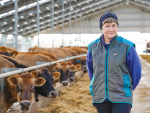
Improving health and safety is about incremental gain rather than a sudden decision, says Leeston farmer and Federated Farmers health and safety spokesman David Birkett.
 increase font size
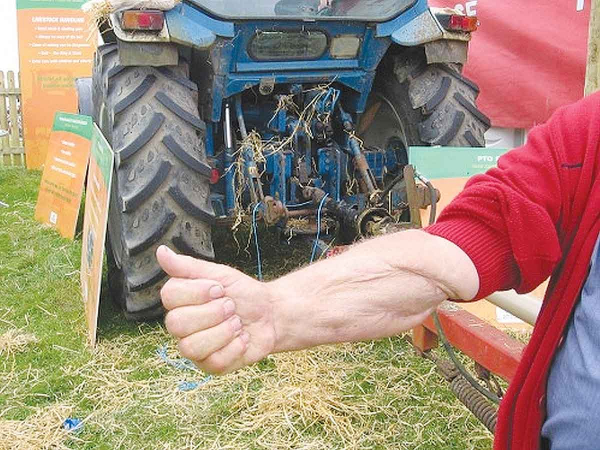
With on-farm safety being a real challenge, especially for employers, the Smart HS approach might offer some answers.
Developed by Donna Clarke and Graham Foote, the online resource delivers structured training delivered in a straightforward manner with common sense as a key driving force.
Both from a rural and corporate background, the couple now operate a kiwifruit orchard in the Bay of Plenty. Graham, who also worked as a dairy farmer, put his practical skills to good use in the training sector. This included working with Farmsafe, Drive Zone and Ag Challenge, training operators to NZQA standards for the use of quads, side-by-sides, tractors and 4WD vehicles. He also did training for Fonterra, NorthPower, the Department of Corrections and of course many farmers and growers.
Smart HS offers a series of online training courses, covering the likes of motorbikes, quads, side by sides and tractors.
Each course is broken into modules. For example, with side by sides, the course covers the legal requirements and regulations, safety and maintenance, machine controls, driving tips, load dynamics and recovering from awkward situations.
As the candidate moves through each of the modules – a process that can be monitored by the employer – they receive current, straightforward information, supported by video content that demonstrates the likely outcomes if good health and safety practice is not applied.
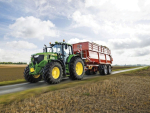
In the case of farm tractors, the modules consist of the legalities, safety and maintenance, controls, safe towing, safe use of 3-point linkage and PTO driven implements, managing tractor dynamics and common mishaps. Once again, the information is practical, well thought out and clearly demonstrates Foote’s experience gained over many years.
Moving on from the study modules, the owner or operators can move onto practical modules, putting the theory into practice. Indeed, should farm owners or managers wish to upskill, they can also undertake courses to become a Smart HS assessor. This helps them to understand a trainees’ ability to understand, make behavioural changes and ultimately benefit from the content.
The online information is also available to use as refresher training for existing employees, so with a typical theory and practical module costing around $270, it seems a small price to pay for sound, practical advice that meets the requirements of the Health and Safety at Work Act of 2015.
Improving health and safety is about incremental gain rather than a sudden decision, says Leeston farmer and Federated Farmers health and safety spokesman David Birkett.
A safety push across New Zealand has revealed significant gaps in hazardous substances management, farm vehicles, tractors, quad bikes and side-by-sides.
Keeping healthy and safe during vintage 2026
Following a side-by-side rolling into a gully, Safer Farms has issued a new Safety Alert.
Farmers are welcoming new Government proposals to make farm health and safety rules more practical and grounded in real-world farming.


Waikato milk processor Tatua has again declared a record milk payout to farmer shareholders, leaving other processors in the dust.
A Labour-led Government won’t be bringing back the controversial freshwater rules of 2020.
National’s much-touted free trade deal with India featured in the Rural Issues Debate at Mystery Creek, Hamilton on Wednesday night.
New Zealand's 2026-27 freshwater fishing season has opened, with anglers encouraged to head to rivers and lakes over the coming days as conditions look favourable across much of the country.
Central Otago District Council (CODC) has voted against a plan to spread treated sewage sludge from Cromwell and Alexandra on farmland near Lauder, a decision Federated Farmers says reflects strong opposition from rural residents.
Pāmu has released its FY26 Integrated Annual Report, reporting a Net Operating Profit of $113 million, more than double the $49 million recorded in FY25.