Amazone ZG-TX Spreader Gets New Weighing and FlowControl
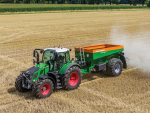
Amazone's ZG-TX combi spreader has been updated with several new features, centred around improved accuracy and easier operation.
 increase font size
 Catros+ machine.
New Zealand farmers can learn plenty about effluent management from their European counterparts.
Northern hemisphere farmers have long valued the nutrient benefits of liquid and solid manures, and the machinery industry has developed plenty of machinery for application on grasslands and crops. For example, self-propelled machines have resulted from the need to handle high daily outputs within time or season constraints, often because spreading has been forbidden at weekends.
Much of the material used in the cropping sector in Europe originates from the pig industry, well known for its problems with odours, prompting cultivation and seeding specialist Amazone to exploit the opportunity provided by its larger Catros disc cultivators.
The 7 - 9m Catros+ machines can be equipped with distribution heads fed by an umbilical connection to incorporate liquid effluent during cultivation, so getting nutrients to the plant root levels, with the added benefit of minimising odours in sensitive areas.
To deal with the corrosive effluents being used, machines are supplied with modified seals on the disc bearing assemblies and extra greasing points throughout the machine frames.
Distribution heads are sourced from industry leaders Vogelsang, who can supply their DosiMat or ExaCut heads dependant on the material and quantity being applied.
In operation, delivery pipes take material to a point ahead of the front rows of discs where it is mixed with the surface levels. A second set of discs further incorporate the effluent to depths between 3 and 14 cm for effective use.
Amazone's ZG-TX combi spreader has been updated with several new features, centred around improved accuracy and easier operation.
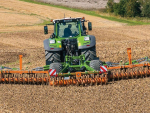
With an extensive cultivation portfolio, Amazone entered a new era in tillage 25 years ago when it launched the newly developed Catros in 2001, an innovative design with a high performance, compact, shallow stubble cultivator, initially sold as a three-point linkage mounted implement.
With the price of fertiliser still significantly higher than 2024, there is an increased onus on ensuring its spread accurately at the correct rate.
With many European manufacturers releasing mechanical weeding systems to counter the backlash around the use and possible banning of agrochemicals, Amazone has added a new model to its Venterra mechanical hoe range.
Landpower is heading to Mystery Creek to showcase the latest Claas Harvest Centre European technologies from manufacturers, including Claas, JCB, and Amazone.



Now in its fourth year, the 2026 Fencing Industry Awards, formed part of the proceedings of the FCANZ Conference, held in Nelson during August.

DairyNZ deputy chair Cameron Henderson has been re-appointed unopposed for another term.
OPINION: The stats speak for themselves.
Farms across the upper North Island are trialling different pasture mixes as part of a research programme that aims to build greater resilience into farming systems.
Election years are always a concerning time for farmers, according to DairyNZ chair Tracy Brown.
The Ballance Farm Environment Awards are coming to the West Coast of the South Island.