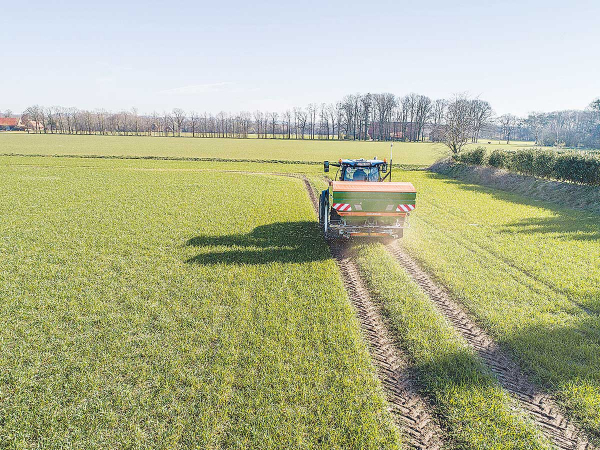
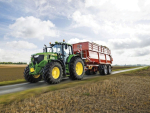
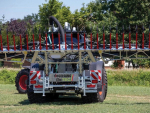
Cultivation, seeding and fertiliser application specialist Amazone claims its new AutoTS spreading system can increase yields along the borders of the paddock by up to 17%.
Accurate, tailored fertiliser application plays a critical role in reducing costs and protecting the environment.
The proven disc-integrated system uses shortened blades for more accurate, flexible spreading along borders, allowing settings to be adjusted to a specific spreading situation, such as a crop edge, boundary or water course, from the tractor cab.
CLAAS Harvest Centre product specialist - Amazone, Steve Gorman, says "for example, if a paddock borders onto land with a similar crop, 100 per cent of the application rate can be spread right up to the edge of the field using the side spreading function. If the paddock borders a road or public footpath, the boundary spreading function reduces the maximum throwing distance and prevents fertiliser from being thrown across the border."
Large-scale field trials conducted over several years have compared the performance of AutoTS system to conventional border spreading techniques under real-time, practical conditions.
Comparing calcium ammonium nitrate being spread at 24 metres, over three separate passes, the average yield of the five-metre border treated using a conventional border spreading system was only 68% of the main body of the paddock. This increased to 85% when using the Amazone AutoTs system.
Gorman says this improvement can really add up in small or irregular-shaped fields because they have a higher proportion of border area.
The value generated by the AutoTS system, compared to conventional border spreading systems, can be estimated using an Amazone's online calculator at www.amazone.net/border-spreading-calculator.