Still going strong!
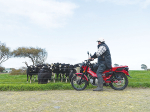
The saying goes ‘if it ain’t broke -don’t fix it’, so it’s no surprise to see an old favourite in the shape of the Honda CT125 still doing it like it always did, but with a revamp from the iconic CT110 that started things.
 increase font size
 The Honda XR 150L is road registerable.
Replacing the well known XR 125, the new Honda XR 150L is a step up for those preferring two wheel transport on the farm or between properties, as the machine is road registerable and LAMS approved.
Now equipped with a 149cc fuel injected engine, the unit benefits from several technical upgrades including an offset crankshaft, roller rocker assemblies and a lighter piston. It has an electric starter, but for a back-up it’s equipped with a kick-starter to deal with a flat battery (usually caused by the ignition being left switched on overnight).
A light-action clutch lever allows the operator to snick the machine into gear and quickly move through the five-speed transmission.
Mounts and dismounts are made easy with an 825mm seat height, and the long, sculpted seat gives good support and comfort.
Up front, twin telescopic forks have 180mm of travel to soak up rough ground or potholes, while a rear single shock takes care of the rear with 150mm of movement. Front tyre equipment is 19-inch, mated to a 17-inch rear, combining in a useful 233mm ground clearance.
Braking is by a 240mm disc with a twin-piston calliper at the front, with a drum unit at the rear. Final drive is by a high quality O-ring chain at the rear, easily maintained with eccentric cam style adjusters.
Standard equipment includes a comprehensive instrument binnacle with an analogue speedo and display area with multiple warning lights.
Additional equipment includes a parking stand on the left side, twin rear view mirrors, halogen headlight and direction indicators. Completing the package is a rear tubular carrier, engine crankcase guard and hand protectors on the handlebars.
The saying goes ‘if it ain’t broke -don’t fix it’, so it’s no surprise to see an old favourite in the shape of the Honda CT125 still doing it like it always did, but with a revamp from the iconic CT110 that started things.
Back in 1990, Malcolm Gray was an importer and distributor of conventional motorcycle helmets.
Police are urging dirt bike riders to get their motorbike driver’s license before riding in public places.
Honda's Pioneer UTV has a huge following on the farms and back blocks of New Zealand, no doubt driven by its reliability, but also by a host of technical features that makes it stand out from a crowded market.
Remarkably there are still many of the venerable Honda step-throughs operating on rural properties throughout New Zealand.


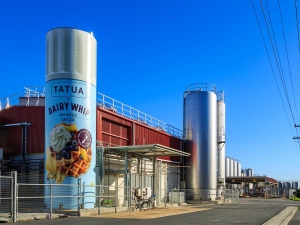
Waikato milk processor Tatua has again declared a record milk payout to farmer shareholders, leaving other processors in the dust.

A Labour-led Government won’t be bringing back the controversial freshwater rules of 2020.
National’s much-touted free trade deal with India featured in the Rural Issues Debate at Mystery Creek, Hamilton on Wednesday night.
New Zealand's 2026-27 freshwater fishing season has opened, with anglers encouraged to head to rivers and lakes over the coming days as conditions look favourable across much of the country.
Central Otago District Council (CODC) has voted against a plan to spread treated sewage sludge from Cromwell and Alexandra on farmland near Lauder, a decision Federated Farmers says reflects strong opposition from rural residents.
Pāmu has released its FY26 Integrated Annual Report, reporting a Net Operating Profit of $113 million, more than double the $49 million recorded in FY25.