
Wool generally steady
A versatile and stylish South Island selection on offer this week saw most types well supported, despite a slightly firmer NZ dollar, says NZ Wool Services International's chief executive John Dawson.
 increase font size
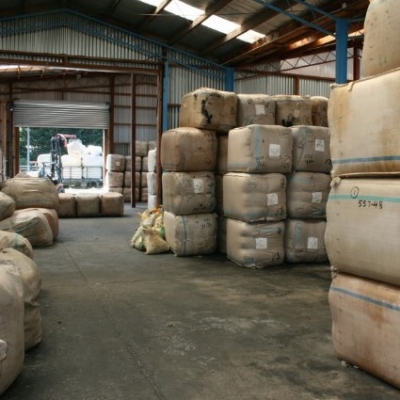
This week's South Island offering of 8,500 bales of wool saw an 84 % clearance says New Zealand Wool Services International Limited's general manager, John Dawson.
Market pressure pushed some prices up while others eased slightly, however overall it was generally a firm sale.
The weighted indicator for the main trading currencies compared to the last sale on 19th February was practically unchanged, easing only 0.21%.
Dawson says that Fine crossbred fleece 34 micron and finer were firm to 1.5% dearer with 35 microns up to 2% easier.
Fine crossbred shears were firm to 3% cheaper reflecting less activity from China as they take their New Year vacations.
Coarse crossbred fleece good and average styles were firm, with poorer styles 1% cheaper. Coarse shears were firm to 1% dearer.
First lambs 28 micron and finer were 2% dearer, 28.5 to 30 micron up to 1.5 % easier and coarse types firm to 2.5 % dearer.
Long oddments were up to 2% dearer with good colour short oddments 3 to 5 % cheaper and poorer styles firm to 3% easier.
Limited competition with Australasia, India and the Middle East principals supported by China and Western Europe.
Next sale on 5th March comprises approximately 12,600 bales from the North Island and 8,000 bales from the South Island.
A versatile and stylish South Island selection on offer this week saw most types well supported, despite a slightly firmer NZ dollar, says NZ Wool Services International's chief executive John Dawson.

NZ Wool Services International's North Island offering of 5400 bales received strong support with 99% selling, chief executive John Dawson says.
John Dawson, CEO of NZWSI, reports that the South Island sale this week saw a strong market with steady support.
NZWSI’s general manager, John Dawson says that a continuing upward trend at today’s South Island wool sale saw prices increase.
The rapid rise in the New Zealand dollar just prior to auction saw a lowering of local wool prices in many areas says New Zealand Wool Services International (NZWSI).


Safer Farms is urging farmers to make sure everyone working on farm has safe, suitable footwear for the job.

The Government is backing work on a community-led water storage scheme that could irrigate up to 11,000 more hectares of the Poverty Bay flats, Agriculture Minister Todd McClay says.
Agri-tech company Herd-i has become a new all-region sponsor of the New Zealand Dairy Industry Awards (NZDIA), the largest nationwide celebration of excellence in the dairy sector.
Four candidates have been confirmed for two director positions on Fonterra’s board.
Returning to the family dairy farm after playing 20 years of professional rugby around the world is no easy task.
After delivering another record farmgate milk price to 100 supplying farms, independent milk processor Tatua is entering thee new financial year with a positive outlook.