Two new awards open to help young farmers progress to farm ownership
Entries have opened for two awards in the New Zealand Dairy Industry Awards (NZDIA) programme, aimed at helping young farmers progress to farm ownership.
 increase font size
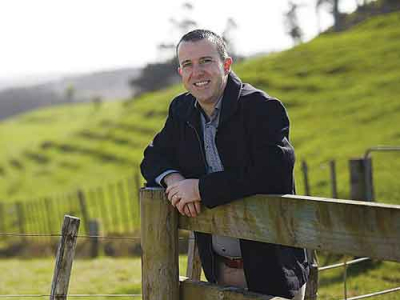 Nathan Penny.
ASB economist Nathan Penny says New Zealand agriculture hasn’t backed great science with great stories.
Speaking at the inaugural proteinTECH conference in Auckland today, Penny reminded 200 attendees of the food miles debate that gripped the country ten years ago.
He says a campaign by UK farmers to turn their consumers against NZ butter and meat flopped because of great work done by Professor Caroline Saunders, Lincoln University.
Research led by Saunders found that contrary to UK farmers’ claims, the carbon footprint of NZ dairy products shipped to UK was 50% of the carbon footprint clocked by UK dairy products; carbon footprint of NZ lamb was only 25% of UK lamb.
Saunders found that NZ cows and sheep grazed outdoors and had a smaller carbon footprint than UK animals which were housed 24/7.
Penny says the British went quiet after Saunders’ research results came out.
“The farmer groups them employed a different strategy- buy British-made food,” he says.
He says consumers warmed to this strategy and NZ lamb exports to the UK declined.
Penny says the food miles debacle shows that science alone wasn’t enough to win consumers’ trust in the UK.
“We need stories, brands around stories and influences to win consumers,” he says.
“We have great science but we are missing out on stories and key influences.
“Caroline (Saunders) provided us great ammunition but we failed to back it with great stories; we were beaten by the British when it came to storytelling.”
Entries have opened for two awards in the New Zealand Dairy Industry Awards (NZDIA) programme, aimed at helping young farmers progress to farm ownership.
According to ASB, Fonterra's plan to sell it's Anchor and Mainlands brands could inject $4.5 billion in additional spending into the economy.
Sheep and beef farmers are cautiously optimistic as farmgate prices continue to firm.
The 2025-26 season is set to start on a high and a $10/kgMS opening forecast milk price isn't being ruled out.
A global trade war beckons, which is bad news for a small open economy like New Zealand, warns Mark Smith ASB senior economist.

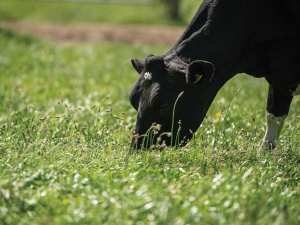
Farms across the upper North Island are trialling different pasture mixes as part of a research programme that aims to build greater resilience into farming systems.
Election years are always a concerning time for farmers, according to DairyNZ chair Tracy Brown.
The Ballance Farm Environment Awards are coming to the West Coast of the South Island.
Most dairy regions around the country have had a pretty good season so far says Tracy Brown.
Rural leader Mark Hooper has been appointed as an independent director to the NZPork board, bringing extensive farming, governance and advocacy experience to the role.