Beef + Lamb New Zealand Awards 2026 Winners Announced in Christchurch
Last night saw the winners of the 2026 Beef + Lamb New Zealand (B+LNZ) Awards named at a gala dinner at Te Pae Christchurch Convention Centre.
 increase font size
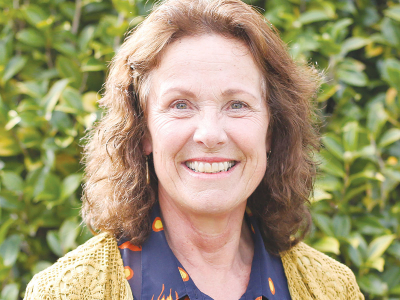 Margaret Brown, one of the authors of Heartland Strong.
Decisions are being made about and for New Zealand’s rural communities by the 80% of the population who live in urban areas, say the authors of a new book on rural change.
Current trends favour a market led, business focussed approach to regional growth, but these trends downplay social and community considerations, and that needs further thought, the authors say.
Heartland Strong: how rural New Zealand can change and thrive finds that rural communities have enormous strengths which could be enhanced and maintained even in the face of inexorable change.
The book condenses the findings of a 10-year study of the resilience of NZ’s rural communities led by AgResearch senior social scientist Dr Margaret Brown.
“Over 100 academic papers and reports later we decided that the people who make the decisions affecting rural communities actually don’t read academic papers so let’s take a selection of the research and write it onto a popular and far more accessible style of writing,” Brown says.
The researchers found “great” examples of rural resilience from Wairoa to Southland, and discovered that strong relationships, connectedness and support networks are what they have in common.
They say the lessons learned by successful communities should be shared more widely and they call for engagement and changes to the way government services are delivered in rural areas.
“One overlooked opportunity is the interest and capability of many rural people who would like to be engaged and valued in making decisions about rural resilience that directly affect them.”
Brown says the authors define resilience as the ability to bounce forward to a new state, not back to the way things were.
“So many things are either driving change or imposing change on agriculture that it can’t be business as usual. It has to change. And to be able to change at a farm level and at a community level you’ve got to have resilience.”
Very little work had been done on NZ rural communities when the research began, Brown says. The main message was that resilience was complex and there was not one recipe for all.
Farmers and rural communities had always been resilient and reacting to change but more and bigger changes were coming.
“What we haven’t seen before is the public scrutiny of farming like we are seeing now. That change will take quite a bit of getting our heads around and adapting to.”
Brown said an example of coming change is the 1 billion tree initiative, which some people se as an opportunity but others as “quite a threat”.
“Many people we’ve been working with see the Government 1 billion trees initiative as threatening to agriculture and to rural communities.
“In the East Coast in particular there was quite a hollowing out of the towns because the labour didn’t actually come from the towns but was brought in. And of course trees don’t generate much labour except at certain times, and then the workers left.”
There was also “terrible” erosion on vulnerable land when the mature trees were cut down, she said.
Another change was the way smaller rural centres were closing down and rural services concentrating into the larger centres.
“I’m a farmer here in Manawatu and one of the things that people coming to work for us ask is, is there a local school? They don’t want their children travelling too far. They want to know if there’s a rugby club and whether all the support services not too far away.”
Last night saw the winners of the 2026 Beef + Lamb New Zealand (B+LNZ) Awards named at a gala dinner at Te Pae Christchurch Convention Centre.
A significant breakthrough in understanding facial eczema (FE) in livestock brings New Zealand closer to reducing the disease’s devastating impact on farmers, animals, and rural communities.
A breakthrough in the understanding of Facial Eczema (FE) in livestock could bring New Zealand closer to reducing the disease’s impact.
An innovative idea for transforming mechanically deboned meat (MDM) into a meat flake for seasoning has taken top honours in the Meat Industry Association’s (MIA) first-ever Dragon’s Den competition.
The Government's plan to merge the seven crown institutes presents exciting possibilities for plant technology company Grasslanz Technology, says chief executive Megan Skiffington.


OPINION: The time has come for the Government to back the organic sector.
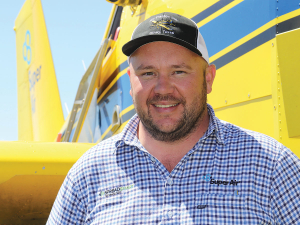
Plan ahead and be patient. That’s the message to farmers and horticulturalists from the chairman of the NZ Agricultural Aviation Association, Kent Weir.
The industry is crying out for graduates with agricultural related degrees.
While GPS and guidance have become the norm and yield mapping and variable application continues to gain traction, most agricultural machinery manufacturers continue to expand their technology offerings, amalgamating the vast amounts of data being collected to streamline real-time and ongoing management decisions.
Supply chain problems, growing protectionism and a move to greater food security are some of the key challenges facing New Zealand exporters, according to our top trade negotiator, Vangelis Vitalis.
A spat within the ranks of the New Zealand Deer Farmers Association has resulted in the suspension of outspoken North Canterbury farmer Barry Cuttance.