Milk Powder Prices Prop Up Farmgate Milk Price
Milk powder prices are keeping farmgate prices up, helping processors offset the dip in milk fat prices.
 increase font size
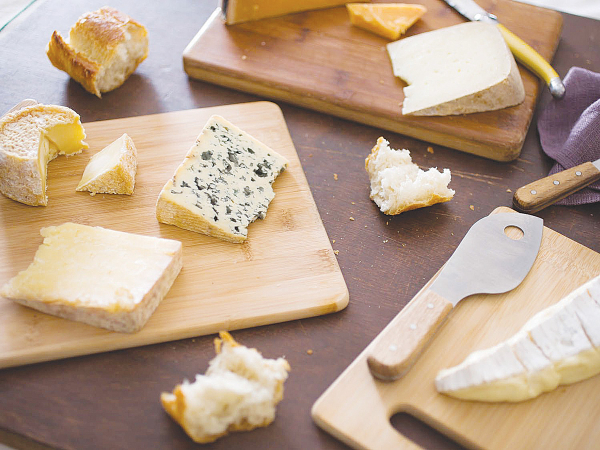 Since late 2021, global cheese prices have averaged 32% higher than the five-year average prior - between November 2016 and October 2021.
The first Global Dairy Trade (GDT) auction for the new season delivered underwhelming results last week.
Whole milk powder prices slumped 3% to US$3,173/metric tonne while milk fats managed modest gains.
ASB economist Nat Keall notes that dairy prices have largely drifted over recent auctions, struggling to maintain clear direction.
Keall says the WMP contract curve at the last auction appeared to show momentum, with buyers paying a premium for product stretching into the middle of the season.
But that has largely dissipated, with prices flatlining in a US$3,150-$3,200/MT range this auction.
Keall says the most notable feature of last week's auction was China's continued absence from the market. The North Asia group took only around 34% of the WMP on offer this auction, equivalent to the sort of proportion it was buying during its zero-Covid period last year.
"Looking over the last handful of auctions - and six months on from the ending of those restrictions - China's return to the global dairy market has been modest and uneven.
"This isn't hugely surprising. Local WMP production remains strong, while domestic consumption remains comparatively subdued. Recent Chinese economic data has printed below expectations too, undermining the notion that a strong domestic recovery will put a rocket under dairy auction prices anytime soon."
ASB has retained its $7.25/kgMS farmgate milk price forecast for the season.
Keall says the prevailing global dairy market dynamics don't look hugely supportive for prices.
"As we've said for some time, global dairy supply looks to be past the lows of recent years at the same moment that global growth is slowing, crimping consumption."
If there's a silver lining for farmers, it's that the NZ dollar continues to underperform.
"Indeed, this was the catalyst for our decision to add 25c to our milk price forecast last week.
"The Kiwi continues to trade in a lower band in the aftermath of the RBNZ's surprise dovish turn a fortnight ago. Relative interest rates look to have peaked in NZ's favour and have shifted towards the US. If the NZ dollar heads lower, earlier than we expect, that could yet push our forecast a little higher still."
Meanwhile cheese prices continue to soar. Last week's GDT saw cheddar prixed rise 7.4% to US$4,668/metric tonne.
Westpac senior agri economist Nathan Penny says the world now definitely loves cheese.
"Indeed, reflecting this global love affair, since late 2021, global cheese prices have averaged 32% higher than the five-year average prior - between November 2016 and October 2021.
"Pinning down the exact genesis for the cheesy trend is a question for the marketing experts, however, we suspect it has something to do with Covid lockdowns, the ease of pizza deliveries during said lockdowns, and therefore a new-found love of cheese in the large fast-growing markets in Asia."
However, New Zealand is not relatively well-placed to benefit from high cheese prices.
"While increasing global consumption of dairy products is normally a good thing for New Zealand, we are not well-placed to benefit from higher cheese prices, at least in the short-term," says Penny.
"New Zealand dairy companies have limited (factory) capacity to produce more cheese. And while cheese production has expanded where possible, in the short term, these companies are stuck producing other less profitable products like whole milk powder."
Milk powder prices are keeping farmgate prices up, helping processors offset the dip in milk fat prices.
OPINION: With 10,500 dairy farms, New Zealand continues to punch above its weight around the world.
A milk glut around the world shows no sign of easing, putting downward pressure on farmgate milk prices for the next few months.
Fonterra has reduced its forecast 2026/27 Farmgate Milk Price.
New Zealand dairy farmers are set to be the first in the world to receive access to a new digital physical milk pricing tool that enables them to fix the price for their physical milk.



Pāmu has released its FY26 Integrated Annual Report, reporting a Net Operating Profit of $113 million, more than double the $49 million recorded in FY25.

Meat Industry Association data, released alongside the Red Meat Sector conference in Wellington, shows export value climbing across the US, China, UK and Canada.
Applications are set to open for the 2027 Zanda McDonald Award, a trans-Tasman award recognised for identifying and fast-tracking talented young leaders in agriculture and agribusiness.
The Royal New Zealand College of General Practitioners (the College) and Hauora Taiwhenua Rural Health Network are calling for investment in a proposed new training pathway for rural GPs, warning that many rural practices are struggling to recruit while a large share of the existing workforce nears retirement.
Federated Farmers has called on Central Otago District Council (CODC) to drop or vote down a plan to truck sludge from Alexandra and Cromwell to farmland near Lauder, warning it would compound an "outrageous" situation created by a separate council's decision weeks earlier.
Synlait has swung to second-half profit as operations stabilise, but the dairy processor still posted a $75.4m annual loss.