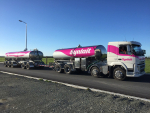
Synlait FY26 Result: $75.4m Loss, Second-Half Profit
Synlait has swung to second-half profit as operations stabilise, but the dairy processor still posted a $75.4m annual loss.
 increase font size
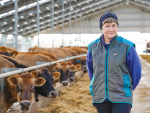
 Leon Clement, Synlait chief executive.
Synlait's final average total milk price for FY18 has been announced as $6.78/kgMS.
This includes a base milk price of $6.65/kgMS (FY17 base milk price: $6.16/kgMS) and seasonal and average value-added incentive payments of $0.13/kgMS.
Synlait said its forecast milk price for the 2018-2019 season is now $6.75/kgMS because of declining commodity prices putting pressure on the opening forecast of $7.00/kgMS, mitigated by a weakening NZ dollar.
The forecast $6.75/kgMS anticipates improving commodity prices in the medium term.
“Our milk suppliers are an important part of what we do at Synlait, and we appreciate the role they play in our success,” said Leon Clement.
“We’re looking forward to partnering with other like-minded farmers in the Waikato when we begin operations there in 2019-2020, and we’ve been impressed by the positive responses we’ve had so far.”
Profit doubles
Canterbury milk processor Synlait has nearly doubled its profit for the financial year ended July 31.
The $74.6 million net after tax profit (NPAT) compares with $39.5m in the same period last year.
Revenue increased from $759m to $879m.
“That is a gratifying 16% growth in top line and an 89% growth in bottom line,” said chairman Graeme Milne.
The results were achieved during a time of hefty investment and a renewed focus on the future, Milne said.
Higher finished infant formula sales were enabled by new plant for blending and consumer packaging.
“In November 2017 we completed our second Dunsandel wetmix kitchen, and the same month commissioned our Auckland blending and consumer packaging facility. Both projects have allowed us to increase our finished infant formula capacity,” said Milne.
The company is in its tenth year of operation.
“This has been a milestone year for Synlait as we grew in capability and capacity. We’re stepping up our performance and looking ahead at where we want to be,” said Milne.
Synlait co-founder John Penno stood down as chief executive in August but will remain on the board.
“John has been a wonderful leader for Synlait, taking the company from startup to a market capitalisation of over $2 billion in ten years, said Milne.
“Synlait’s new chief executive, Leon Clement, has stepped seamlessly into his shoes. Leon has more than 16 years experience in the industry and is the ideal candidate to take Synlait into FY19 and beyond.”
Other leadership changes included Hamish Reid, appointed to the new role of director of sustainability and brand; Deborah Marris joining as director of legal, risk and governance; and Dr Suzan Horst as director, quality, regulatory and laboratory.
The company earlier this year said it would begin selling milk branded Everyday Milk on the NZ market. Now it plans to make cheese; it has bought “selected assets” of Talbot Forest Cheese under a conditional deal covering property, plant and equipment at a new 12,000 tonne site at Temuka, the consumer brand Talbot Forest Cheese and customer relationships.
“The proposed acquisition builds on our existing high-quality, flexible dairy manufacturing capabilities that can be tailored to meet customer needs,” said Clement.
“We will be able to manufacture a variety of cheese products and further diversify our revenue streams.”
The company plans to grow its Everyday Dairy milk category in NZ -- a $2 billion market -- and overseas.
Synlait has swung to second-half profit as operations stabilise, but the dairy processor still posted a $75.4m annual loss.
Speculation of a possible joint move by Fonterra and a2 Milk to buy Synlait raises a much bigger strategic question, says agribusiness expert Dr Nic Lees.
A revolving door of chief executives at milk processor Synlait is a warning sign, says Lincon University senior lecturer in agribusiness Nic Lees.
Troubled milk processor Synlait has lost its third chief executive in five years.


Pāmu has released its FY26 Integrated Annual Report, reporting a Net Operating Profit of $113 million, more than double the $49 million recorded in FY25.

Meat Industry Association data, released alongside the Red Meat Sector conference in Wellington, shows export value climbing across the US, China, UK and Canada.
Applications are set to open for the 2027 Zanda McDonald Award, a trans-Tasman award recognised for identifying and fast-tracking talented young leaders in agriculture and agribusiness.
The Royal New Zealand College of General Practitioners (the College) and Hauora Taiwhenua Rural Health Network are calling for investment in a proposed new training pathway for rural GPs, warning that many rural practices are struggling to recruit while a large share of the existing workforce nears retirement.
Federated Farmers has called on Central Otago District Council (CODC) to drop or vote down a plan to truck sludge from Alexandra and Cromwell to farmland near Lauder, warning it would compound an "outrageous" situation created by a separate council's decision weeks earlier.
Synlait has swung to second-half profit as operations stabilise, but the dairy processor still posted a $75.4m annual loss.