Synlait FY26 Result: $75.4m Loss, Second-Half Profit
Synlait has swung to second-half profit as operations stabilise, but the dairy processor still posted a $75.4m annual loss.
 increase font size
 Synlait Milk chairman Graeme Milne.
Synlait Milk has dropped forecast milk price for the 2015 -16 season from $5/kgMS to $4.20/kgMS.
Chairman Graeme Milne says the revision is driven by the sustained low global commodity prices since September 2015, and a view that the recovery will be slower than anticipated.
"Our previous forecast of $5/ kgMS expected prices to recover somewhat by this stage in the season, however this hasn't happened and our revised forecast reflects this," says Milne.
"Similar to this time last year, there is still a lot of uncertainty. While our business is focused on value added products, global commodity pricing is the main driver behind the milk price that our suppliers receive.
"European milk production is high following the removal of quotas last year. Low oil prices mean cheap feed for farmers in Europe, USA and China while demand for imported dairy commodities by China, the world's largest importer, has declined as their local milk production has increased."
Milne says Synlait will continue to monitor the situation and expects to revise the forecast milk price again in May 2016.
Managing director and chief executive John Penno says there is no doubt this year will be very tough for dairy farmers, with two straight years of unsustainably low milk prices.
"It's important that we continue to give our suppliers a clear and realistic idea of where the milk price is likely to end up. As always things may change, and we hope they do because it's hard to run a dairy farm business in this environment," says Penno.
"More than half of our suppliers are now involved in our Lead With Pride and Special Milk programmes. Each programmme offers a premium payment over and above the Synlait base milk price for differentiating milk on farm."
"But it's still very tough out there. We're meeting with our suppliers in a few weeks to create a forum where their ideas and options around managing through this period can be shared. They're not alone and we're committed to supporting them where we can."
Synlait has swung to second-half profit as operations stabilise, but the dairy processor still posted a $75.4m annual loss.
Speculation of a possible joint move by Fonterra and a2 Milk to buy Synlait raises a much bigger strategic question, says agribusiness expert Dr Nic Lees.
The new dairy season is kicking off with plenty of risks to the forecast farmgate price, both upside and downside, says ANZ agricultural economist Matt Dilly.
A revolving door of chief executives at milk processor Synlait is a warning sign, says Lincon University senior lecturer in agribusiness Nic Lees.


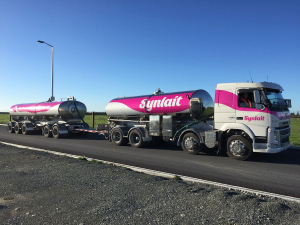
Synlait has swung to second-half profit as operations stabilise, but the dairy processor still posted a $75.4m annual loss.

LIC shareholders have elected a new North Island representative to the co-operative's Board, along with five representatives to its Shareholder Reference Group (SRG), following the company's Annual Meeting held in Invercargill.
Farmers across parts of Southland and South Otago are continuing to deal with difficult conditions after a prolonged run of wet weather, with pressure building around feed supply, stock management, pasture damage, farm infrastructure and everyday workloads.
Federated Farmers says it welcomes Labour's commitment to reviewing the Sharemilking Agreements Act, calling on other major parties to do the same.
For Canterbury dairy farmers Sian Meijer and Rick Wobben, wearable technology has become one of their most valuable on-farm tools - helping manage 1850 cows across an expansive, high-performing dairy operation while improving efficiency, mating outcomes and day-to-day decision making.
Fonterra has unveiled its annual results for the 2026 financial year, posting $27 billion in revenue and close to $20 billion returned to New Zealand farmer owners and unit holders.