Rural Women New Zealand will highlight the devastating impacts on families of leptospirosis, a disease that can be passed from infected animals to humans, at the New Zealand Veterinary Association conference in Hamilton next week.
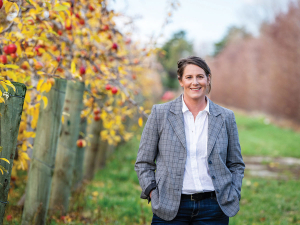
Fiona Gower, an RWNZ member from Port Waikato, will put the human face on leptospirosis, which is a key health concern for rural people as New Zealand has one of the highest rates of infection in the world.
Liz Evans, RWNZ national president, says if farm animals are affected, it can lead to severe stress for farmers dealing with poor animal health, a drop in milk production, poor reproduction and loss of stock.
"But when a family member or members contract the disease the impacts are huge," she says.
"Depending on the severity of the case, it will mean a long illness and recovery time, and at worst, death. Emotionally the stress on the family of having a sick spouse, parent or child is incredible – not knowing when or if they will get better."
Rural Women New Zealand has collected heart-rending stories from people who've caught the disease - the months and even years taken from people's lives, and the long term impacts on their health and financial situations.
One said, "After I contracted lepto my husband was so terrified of the disease he sold the farm." Another said "In the first week I thought I would die; then I wished that I had."
Evans says strengthening links between the research and medical sectors and the rural community is key to eradicating lepto.
"Working collaboratively we can raise awareness of leptospirosis and how to prevent it through vaccination of stock and good hygiene practices.
"In people, early diagnosis and treatment are also important in minimising its severity and long-term effects.
"We strongly suggest that rural people and farmers presenting at their GP with non-specific symptoms should always request that a test for leptospirosis be included in the blood test line-up, although antibodies will not be present for two to three weeks."
In people the mild form of lepto is a minor flu-like sickness, but without the respiratory symptoms. The severe form may include extreme headaches, high fever, nausea, muscle pain, breathing and vision problems and diarrhoea. About half of people with severe lepto are hospitalised, and there can be permanent complications from kidney or liver damage.
Rural Women New Zealand is the chair of the Farmers Leptospirosis Action Group, which is conducting SFF-funded research into leptospirosis at Massey University, looking at the cost-benefits of vaccinating sheep and cattle.
RWNZ has been involved in the fight to stamp out leptospirosis since the 1970s. At that time, members raised over $150,000 to fund research that led to the development of vaccines for dairy cattle and pigs.
With the death of a meat worker at a sheep-only plant in 2006, Rural Women NZ members mobilised once more, raising $107,000 for further research at Massey into transmission pathways from animals to farmers and meat workers.