Kāpiti Wins Supreme Champion at International Cheese and Dairy Awards
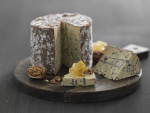
Kāpiti's Triple Cream Blue cheese has been named Supreme Champion Cheese at the 2026 International Cheese and Dairy Awards in the United Kingdom.
 increase font size
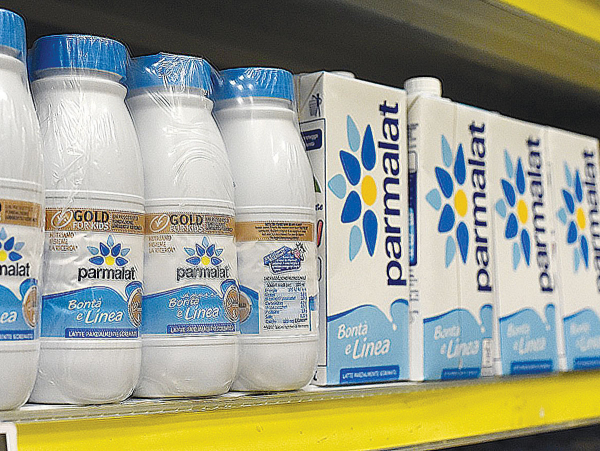 The world's number one dairy company Lactalis owns the ex-Parmalat business in Australia.
French company Lactalis has dethroned Nestlé as the world's largest dairy company.
Rabobank's annual Global Dairy Top 20 report released last month shows organic growth and a global mergers and acquisition strategy helped Lactalis unseat Nestlé.
In 2000, privately-owned Lactalis was placed ninth on the list with a turnover of US$4.8 billion.
Last year, its revenue totalled US$23b compared to Nestlé at just under US$21b.
Fonterra retains its sixth placing with total revenue of US$13.6b.
Lactalis, owned by the Besnier family, has a presence in Australia; it became a major shareholder in Parmalat's Australian business in 2011 before buying out the business in 2019.
The Rabobank report says, since 2010, Lactalis has grown its empire by adding about 60 deals, expanding its global footprint in the Middle East, Africa and North and South America.
Its pending purchase of Kraft Heinz natural cheese business and other businesses in Europe will boost revenue by another US$2.5b and extend the company's ranking next year.
The third place in the rankings has been retained by Dairy Farmers of America, the US' largest dairy co-op.
French company Danone and Chinese dairy giant Yili, which owns Westland Milk, Hokitika round up the top five.
European co-ops FrieslandCampina and Arla Foods feature seventh and eighth respectively.
The Rabobank report shows that in 2020, dairy companies faced significant challenges due to the Covid-19 pandemic, but overall, the sector fared better than expected.
The combined turnover of the top 20 industry leaders fell by just 0.1% in US dollar terms, following the prior year's 1.8% gain. In euro terms, the combined turnover decreased by 1.9%.
Merger and acquisition activity slowed in 2020, with approximately 80 announced deals versus the prior year's 105. Activity picked up in 2021, with over 50 deals announced through midyear.
Sustainability A Winner
The Rabobank report shows that in 2020, dairy companies faced significant challenges due to the Covid-19 pandemic, but overall, the sector fared better than expected, demonstrating its resilience.
The pandemic also heightened consumers' awareness of environmental challenges. A focus on sustainability was a winner for dairy companies.
"Consumer sentiments are being heard, and many companies included in the Global Dairy Top 20 have made sustainability commitments for 2030 and carbon-neutrality commitments for 2050," according to Richard Scheper, Rabobank dairy analyst.
Sustainability-marketed US milk sales grew more than 20% from 2013 to 2018, compared to negative growth for the category as a whole.
Sustainability-marketed natural cheese and yogurt sales grew over 30% and 20% respectively, compared to near 10% growth for those categories broadly over the five-year period.
The report says dairy alternatives keep growing and blurring the definition of dairy.
The sales growth of liquid milk and yogurt alternatives - especially oat and almond based variants - have not gone unnoticed.
Most significantly, Danone's turnover in dairy alternatives, following its acquisition of WhiteWave Foods in 2017, was recorded at US$2.5b, a gain of 15% compared to the previous year.
Kāpiti's Triple Cream Blue cheese has been named Supreme Champion Cheese at the 2026 International Cheese and Dairy Awards in the United Kingdom.

Lactalis New Zealand has opened a new distribution centre in Christchurch, marking a significant investment in the company's South Island supply chain capability.
Fonterra farmers are set for a multi-billion-dollar payout this week.
Two major acquisitions in the New Zealand dairy sector were completed this week.
Fonterra farmers will be smiling all the way to the bank next month.


Too many farmers put reclaiming excise duty on petrol into the "too-hard" basket, says farm accounting software provider, Farm Focus.
Tatua Co-operative Dairy Company has confirmed that chair and director Stephen Allen will retire at the co-operative's annual general meeting (AGM) on 3 December 2026, ending 30 years of service, including more than 20 years as Chair.
The Parliamentary Commissioner for the Environment, Simon Upton, wants environmental information to be treated as critical national infrastructure.
A Morrinsville business celebrating its 30th birthday has shaken up the street scene in the Waikato township.
New Zealand needs to make sure that it continues to focus on its own food security, according to HortNZ board member and blueberry grower Dermott Malley.
Halter has announced the six winners of its 2026 One Year Free competition, marking the biggest year yet for the annual award and the first time the company has expanded the field beyond its usual line-up.