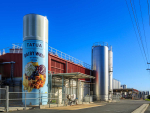
Ah Tatua, You've Done It Again!
Waikato milk processor Tatua has again declared a record milk payout to farmer shareholders, leaving other processors in the dust.
 increase font size
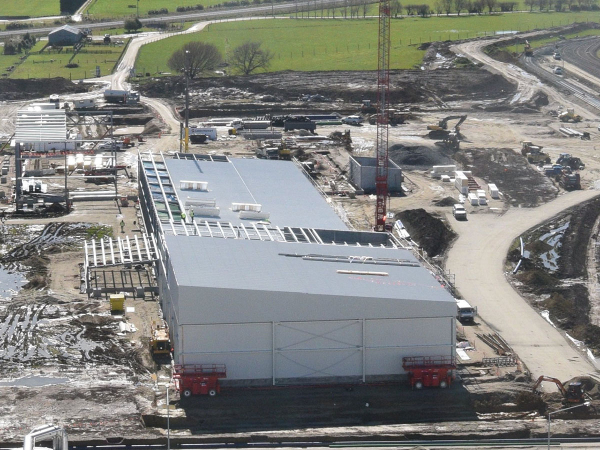 Fonterra’s new UHT cream plant at Edendale.
With Fonterra's UHT plant at its Edendale site less than a year from completion, demand continues to grow for products the plant will produce, such as Anchor Whipping Cream.
The co-operative's foodservice channel registered a $27 million increase in operating profit for FY25 as demand continued to grow for UHT cream, butter and individually quick frozen (IQF) mozzarella.
While China is the main destination for Fonterra's foodservice products, demand is growing in Southeast Asia where restaurant chains and cafes are using more dairy in their dishes.
Jack Tan, the co-op's acting director of Southeast Asia Foodservice, says the growth reflects a broader shift in how dairy is embraced across the region.
"We're seeing strong and sustained growth in demand for UHT cream across Southeast Asia Anchor Whipping Cream is becoming a staple in many local favourites, from beverages to baked goods."
Across Southeast Asia, Fonterra's dairy products are being infused into local favourites by adapting to regional tastes and food culture. Fonterra's Anchor Whipping Cream is being used in Portuguese egg tarts in Singapore, Malaysia and Thailand. It's also gaining popularity in local beverage applications across Malaysia, Singapore, Indonesia, and Vietnam - where it's even being added to Vietnamese coffee for a creamy twist.
The $150 million investment in the Edendale UHT plant is coming along well, with the first products expected to roll off the line in August 2026.
Andrew Johns, Fonterra's general manager of lower South Island operations, says that the investment at Edendale is not just about meeting demand - it's about building for the future.
"We're really excited about this opportunity to build a new plant here in Southland and supply UHT cream for growing markets."
The plant will initially create capacity to process upwards of 50 million litres of UHT cream annually, with the ability to grow beyond 100 million litres by 2030.
Nine months since construction began in January, the site is clearly visible from State Highway 1. The walls and concrete slabs for processing and packing are in place, and most of the roof is now on. Work on the product store is progressing well, and construction of the distribution warehouse is underway. External excavation is nearly complete and foundations for the container yard are advancing steadily.
"We're making sure we deliver a safe plant that can produce high-quality product that exceeds customer expectations."
Currently, more than 50 peole are working on the build, with that number expected to grow to around 150 in the coming months as activity ramps up.
"There's good energy on site and I hope that's filtering thro
Waikato milk processor Tatua has again declared a record milk payout to farmer shareholders, leaving other processors in the dust.
Fonterra has unveiled its annual results for the 2026 financial year, posting $27 billion in revenue and close to $20 billion returned to New Zealand farmer owners and unit holders.
Fonterra Co-operative Group has confirmed the independently assessed candidates standing for election to its board in 2026.
Fonterra has revised its Farmgate Milk Price forecast for the 2026/27 season, lifting the midpoint and narrowing the range on the back of improving global dairy commodity prices.
Outgoing Fonterra Co-operative Council chair John Stevenson says that it has been a privilege to represent the co-op's farmer shareholders.


New Zealand's citrus growers have been told to compete on the value built into their fruit rather than the volume they grow.
Hawke's Bay fruit growers are being reminded of the need to prepare for whatever the El Niño weather system may bring in the coming months.
Three and a half years on from when Cyclone Gabrielle hit Hawke's Bay, some orchardists in the region are still receiving counselling to help them deal with the trauma they suffered.
South of the central Hawke’s Bay town of Waipukurau is Taniwha Station – a highly successful 550ha bull beef farming operation.
Beef + Lamb NZ funded research has shown that some simple changes to pasture management could help farmers make better use of rainfall and build resilience before dry conditions hit.
OPINION: There could hardly be a more appropriate theme for a conference than the one chosen by the red meat sector - Navigating Volatility.