What Would Synlait Be Worth to Fonterra or a2 Milk?
Speculation of a possible joint move by Fonterra and a2 Milk to buy Synlait raises a much bigger strategic question, says agribusiness expert Dr Nic Lees.
 increase font size
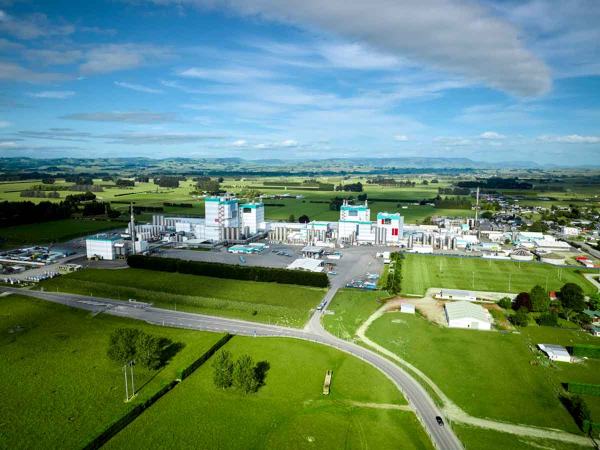 Fonterra has announced a $70 million investment in two further new electrode boilers.
While opening the first electrode boiler at its Edendale site, Fonterra has announced a $70 million investment in two further new electrode boilers.
The announcement comes as the co-operative makes the move away from coal use and towards renewable energy in an effort to futureproof its sites.
The two new electrode boilers will replace two existing coal-fired boilers, providing renewable energy to support milk processing and future growth at the site, including additional power and steam heat capacity for the new UHT plant currently being built.
Anna Palairet, Fonterra’s chief operating officer, says the investment marks a key step in strengthening operations at the Edendale site.
“Investing in renewable energy solutions, such as electrode boilers, will help ensure we can continue to process milk efficiently both now and in the future,” Palairet says.
“Securing a reliable energy supply is critical to the resilience of our operations, and this investment will help future-proof Edendale for years to come."
Fonterra says the investment supports its broader decarbonization and emissions reduction targets.
Once the two new electrode boilers are complete, it is expected that emissions at Edendale will be reduced by approximately 72,800 tonnes of CO2e annually which is the equivalent of removing more than 30,000 cars from New Zealand roads.
This is forecast to result in an approximately 4% reduction towards Fonterra’s overall 2030 Scope 1 and Scope 2 GHG emissions reduction targets.
The investment is co-funded as part of a previously announced Energy Efficiency and Conservation Authority (EECA) partnership.
EECA Chief Executive, Dr Marcos Pelenur, believes the project is a positive step toward enhancing productivity, building resilient infrastructure, and ensuring long-term operational sustainability.
“This project supports greater energy security while laying the foundation for future growth and adaptability.”
Invercargill MP Penny Simmonds says she is delighted by the announcement.
“This is a major announcement for our province, creating employment opportunities and boosting the local economy,” she says.
“It is also an excellent way for the cooperative to cut its emissions and continue to reduce its environment footprint.”
Construction is set to commence shortly, with the new boilers expected to be operational by August 2027.
Speculation of a possible joint move by Fonterra and a2 Milk to buy Synlait raises a much bigger strategic question, says agribusiness expert Dr Nic Lees.
With forecasters advising El Niño conditions will develop through winter and strengthen into spring and summer, Ballance Agri-Nutrients is encouraging farmers and growers to think ahead about nutrient planning and be prepared to work around challenging weather conditions.
In the past, much has been made of the concept of farm to fork, but an Australian expert in food science and marketing with experience in the dairy industry, Dr Angeline Achariya, says the reverse of this slogan is critical to win modern day consumers.
A four year trial has reaffirmed that mixing plantain into dairy pastures can help reduce nitrogen losses to freshwater while maintaining milk production and profitability, say researchers.
Fonterra has opened its upgraded Chengdu Application Centre, bringing New Zealand dairy expertise closer to customers in one of China's fastest-growing regions.


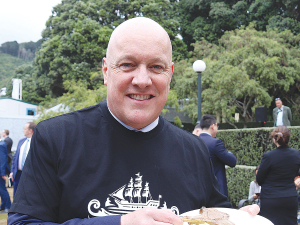
OPINION: In politics, credibility is and should be big. It must surely rank higher than charisma, which is quite trite and superficial. Yet, voters nowadays are often wooed and influenced by how someone looks or talks at a superficial level. TV plays a huge role in this.
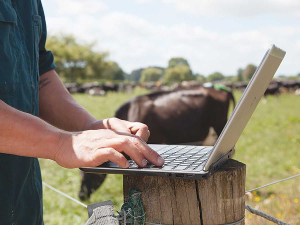
Farmers can spend less time on paperwork, thanks to a new data sharing agreement between DairyNZ’s DairyBase and LIC’s MINDA software.
Kaikōura families affected by July's severe storm have found a practical solution to a problem that's kept some children away from regular schooling for weeks: a washed-out section of Inland Kaikōura Road, which has stopped the local school bus from running its usual route.
Rural New Zealand is welcoming the Government’s recent package of rural healthcare initiatives.
Interest in agritech and production animal systems has prompted Massey University's School of Agriculture and the Environment to new majors to its popular animal science degree.
Ballance Agrinutrients chief executive Kelvin Wickham says despite a tough year, he is pleased the business has returned to profit.