Federated Farmers has been urged to consider establishing a policy on artificial intelligence (AI).
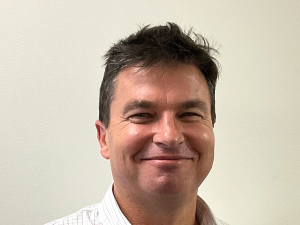
During a discussion at Auckland Federated Farmers Conference recently, Environmental consultant, Richard Gardner, who was formerly a policy analyst with the lobby group, said he was recently watching via the internet members of the Environment Select Committee of Parliament hearing submissions on the Natural Environment and Planning Act.
“I just had a feeling that AI had been used by some Members of Parliament to ask some of their questions,” he said.
“That made me worried as AI has its limitations. Does the federation have a strategy to deal with its use?”
Federated Farmers Acknowledges Need for AI Strategy
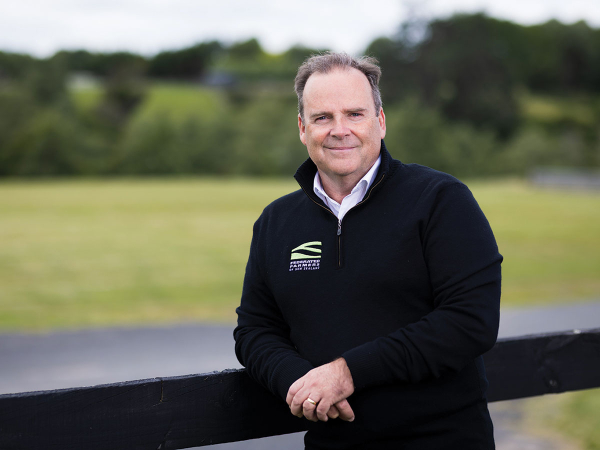
Chief executive Mike Siermans, who attended the meeting, said the lobby group didn’t at present.
“We probably need one.”
Mark Hooper, the federation’s board member with responsibility for the Resource Management Act (RMA), part of which will be replaced by the Natural Environment and Planning Act, who was also at the meeting said AI was useful to some extent in summarising submissions but not in formulating policy.
RMA Reform Remains a Key Concern
While the federation was very supportive of the Government’s intent in reforming the RMA, it felt the draft policy produced didn’t align with that.
“We hope we can get some issues resolved, but it’s a big ask,” he said.
“We’re holding our breath and waiting to see.”
Farmers Concerned About Environmental Limits
The major concern centred around the setting of environmental limits on farms as the natural inclination was to try to make improvements to current levels
“But that can become a hard limit, and farmers could be worse off than they are at present,” he said.
Questions Raised About Future Role of AI in Policy
After the meeting, where Gardner was made a life member of Auckland Federated Farmers, he said around 10,000 submissions had been made on The Natural Environment and Planning Act.
“But when I watched on the internet I wondered what was happening at the select committee,” he said.
“I had the distinct feeling that in some cases the submissions had been summarized and AI had been used when it came to what questions should be asked.”
“If that’s the case what else could be done with AI? Is there any point in having politicians and making submissions?
“It does worry me. Things should be done in a different way. The federation needs to know what’s happening and have a policy to address that.”
'AI Is Here'
Hooper says the use of AI in advocacy is already here.
He says this technology is a useful tool that’s being used successfully by a lot of organisations to increase productivity and efficiency in the workplace.
“There are some very useful applications when it comes to analysing complex data, brainstorming, research, or automating simple and mundane tasks,” he told Dairy News.
“As a sector, we can’t shy away from these kinds of technological advances – it’s no different to when the computer or the internet first arrived. This is just the next wave.”
Hooper believes in time AI will be like a computer or internet is today – used by everyone in some way.
However, he wants AI to be viewed as a ‘tool’, not a replacement for human input or thought.
“The technology is very impressive, but it also has its limitations.
“We do still need that human input, critical analysis and thought, but I think the two can work together well in a complementary way.
“It’s by no means a replacement for our expert policy advisor, lawyers and communicators – but it can help them do their jobs faster or more efficiently.”