Outlook for dairy strong – ag trade envoy
New Zealand’s special agricultural trade envoy Hamish Marr believes the outlook for the dairy sector remains strong.
 increase font size
 DWN chief executive Zelda de Villiers.
Dairy Women’s Network (DWN) say member feedback on their latest professional development offering has shown some impressive results.
The network launched its new Dairy Modules programme for the first time in November 2014 and has since had the programme evaluated by the Net Promoter Score system, which has confirmed its world-class standard.
In the past eight months, with the help of its partners, DWN has delivered free modules on negotiating fair contracts, goal setting, rostering-on-farm, better use of smartphones, budgeting, animal welfare and calf rearing to more than 100 participants in 41 different towns throughout rural New Zealand.
The independently rated modules have received excellent scores using the Net Promoter Scores system, which are measured from -100 to 100+ with the Network’s various scores sitting between 53+ to 70+.
DWN chief executive Zelda de Villiers says a score of 30+ is considered “good”.
“The three reports that have been completed on smartphones, goal setting and animal welfare, have resulted in upper echelon scores which we are really thrilled about,” she says.
“It is particularly heartening to read many verbatim comments from participants in the reports saying things like: “what I have learnt today is unbelievable”, “excellent presenters” and “very informative and motivating to continue on”.
“Given that our organisation’s vision is to support and inspire women to succeed in the business of dairying, we are very proud of these results.”
The modules replace the organisation’s previous professional development programmes called Dairy Days and Financial Days – nationwide roadshows that ran annually from 2005 to 2014.
“In comparison, Dairy Modules are developed with the members’ knowledge of on-farm training needs to ensure the training is practical, farm-focused and developed and delivered by farmers for farmers in a way in that our members prefer to learn,” says de Villiers.
“The Dairy Modules programme is more flexible than its predecessors. It provides farming women the opportunity to deliver the training, developing leadership skills and the ability to apply that knowledge back into their businesses and communities.”
Separate to the Net Promoter Score system, the reports are split into four main areas for feedback from participants; overall relevance of the training, confidence in the skill being taught, training materials and the presenter.
On average, the modules scored 91%, 76%, 90% and 95% respectively in each feedback area.
The topics are discussed and decided at the DWN regional convenors’ meeting in April each year, when relevant professional and personal development topics are identified and prioritised.
“The development and delivery of the Dairy Modules is very collaborative, and uses feedback from network members, network volunteers and experts in the subject areas we’re covering. It’s a more inclusive way of developing and delivering the training,” says de Villiers.
For more information, visit www.dwn.co.nz
New Zealand’s special agricultural trade envoy Hamish Marr believes the outlook for the dairy sector remains strong.

A series of free workshops on animal health are being organised next month.
Dairy Women’s Network is joining forces with Breast Cancer Cure (BCC) to raise funds for research.
Mid-Canterbury farmer Tania Burrows is winner of Dairy Women’s Network inaugural Regional Leader of the Year award.
The Fonterra 2020 Dairy Woman of the Year Ash-Leigh Campbell hopes her win will inspire young girls to join the dairy industry.



Federated Farmers says it welcomes Labour's commitment to reviewing the Sharemilking Agreements Act, calling on other major parties to do the same.
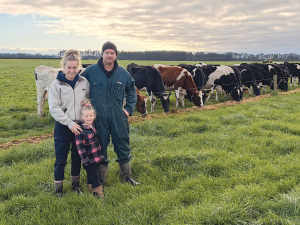
For Canterbury dairy farmers Sian Meijer and Rick Wobben, wearable technology has become one of their most valuable on-farm tools - helping manage 1850 cows across an expansive, high-performing dairy operation while improving efficiency, mating outcomes and day-to-day decision making.
Fonterra has unveiled its annual results for the 2026 financial year, posting $27 billion in revenue and close to $20 billion returned to New Zealand farmer owners and unit holders.
The first major update to the Dairy Cattle Code of Welfare in more than a decade has been released, marking what DairyNZ describes as an important step in ensuring animal welfare standards continue to evolve alongside scientific evidence and on-farm realities.
Ravensdown shareholders have elected Jane Montgomery and Kate Acland to the Ravensdown Board for three-year terms, following a closely contested director election.
Federated Farmers says new legislation replacing the Resource Management Act will cut red tape, unlock investment and help grow New Zealand's export-led economy, after the Planning Bill and Natural Environment Bill passed their third reading in Parliament yesterday.